

Verona, Italy

Italy > Verona

Verona

Urban   Riverfront  

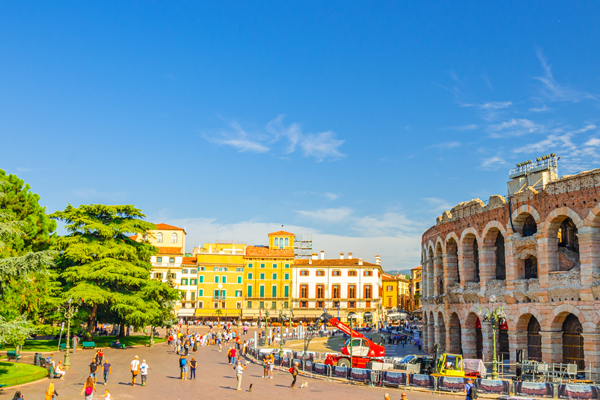
Verona sits in the Veneto region of northern Italy, where Roman amphitheaters share streets with medieval towers and Renaissance palaces. Walk through the centro storico and you'll notice the Adige River cutting through the city, its pale stone bridges connecting neighborhoods that feel less touristy the moment you turn off the main piazzas. The Arena dominates Piazza Bra—a 1st-century Roman structure still hosting opera and concerts—but the real texture of daily life emerges in the quieter squares where locals gather for aperitivo. Shakespeare set Romeo and Juliet here, and the city leans into that literary legacy without letting it overwhelm everything else. Verona functions as a genuine working city, not just a museum: there are markets, small manufacturers, university students, and families who've lived here for generations. The architecture spans centuries—Roman gates, medieval fortifications, Renaissance frescoes—creating a layered urban landscape where history isn't cordoned off but woven into how people actually move through space. The city's position between the Alps and the Venetian plain makes it a natural crossroads, historically and now.
Italian For A WhileItalian For A While
Connect

Become ‘Italian for a While’ with IFA! Learn in Italy on a 1-week to 12-month program - open to students, young adults, graduates, digital nomads, professionals, groups, faculty-led programs, and more. Take courses at an accredited school while immersing yourself in the language, life, and culture among your international peers. Submit an inquiry with IFA to learn more.

Click connect to have our partner contact you via e-mail and/or phone.

Italian For A WhileItalian For A While

Become ‘Italian for a While’ with IFA! Learn in Italy on a 1-week to 12-month program - open to students, young adults, graduates, digital nomads, professionals, groups, faculty-led programs, and more. Take courses at an accredited school while immersing yourself in the language, life, and culture among your international peers. Submit an inquiry with IFA to learn more.
Connect

Click connect to have our partner contact you via e-mail and/or phone.

Visa & Residency

Obtaining a residency in Italy involves several steps and the process can vary depending on the type of visa you are applying for. The most common types of visas for expats include the Elective Residence Visa and the Work Visa. The Elective Residence Visa is designed for individuals who can prove they have a high, steady income from sources outside of Italy and do not need to work in the country. Applicants must show they have sufficient funds to support themselves, a place to live, and comprehensive health insurance. This visa is valid for one year and can be renewed. The Work Visa is for those who have secured a job in Italy before entering the country. The employer must apply for a work permit on behalf of the employee, which is subject to quotas. Once the work permit is granted, the employee can apply for the visa. This process can be quite competitive and time-consuming due to the quota system. Other visas include the Student Visa and Family Reunification Visa. The process generally involves gathering the required documentation, such as a valid passport, proof of financial means, accommodation, and health insurance, and submitting an application to the Italian consulate or embassy in your home country. An appointment is usually required, and you may need to attend an interview. The difficulty of the process can vary; it is often described as average, but it can be challenging due to the bureaucracy and strict requirements. It is advisable to start the application process well in advance of your intended move date and to seek assistance from professionals if necessary. Once in Italy, you will need to apply for a residence permit (permesso di soggiorno) within eight days of arrival to stay legally. This additional step involves going to the local post office or police station (Questura) to submit the necessary paperwork. Overall, while the process can be bureaucratic and requires careful preparation, it is manageable with the right planning and support.

Cost of Living

Living costs in Verona are reasonable compared to other major Italian cities and well below those of Venice or Milan. Rent for a one-bedroom apartment in the center runs considerably less than in Rome or Florence, and groceries, dining, and utilities remain affordable. Property ownership is accessible for those relocating from Western Europe or North America, though prices have climbed in recent years as the city attracts more international residents.

Weather

Verona experiences a humid continental climate with cold, damp winters and warm summers; snow is occasional in winter, and summers can be quite hot and humid.

Healthcare in Verona

Ospedale Maggiore di Borgo Trento is the main public hospital and handles serious cases competently, though like much of Italy's healthcare system it can experience wait times. Private clinics exist but are limited compared to larger Italian cities. For routine care and prescriptions, the system works fine; for complex procedures, residents sometimes travel to Milan or Padua.

Schools in Verona

Verona has limited but functional international options. The British School of Verona offers IB curriculum through secondary level, while some private institutions provide English-language instruction alongside Italian programs. Options remain modest compared to Milan or Rome.

Several schools operate bilingual Italian-English tracks, particularly in the private sector. Scuola Paritaria and other accredited institutions integrate dual-language instruction, though availability concentrates in central Verona and requires advance enrollment.

Restaurants in Verona

Copyright 1997-2026 Burlingame Interactive, Inc.

Privacy Policy Legal