Lithuania
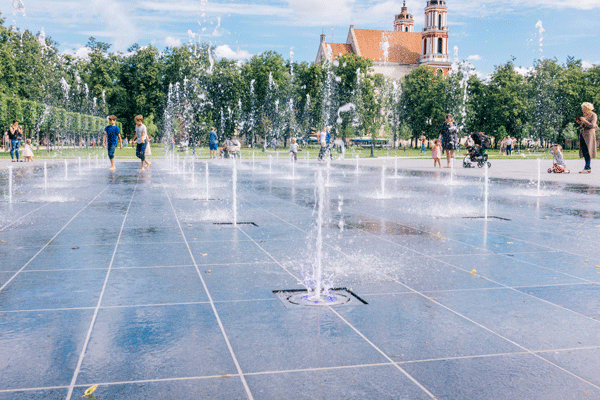
Coastal BeachesLithuania is a Baltic nation in northeastern Europe, bordered by Latvia, Belarus, Poland, and Russia, with a coastline along the Baltic Sea. The country has a rich cultural heritage blending Eastern European and Nordic influences, with a vibrant capital in Vilnius known for its historic Old Town and artistic community. Lithuania has a growing economy with a strong tech sector, competitive IT industry, and membership in the EU and NATO, making it increasingly attractive to international professionals. The population is relatively small at around 2.8 million, creating a tight-knit community feel while maintaining modern European amenities. Life in Lithuania offers a good balance of affordability, quality of life, and access to nature, with an emerging startup scene and improving infrastructure. The country is known for its forests, lakes, and outdoor recreation opportunities, alongside a developing cultural scene.
 SJB Global
Connect
SJB-Global is a top-rated financial advisory firm specializing in expat financial advice worldwide, offering retirement planning & tax-efficient solutions with a regressive fee model. Our clients benefit from their country’s most favorable tax environment by utilizing the efficient investment vehicles we offer. Our commitment to quality service is reflected in our stellar reviews, with over 300 testimonials boasting 95% five-star ratings.
Click connect to have our partner contact you via e-mail and/or phone.
SJB GlobalSJB-Global is a top-rated financial advisory firm specializing in expat financial advice worldwide, offering retirement planning & tax-efficient solutions with a regressive fee model. Our clients benefit from their country’s most favorable tax environment by utilizing the efficient investment vehicles we offer. Our commitment to quality service is reflected in our stellar reviews, with over 300 testimonials boasting 95% five-star ratings.
Connect
Click connect to have our partner contact you via e-mail and/or phone.
Podcasts

Episode 8: Jake Barber - The Expat Finance Expert Returns



Episode 6: Jake Barber - Expat Finance Expert and Lifelong Expat
Living in Lithuania
Best Places to Live in Lithuania
Visa & Residency
Obtaining a residency in Lithuania involves several steps and can be considered an average challenge compared to other European countries. The most common type of visa that expats apply for is the National Visa (D). This visa is designed for those who intend to reside in Lithuania for more than 90 days within a 180-day period. To apply for the National Visa (D), expats must first gather the necessary documents, which typically include a valid passport, proof of sufficient financial means to support themselves, a letter of invitation or a confirmed accommodation in Lithuania, and a completed application form. Additionally, applicants must provide a reason for their stay, such as employment, study, business, or family reunification. For those seeking employment, a work permit may also be required unless they are exempt due to their profession or the nature of their work. Students must provide proof of admission to an educational institution, while those joining family members in Lithuania must provide evidence of their relationship. The application process usually involves submitting the documents to the nearest Lithuanian embassy or consulate. Some applicants may need to attend an interview. After the application is submitted, it typically takes up to 15 days for a decision to be made, although this period can be extended in certain cases. Once the National Visa (D) is granted, it allows the holder to enter Lithuania and apply for a temporary residence permit, which is necessary for stays longer than one year. The temporary residence permit can be issued for different durations, depending on the grounds for the application, but it is usually valid for one year with the possibility of renewal. Digital nomads often use the National Visa (D) as well, as it allows them to live and work remotely in Lithuania for up to a year. This visa is particularly attractive to digital nomads due to the country's high-speed internet, affordable cost of living, and vibrant expat community. Overall, while the process involves several bureaucratic steps, it is relatively straightforward, especially for those who have all the required documentation and a clear purpose for their stay in Lithuania.
Healthcare in Lithuania
Lithuania's system is a mixed model, combining elements of both public and private healthcare. The public healthcare system is funded by the government through the National health insurance Fund, which covers most medical services for Lithuanian citizens and permanent residents. This includes primary care, hospital care, prescription drugs, and dental care. Private healthcare is also available and is often used for quicker access to specialists and elective procedures. The quality of healthcare in Lithuania is generally good, with well-trained medical staff and modern facilities, especially in larger cities. However, there can be long waiting times for certain treatments in the public sector. Expats and digital nomads who are legally residing in Lithuania and contributing to the social security system can gain access to public healthcare. Those who are not must either secure private insurance or pay out-of-pocket for medical services.
Cost of Living
Lithuania offers relatively affordable living costs compared to Western Europe, with housing being one of the largest expenses. Rent for a one-bedroom apartment in central Vilnius typically ranges from €400–€700 per month, while outside the capital it can be €250–€400. Property purchase prices average €3,000–€5,000 per square meter in Vilnius, significantly lower than Western European capitals. Daily expenses including groceries, dining, and utilities are moderate, making Lithuania an economical choice for relocators from wealthier EU nations.
Weather
Lithuania experiences a temperate continental climate with four distinct seasons. Winters are cold and snowy, typically lasting from December to March with temperatures often dropping below freezing. Summers are mild to warm, with July being the warmest month, while spring and autumn are transitional periods with moderate temperatures. Annual precipitation is moderate and distributed throughout the year, with the wettest months generally occurring in autumn.
Educational System in Lithuania
The educational system in Lithuania is comprehensive and designed to provide a well-rounded education to its students. Education is compulsory from the age of 6 or 7 until 16, which covers primary and basic education. The system is divided into several stages: pre-school education (ikimokyklinis ugdymas), primary education (pradinis ugdymas), basic education (pagrindinis ugdymas), secondary education (vidurinis ugdymas), and higher education (aukštoji moksla). Pre-school education is optional and is for children up to the age of 6. Primary education starts at the age of 6 or 7 and lasts for four years. Basic education follows and is divided into two cycles: the first cycle lasts for four years, and the second cycle lasts for two years. After completing basic education, students can choose to continue their studies in secondary education, which lasts for two years and prepares them for higher education or vocational training. Secondary education culminates with the Matura exams, which are necessary for university admission. Lithuania places a strong emphasis on the quality of education, with a curriculum that includes the Lithuanian language, foreign languages, mathematics, natural sciences, social sciences, arts, and physical education. The country has been participating in international assessments such as PISA, and results have been showing steady improvement. Schools in Lithuania are known for their focus on fostering critical thinking, creativity, and the ability to adapt to the changing world.
Living in Lithuania
Healthcare in Lithuania
Moving to Lithuania