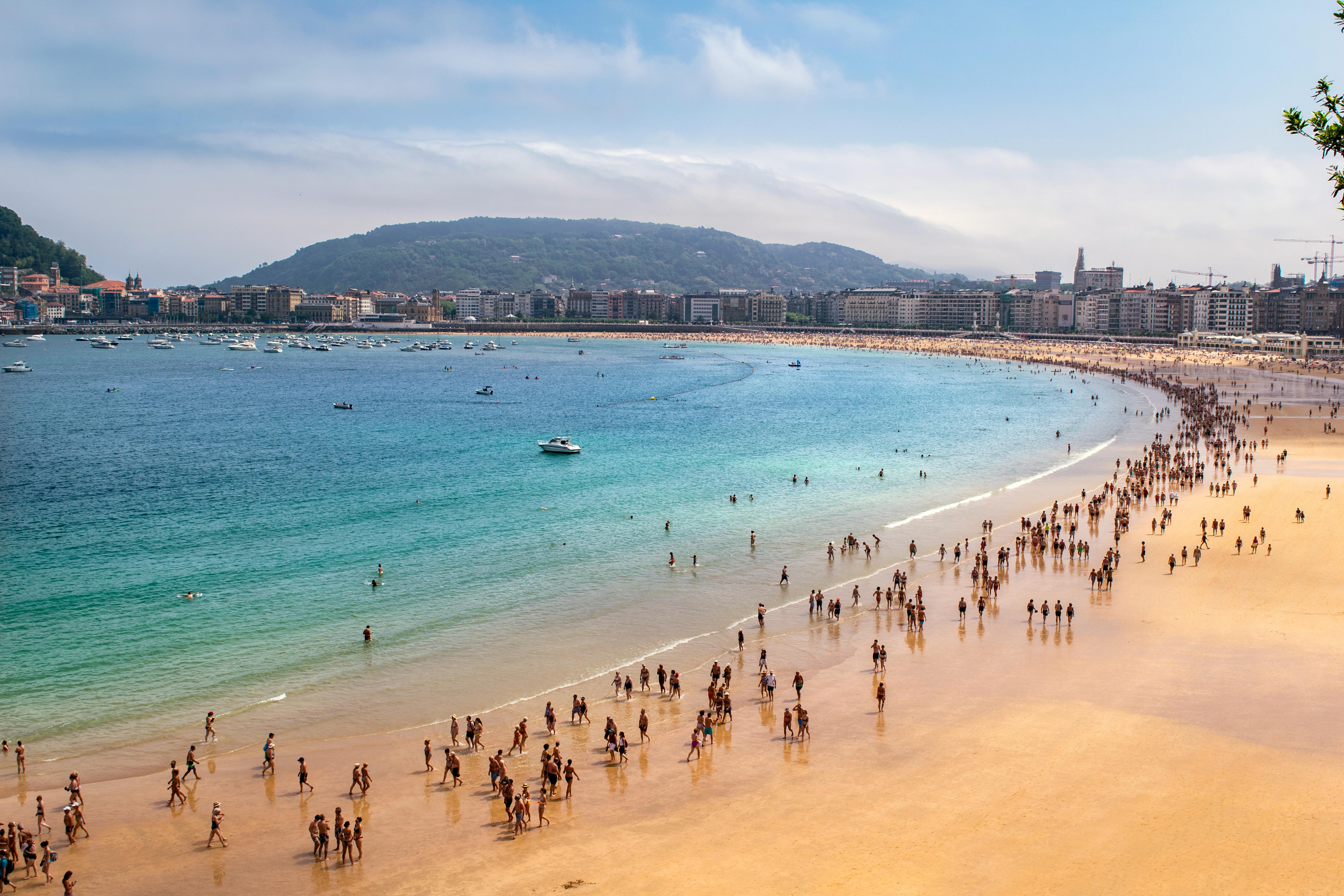
San Sebastian
Urban Coastal BeachesSan Sebastian, known locally as Donostia, sits on Spain's Basque coast where three beaches curve into the Bay of Biscay like a natural amphitheater. The city has earned international recognition for its culinary scene—home to more Michelin stars per capita than nearly anywhere on earth—where both high-end restaurants and casual pintxo bars draw food pilgrims year-round. Beyond the gastronomic reputation, San Sebastian is a compact, walkable city of roughly 186,000 people where Belle Époque architecture lines the waterfront, narrow medieval streets wind through the old town, and a strong Basque cultural identity shapes everything from language to festivals. The beaches—Playa de la Concha, Playa de Ondarreta, and Playa de Zurriola—are genuinely urban, bordered by promenades where locals swim, surf, and socialize. The city balances serious cultural institutions (museums, theaters, film festival) with an unpretentious everyday life; you'll find residents in workout clothes buying fish at the market next to tourists in designer sunglasses. The surrounding hills and proximity to the Pyrenees offer hiking and outdoor access without requiring a car journey.
 BlueCross BlueShield Global Solutions
Get Quote
BlueCross BlueShield Global Solutions (BCBS) offers global health plans for international assignments or trips lasting 6 months or longer. With access to over 1.7M medical providers in 190 countries around the world, BCBS provides members with solutions and industry-leading digital services - ensuring top-quality coverage to people who live, work, study and travel internationally.
BlueCross BlueShield Global SolutionsBlueCross BlueShield Global Solutions (BCBS) offers global health plans for international assignments or trips lasting 6 months or longer. With access to over 1.7M medical providers in 190 countries around the world, BCBS provides members with solutions and industry-leading digital services - ensuring top-quality coverage to people who live, work, study and travel internationally.
Get Quote
Visa & Residency
Obtaining a residency in Spain can be a straightforward process, but it requires careful preparation and attention to detail. The most common types of residency visas that expats apply for are the Non-Lucrative Visa and the Golden Visa. The Non-Lucrative Visa is ideal for individuals who can support themselves without working, such as retirees or remote workers. To apply for this visa, applicants must prove they have sufficient financial means to live in Spain without income from employment, provide proof of private health insurance, and have a clean criminal record. The visa is initially granted for one year and can be renewed for two-year periods, provided the requirements are still met. After five years of legal residency, applicants can apply for long-term residency or even Spanish citizenship. The Golden Visa, on the other hand, is aimed at investors. It requires a significant investment in Spain, such as purchasing real estate worth at least €500,000, investing €1 million in Spanish companies, or depositing €1 million in a Spanish bank. The Golden Visa offers a fast track to residency and is particularly popular among non-EU nationals. It grants residency for two years, which is renewable for five-year periods, and eventually leads to permanent residency and citizenship if desired. The application process for both visas involves submitting the necessary documentation to the Spanish consulate or embassy in the applicant's home country. After the initial approval, the applicant will receive a visa that allows them to enter Spain. Upon arrival, they must apply for a Foreigner Identity Card (TIE) at the local office or police station. The process can be complex and time-consuming, often requiring translations and apostilles for official documents. It is recommended to seek legal advice or assistance from immigration professionals to navigate the process successfully. Overall, while the process is manageable, it does require thorough preparation and understanding of the Spanish immigration system.
Cost of Living
Living in San Sebastian carries a high price tag, driven by its status as one of Spain's most desirable coastal cities and the draw of its food culture and beaches. Rental apartments in central neighborhoods command premium rates, and property purchase prices rival those of major Spanish cities. Dining out, even at casual establishments, reflects the city's gastronomic prestige, though local markets and supermarkets offer more affordable grocery options.
Weather
San Sebastian has an Atlantic maritime climate with mild winters and warm summers, though rainfall is frequent year-round, particularly in autumn and winter.
Healthcare in San Sebastian
Hospital Universitario Donostia, the primary public facility, provides comprehensive acute care and emergency services with modern equipment and specialized departments. Private options including Quirónsalud and Policlínica Gipuzkoa serve the region, and the healthcare system benefits from Spain's universal coverage framework. Response times for non-emergency care can extend several weeks through public channels.
Schools in San Sebastian
San Sebastian has several international options including Colegio Montemadrid (offering IB curriculum) and other schools with English-language instruction tracks. These schools typically serve expat families and Spanish families seeking international education pathways.
Bilingual education is widely available throughout San Sebastian, with many schools offering Spanish-Basque-English trilingual programs. This reflects the region's linguistic landscape and is standard rather than exceptional in the Basque Country.
Restaurants in San Sebastian
Living in San Sebastian
Moving to San Sebastian
Healthcare in San Sebastian