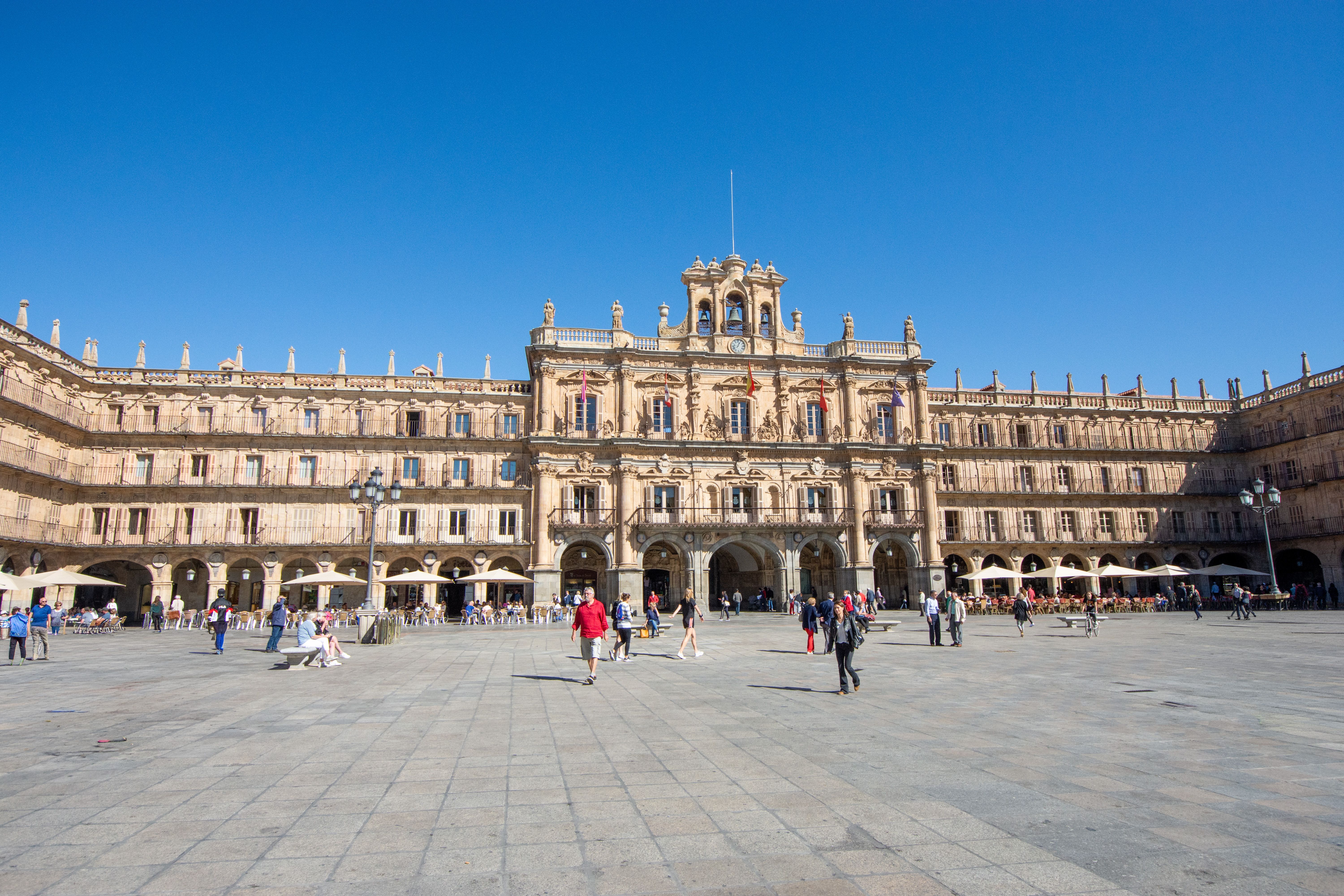
Salamanca
Urban RiverfrontSalamanca pulses with an intellectual energy that feels almost tangible—this is a university town where students flood the plazas, where conversation spills from tapas bars into narrow medieval streets, where the rhythm of life moves between lecture halls and late-night tertulias. The city's golden sandstone buildings glow warmly in afternoon light, especially the Plaza Mayor, one of Spain's most architecturally coherent squares. Two cathedrals—one Gothic, one Romanesque—anchor the skyline, and the Roman bridge spanning the Tormes River connects the old town to newer quarters. Walking here means constantly stumbling onto Renaissance facades, hidden courtyards, and the kind of layered history that doesn't announce itself loudly but reveals itself gradually. The university, founded in 1218, remains the city's heartbeat; it's one of Europe's oldest and most prestigious. Beyond the monumental center, Salamanca is genuinely livable—not a museum piece but a working city where locals shop at markets, families gather in parks, and the student population keeps things feeling young and forward-looking. The surrounding region offers access to the Castilian plateau's open landscapes.
 Balcells Group Lawyers
Connect
With over 40 years of professional experience, Balcells Group provides legal advice on immigration, business, real estate, and tax. They help individuals, companies, investors, students, entrepreneurs, highly-qualified professionals, digital nomads, and more, to enjoy successful law processes in Spain by guiding their clients every step of the way. They speak Spanish, English, Catalan and Russian.
Click connect to have our partner contact you via e-mail and/or phone.
Balcells Group LawyersWith over 40 years of professional experience, Balcells Group provides legal advice on immigration, business, real estate, and tax. They help individuals, companies, investors, students, entrepreneurs, highly-qualified professionals, digital nomads, and more, to enjoy successful law processes in Spain by guiding their clients every step of the way. They speak Spanish, English, Catalan and Russian.
Connect
Click connect to have our partner contact you via e-mail and/or phone.
Visa & Residency
Obtaining a residency in Spain can be a straightforward process, but it requires careful preparation and attention to detail. The most common types of residency visas that expats apply for are the Non-Lucrative Visa and the Golden Visa. The Non-Lucrative Visa is ideal for individuals who can support themselves without working, such as retirees or remote workers. To apply for this visa, applicants must prove they have sufficient financial means to live in Spain without income from employment, provide proof of private health insurance, and have a clean criminal record. The visa is initially granted for one year and can be renewed for two-year periods, provided the requirements are still met. After five years of legal residency, applicants can apply for long-term residency or even Spanish citizenship. The Golden Visa, on the other hand, is aimed at investors. It requires a significant investment in Spain, such as purchasing real estate worth at least €500,000, investing €1 million in Spanish companies, or depositing €1 million in a Spanish bank. The Golden Visa offers a fast track to residency and is particularly popular among non-EU nationals. It grants residency for two years, which is renewable for five-year periods, and eventually leads to permanent residency and citizenship if desired. The application process for both visas involves submitting the necessary documentation to the Spanish consulate or embassy in the applicant's home country. After the initial approval, the applicant will receive a visa that allows them to enter Spain. Upon arrival, they must apply for a Foreigner Identity Card (TIE) at the local office or police station. The process can be complex and time-consuming, often requiring translations and apostilles for official documents. It is recommended to seek legal advice or assistance from immigration professionals to navigate the process successfully. Overall, while the process is manageable, it does require thorough preparation and understanding of the Spanish immigration system.
Cost of Living
Living in Salamanca costs considerably less than Spain's major cities, though prices have crept upward as the city attracts more visitors and remote workers. Rental apartments in the historic center command higher prices, but neighborhoods just outside the old town offer reasonable rates. Dining and daily expenses remain affordable, especially if you shop at local markets and eat where students eat.
Weather
Salamanca experiences a continental climate with cold, dry winters and warm summers; expect significant temperature swings between seasons and relatively low rainfall year-round.
Healthcare in Salamanca
Hospital Universitario de Salamanca, the city's primary public facility, provides general medicine, surgery, and emergency services with teaching hospital resources. Private clinics including Quirónsalud operate in the city, offering faster appointment access. English-speaking medical staff exists but is not guaranteed outside major departments.
Schools in Salamanca
Salamanca has several international options including the British School of Salamanca, which follows the English National Curriculum through secondary level. The city also hosts schools offering International Baccalaureate programs and other European curricula, though options are more limited than in Spain's largest cities.
Multiple bilingual schools operate in Salamanca with Spanish-English instruction as the primary model, integrated throughout primary and secondary education. These schools blend Spanish state curriculum requirements with enhanced English language instruction and international perspectives.
Restaurants in Salamanca