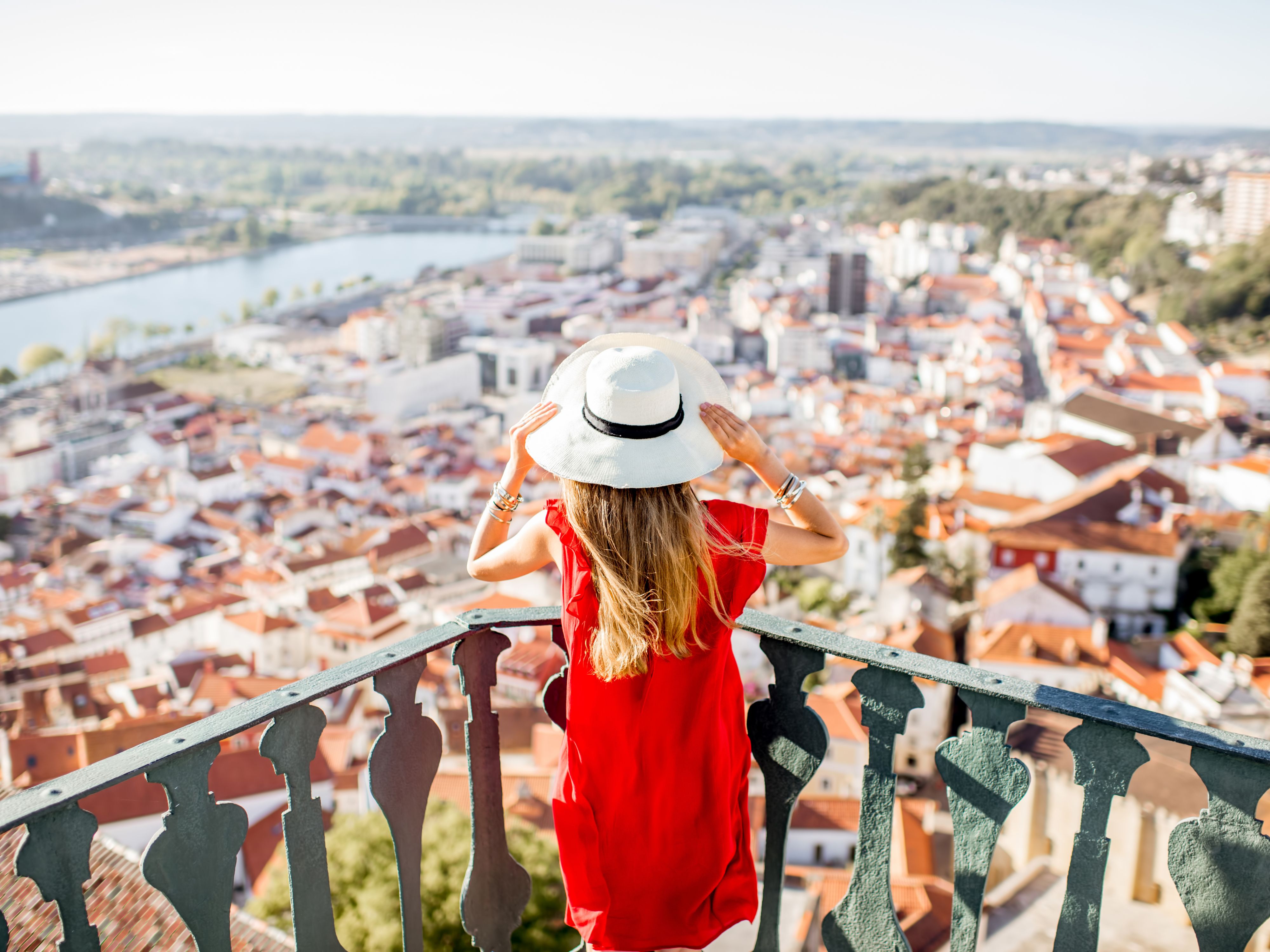
Portugal works especially well when daily life can run on foot, by tram, or by train, with cafés, parks, and weekend outings close enough that driving never becomes the center of the routine. The places that stand out are the ones where the rhythm of errands, school runs, and evenings out feels simple enough to hold up in real life, not just on a map. Lisbon and Cascais show that in different ways, while Coimbra and Braga lean into a slower, more traditional pace. The full list goes further, including Porto, Ponta Delgada and Aveiro.
Lisbon — metro, trams, river views
Lisbon gives you the biggest-city version of car-free living in Portugal, with a metro that makes cross-town movement straightforward and trams that still feel part of everyday life. Its neighborhoods range from Alfama’s tiled lanes to Belém’s riverside gardens, so you can build a routine around history, cafés, and transit rather than long drives.
“The metro is great. Easy to get around. The train out and back to Cascais is excellent.”
— movingtoportugal7, Expat Exchange member
That mix of old and new is what keeps the city practical as well as lively.
Relocating abroad soon? Make your move with AGS! AGS Worldwide Movers is a leader in the international moving industry. Our experience and expertise allows us to guarantee our clients the best quality moving services.
Learn More about AGS Worldwide Movers
Cascais — coastal rhythm, train connection
Cascais has an easier seaside pace, with a waterfront promenade, old-town streets, beaches, and scenic walks all close together. The train link to Lisbon means you can keep the capital within reach without letting it dominate your week.
“There were a ton of expats here when I visited. The people on the forums didn't lie.”
— movingtoportugal7, Expat Exchange member
It is the kind of place where the coast does the heavy lifting and the logistics stay simple.
Braga — baroque churches, lived-in center
Braga feels rooted in everyday Portuguese life, with baroque churches, narrow medieval streets, and a historic center that still functions as a real neighborhood. Markets, plazas, universities, and modern commerce all sit within a city that never feels rushed or overrun. The result is a place where errands, school, and a slower social rhythm can all fit together naturally.
Coimbra — university city, hillsides, fado
Coimbra has the kind of compact, layered layout that works well without a car: a medieval old town on the hills, a university quarter full of student energy, and a lower town that handles commerce and transport. The city’s identity is shaped by centuries of academic tradition, with fado in the streets and a lived-in feel that never turns into a museum piece. It is practical, but it also has enough character to make daily life feel distinctive.
Aveiro — lagoon-side streets, living city
Aveiro is a smaller-scale choice where canals, lagoon-side streets, and a compact historic center make walking feel natural. The moliceiros, Art Nouveau buildings, and waterfront cafés give it charm, but it is still a working city with locals outnumbering visitors. That balance makes it appealing if you want a slower pace without giving up everyday convenience.