

Erfurt
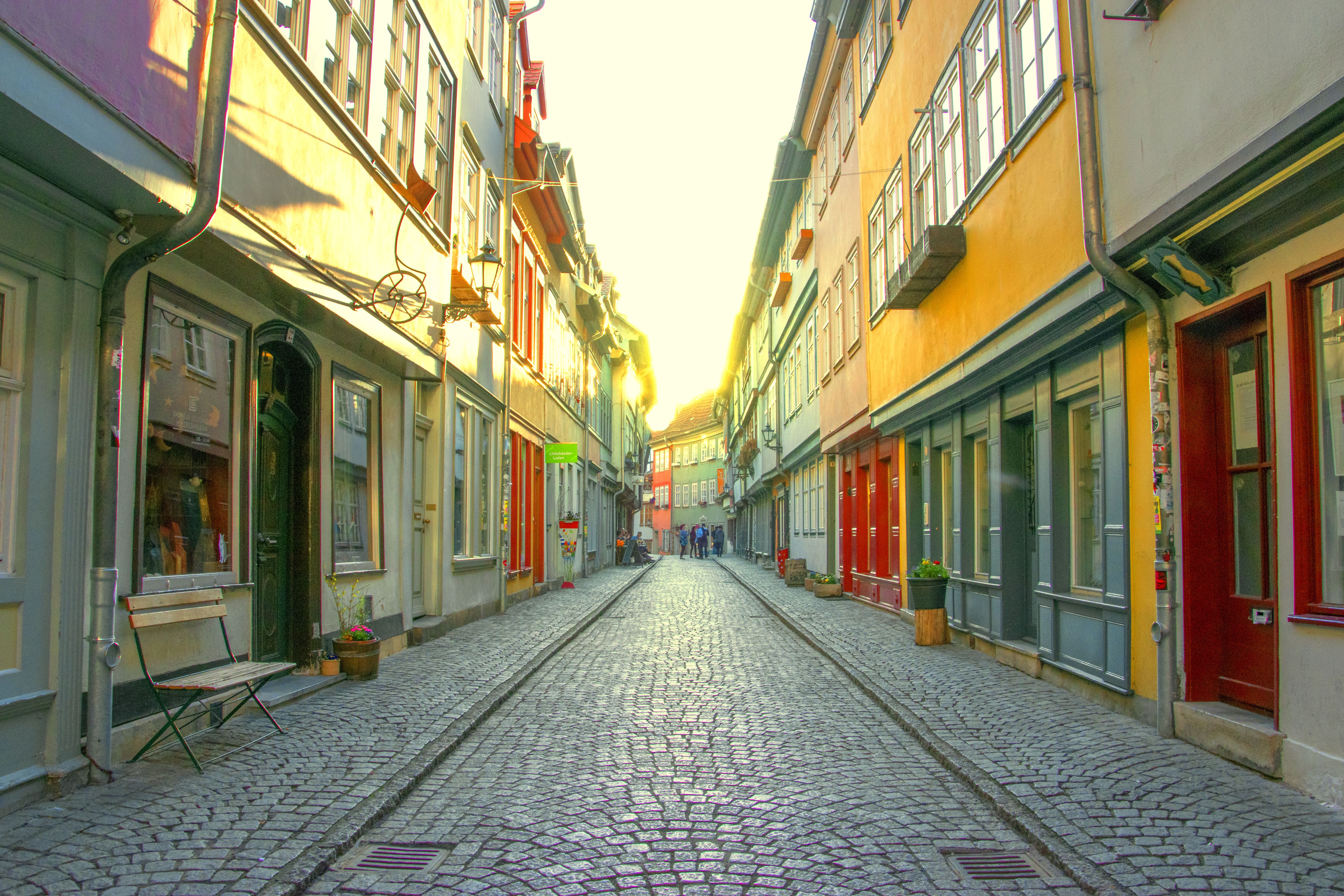
Urban RiverfrontErfurt pulses with the energy of a mid-sized German city that refuses to feel provincial. Walking through the Altstadt, you're surrounded by Gothic spires and Renaissance facades, but the real rhythm comes from the students, cyclists, and locals filling the cafes and squares. The city has genuine depth—it's been a center of learning and culture for centuries, home to one of Germany's oldest universities and a major printing hub during the Reformation. Today that intellectual legacy persists in theaters, galleries, and bookshops scattered throughout. The Krämerbrücke, a medieval bridge lined with shops and half-timbered houses, is the kind of place that draws visitors but doesn't feel like a museum piece. Beyond the old town, Erfurt spreads into quieter residential neighborhoods and green spaces. The city moves at a human pace—not rushed, not sleepy, just genuinely livable. There's a sense that things happen here because people care about them, not because tourism demands it.

SJB GlobalConnect
SJB-Global is a top-rated financial advisory firm specializing in expat financial advice worldwide, offering retirement planning & tax-efficient solutions with a regressive fee model. Our clients benefit from their country’s most favorable tax environment by utilizing the efficient investment vehicles we offer. Our commitment to quality service is reflected in our stellar reviews, with over 300 testimonials boasting 95% five-star ratings.
Click connect to have our partner contact you via e-mail and/or phone.
SJB GlobalSJB-Global is a top-rated financial advisory firm specializing in expat financial advice worldwide, offering retirement planning & tax-efficient solutions with a regressive fee model. Our clients benefit from their country’s most favorable tax environment by utilizing the efficient investment vehicles we offer. Our commitment to quality service is reflected in our stellar reviews, with over 300 testimonials boasting 95% five-star ratings.
Connect
Click connect to have our partner contact you via e-mail and/or phone.
Visa & Residency
Obtaining a residency in Germany involves several steps and the process can vary depending on the type of visa one is applying for. For expatriates, the most common types of residency visas include the EU Blue Card, Residence Permit for Employment, and Residence Permit for Self-Employed Business Purposes. The EU Blue Card is targeted at highly skilled professionals from non-EU countries who have a job offer in Germany with a minimum salary threshold. Applicants must have a recognized university degree or equivalent. The Residence Permit for Employment is for those who have a specific job offer in Germany, while the Residence Permit for Self-Employed Business Purposes is for entrepreneurs planning to start a business in Germany. To apply for any of these visas, one must first secure a job offer or prove their business plan's viability. The next step is to schedule an appointment with the German embassy or consulate in one's home country to submit the visa application. Required documents typically include a valid passport, proof of health insurance, proof of accommodation in Germany, and relevant certificates or diplomas. For the freelance visa, which is popular among digital nomads, applicants must also provide evidence of their freelance work, such as contracts or letters of intent from potential clients, and prove that their work is in demand in Germany. Once the initial visa is granted, which allows entry into Germany, expatriates must then register with the local residents' registration office and apply for a residence permit to stay longer than the visa's validity. The residence permit application process involves providing additional documentation, such as proof of financial stability and a clean criminal record. The duration of the residence permit can vary, but it is often issued for one year and can be renewed. The EU Blue Card, for example, can lead to permanent residency after 33 months, or 21 months with a B1 level of German language proficiency. Overall, while the process can be bureaucratic and requires thorough preparation, it is generally considered average in terms of difficulty compared to other countries. It is essential to start the application process well in advance of the intended move date and to ensure all paperwork is meticulously completed and accurate.
Cost of Living
Living in Erfurt costs noticeably less than western German cities like Munich or Frankfurt, making it accessible for students and young professionals. Rent for a one-bedroom apartment in the city center runs well below the national average, and groceries, dining, and entertainment follow suit. The trade-off is that wages in Thuringia tend to be lower than in wealthier regions, though for remote workers or those relocating from expensive metros, the value is substantial.
Weather
Erfurt experiences a temperate continental climate with cold winters (often dropping below freezing) and mild summers. Rainfall is moderate year-round, with the wettest months typically in summer.
Healthcare in Erfurt
Helios Hospital Erfurt and the University Hospital (Universitätsklinikum) provide comprehensive acute care and specialist services across the city. Both facilities meet German standards for equipment and staffing, though wait times for non-emergency procedures can stretch several weeks. English-speaking staff availability varies by department.
Schools in Erfurt
Erfurt has limited but functional international school options. The International School of Erfurt (ISE) offers curricula aligned with international standards, though enrollment remains modest compared to larger German cities.
Several schools in Erfurt operate bilingual German-English programs, primarily at the primary and secondary levels. These programs are integrated into the public school system rather than standalone institutions.