Puerto Vallarta
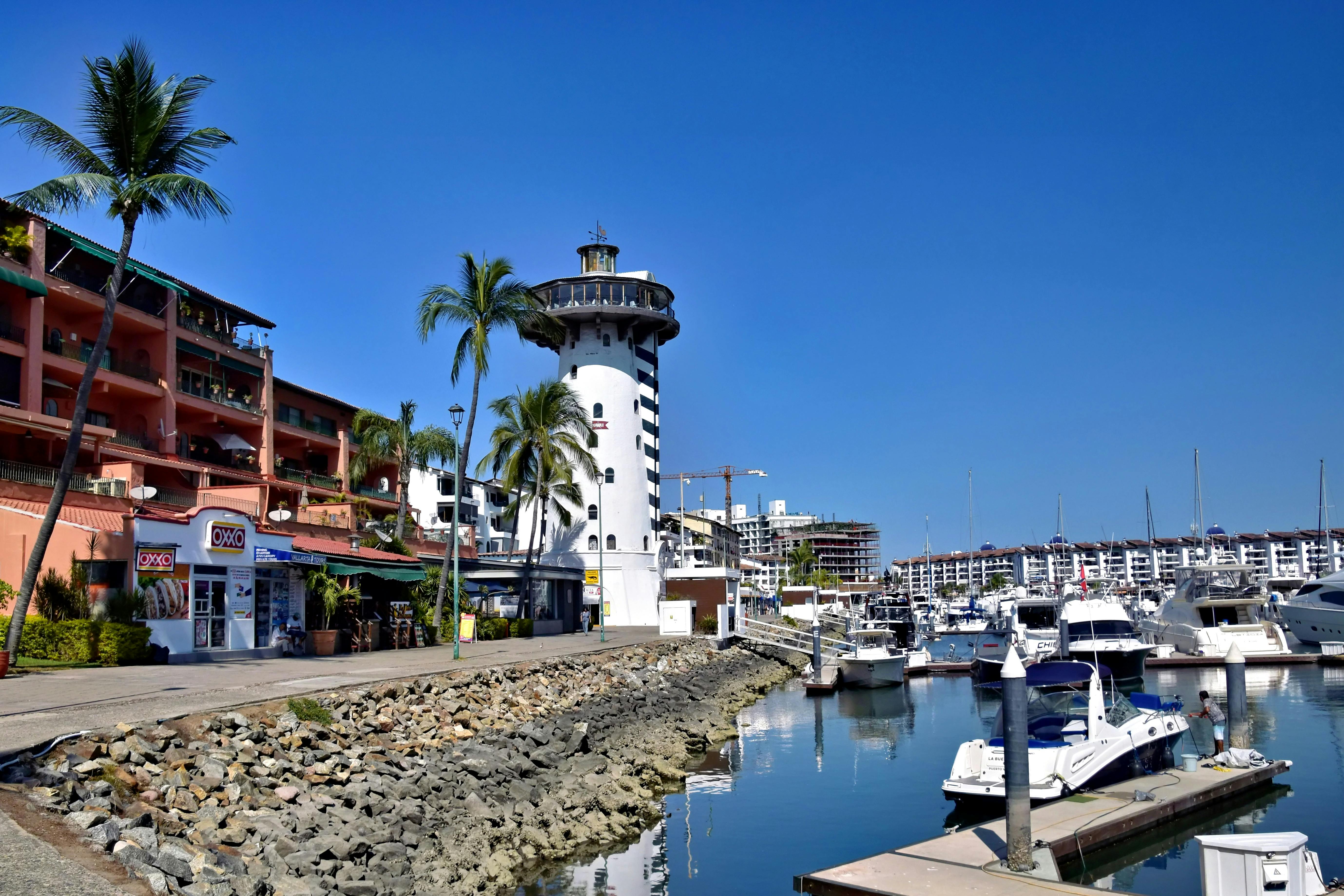
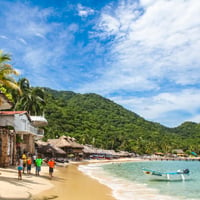
Beach Coastal Beaches RiverfrontPuerto Vallarta emerged in the 1850s as a modest port town, then transformed dramatically after the 1960s when it became a destination for Hollywood and international travelers seeking Pacific warmth and colonial architecture. Today it remains a working port city with a dual identity: the historic centro preserves narrow streets, plazas, and whitewashed buildings from its past, while the hotel zone stretches north along the bay with resorts and restaurants catering to tourists. The Malecón—a waterfront promenade lined with sculptures, street performers, and seafood vendors—connects these worlds and pulses with life from dawn through late evening. Beyond the tourist infrastructure, Puerto Vallarta functions as a genuine Mexican city where locals shop at markets, families gather in parks, and fishing boats still operate from the harbor. The surrounding Sierra Madre mountains rise steeply from the coast, creating dramatic backdrops and limiting sprawl. Art galleries, live music venues, and a thriving expat community have given the city a creative edge, though gentrification pressures are reshaping neighborhoods. The combination of accessibility, established infrastructure, and natural setting has made it one of Mexico's most established beach destinations.
 Dream Pro Homes Luxury
Connect
Dream Pro Homes Luxury owner Greg Gunter is the Broker for Berkshire Hathaway HomeServices offering luxury home options in the UNESCO city of San Miguel de Allende, Mexico, rated the No. 1 City in the World five years running from Conde Nast Traveler and Travel & Leisure magazines.
Click connect to have our partner contact you via e-mail and/or phone.
Dream Pro Homes LuxuryDream Pro Homes Luxury owner Greg Gunter is the Broker for Berkshire Hathaway HomeServices offering luxury home options in the UNESCO city of San Miguel de Allende, Mexico, rated the No. 1 City in the World five years running from Conde Nast Traveler and Travel & Leisure magazines.
Connect
Click connect to have our partner contact you via e-mail and/or phone.
Visa & Residency
Obtaining a residency in Mexico is a process that can be straightforward if the applicant meets the necessary requirements and follows the steps diligently. There are primarily two types of residency visas: the Temporary Resident Visa and the Permanent Resident Visa. The Temporary Resident Visa is suitable for those who wish to stay in Mexico for more than six months but not longer than four years. It is popular among expats who are not yet ready to commit to permanent residency. To apply for this visa, one must visit a Mexican consulate abroad. The applicant will need to provide proof of sufficient economic means to support themselves, or they must show that they are employed or have a job offer in Mexico. The Permanent Resident Visa is for those who intend to settle in Mexico indefinitely and is often sought by retirees or those with family in Mexico. To qualify, applicants must meet stricter financial requirements or have certain family connections with Mexican citizens or other permanent residents. The application process for the Permanent Resident Visa is similar to that of the Temporary Resident Visa, but with additional documentation required to prove the applicant's long-term economic solvency or family ties. The difficulty of the process can vary based on individual circumstances, such as the applicant's nationality, financial situation, and the specific requirements of the Mexican consulate where the application is submitted. Generally, the process is considered average in terms of difficulty when compared to other countries. It is important to note that all documents must be translated into Spanish and apostilled or legalized, depending on the country of origin. Once the visa is approved, the applicant will receive a visa sticker in their passport, which must be exchanged for a resident card within 30 days of entering Mexico at the nearest office (Instituto Nacional de Migración). The process involves submitting various forms, taking photographs, and possibly attending an interview. Overall, while there are several steps to follow, the process is well-documented and can be navigated with patience and careful preparation.


Cost of Living
Living costs in Puerto Vallarta sit comfortably in the moderate range for Mexico, though prices have climbed noticeably in recent years as the city has attracted more international residents and investment. Beachfront and centro properties command premium prices, while neighborhoods inland or south of the main tourist corridor remain more affordable. Dining, groceries, and utilities are reasonable compared to U.S. or European standards, but imported goods and tourist-facing establishments carry markups. Long-term rentals and property purchases in desirable areas have become competitive.
Weather
Puerto Vallarta has a tropical climate with warm temperatures year-round, typically ranging from 75–90°F. The rainy season runs from June through October, while November through May offers drier, more predictable conditions.
Healthcare in Puerto Vallarta
Hospital Amerimed and Hospital Angeles Vallarta provide private hospital care with English-speaking staff and modern diagnostic equipment, serving both residents and tourists. Public healthcare through IMSS facilities exists but operates with longer wait times and fewer amenities than private options. Dental clinics and specialist practices concentrate in central areas, though serious cases often require transfer to Guadalajara or Mexico City.
Schools in Puerto Vallarta
Colegio Americano de Puerto Vallarta and Instituto Tecnológico de Puerto Vallarta serve expat families with IB and American curricula. These schools maintain smaller class sizes than larger Mexican institutions and draw heavily from the international resident community, though tuition runs significantly higher than local alternatives.
Several private schools including Colegio Bilingüe Puerto Vallarta and Colegio Cervantes operate bilingual Spanish-English programs throughout the city. Most bilingual options are concentrated in the central and north bay areas where expat populations cluster, with quality and curriculum depth varying considerably between institutions.
Restaurants in Puerto Vallarta
Living in Puerto Vallarta
Moving to Puerto Vallarta
Healthcare in Puerto Vallarta