Mexico
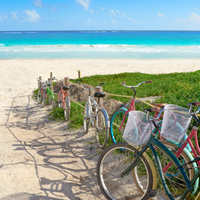
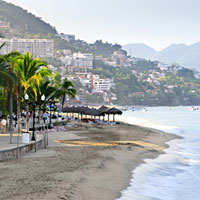
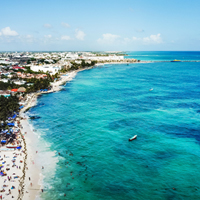
Coastal BeachesMexico is a large North American country located south of the United States, bordered by the Pacific Ocean and Caribbean Sea. It is the world's most populous Spanish-speaking nation with a rich blend of indigenous and Spanish colonial heritage. The economy is diverse, spanning manufacturing, agriculture, tourism, and services, making it one of Latin America's largest economies. Mexico offers vibrant culture, world-class cuisine, ancient archaeological sites, and modern cities like Mexico City and Guadalajara. The country has a young, dynamic population and a growing expatriate community. Life in Mexico combines affordability with cultural richness, though experiences vary significantly between urban centers and rural areas.
 AGS Worldwide Movers
Get Quote
Relocating abroad soon? Make your move with AGS! AGS Worldwide Movers is a leader in the international moving industry. Our experience and expertise allows us to guarantee our clients the best quality moving services.
AGS Worldwide MoversRelocating abroad soon? Make your move with AGS! AGS Worldwide Movers is a leader in the international moving industry. Our experience and expertise allows us to guarantee our clients the best quality moving services.
Get Quote


Podcasts

Episode 5: The Dream Pro of San Miguel de Allende, Mexico



Episode 6: Jake Barber - Expat Finance Expert and Lifelong Expat

Episode 8: Jake Barber - The Expat Finance Expert Returns
Living in Mexico
Best Places to Live in Mexico
Visa & Residency
Obtaining a residency in Mexico is a process that can be straightforward if the applicant meets the necessary requirements and follows the steps diligently. There are primarily two types of residency visas: the Temporary Resident Visa and the Permanent Resident Visa. The Temporary Resident Visa is suitable for those who wish to stay in Mexico for more than six months but not longer than four years. It is popular among expats who are not yet ready to commit to permanent residency. To apply for this visa, one must visit a Mexican consulate abroad. The applicant will need to provide proof of sufficient economic means to support themselves, or they must show that they are employed or have a job offer in Mexico. The Permanent Resident Visa is for those who intend to settle in Mexico indefinitely and is often sought by retirees or those with family in Mexico. To qualify, applicants must meet stricter financial requirements or have certain family connections with Mexican citizens or other permanent residents. The application process for the Permanent Resident Visa is similar to that of the Temporary Resident Visa, but with additional documentation required to prove the applicant's long-term economic solvency or family ties. The difficulty of the process can vary based on individual circumstances, such as the applicant's nationality, financial situation, and the specific requirements of the Mexican consulate where the application is submitted. Generally, the process is considered average in terms of difficulty when compared to other countries. It is important to note that all documents must be translated into Spanish and apostilled or legalized, depending on the country of origin. Once the visa is approved, the applicant will receive a visa sticker in their passport, which must be exchanged for a resident card within 30 days of entering Mexico at the nearest office (Instituto Nacional de Migración). The process involves submitting various forms, taking photographs, and possibly attending an interview. Overall, while there are several steps to follow, the process is well-documented and can be navigated with patience and careful preparation.
Healthcare in Mexico
The healthcare system in Mexico is a mix of public and private services. The public healthcare system is made up of institutions like the Mexican Social Security Institute (IMSS) and the Institute for Social Security and Services for State Workers (ISSSTE), which provide services to employed citizens and their families. There is also Seguro Popular, a government-subsidized program aimed at providing healthcare to those not covered by IMSS or ISSSTE. The quality of public healthcare can vary significantly, with urban areas typically having better facilities and more resources than rural areas. Private healthcare in Mexico is known for its high quality and is often used by those who can afford it or have private insurance, including expats and digital nomads. Private hospitals and clinics are generally well-equipped and staffed with English-speaking doctors. The cost of private healthcare is lower compared to that in the United States, but it can still be expensive for locals. Expats and digital nomads can gain access to public healthcare by contributing to the social security system through formal employment or by directly purchasing health insurance plans from providers like IMSS. However, many expats and digital nomads opt for private health insurance to ensure access to private hospitals and clinics.
Cost of Living
Mexico offers relatively low cost of living compared to North America and Europe, though prices vary by region. Rent in major cities like Mexico City ranges from $400–$800 USD monthly for one-bedroom apartments in central areas, while outside city centers it can be $250–$500. Property purchases range from $1,500–$3,500 USD per square meter in popular expat areas. Daily expenses including food, utilities, and transportation are significantly cheaper than in the US or Canada, making Mexico attractive for budget-conscious relocators.
Weather
Mexico's weather varies dramatically by region and altitude due to its diverse geography. Coastal areas experience tropical conditions with warm temperatures year-round, while highland regions have cooler, more temperate climates. The rainy season typically runs from May to October, with the driest months from November to April. Hurricane season affects coastal areas from June through November, particularly on the Atlantic and Pacific coasts.
Educational System in Mexico
The educational system in Mexico is overseen by the Secretariat of Public Education. It is mandatory for children to attend school from the age of four to fifteen, which includes three levels: pre-school (preescolar), primary (primaria), and lower secondary (secundaria). Pre-school, for children aged 4-6, is the first stage and focuses on physical, emotional, social, and cognitive development. Primary education lasts for six years, typically for children aged 6-12, and covers basic education. Following this, lower secondary education, or middle school, lasts for three years, usually for students aged 12-15. Upper secondary education (educación media superior), which is not mandatory, includes diverse options such as general upper secondary school (preparatoria), technical professional education (profesional técnico), and technological baccalaureate (bachillerato tecnológico). Students typically start this level at the age of 15 and complete it by 18. The quality of education in Mexico varies significantly across regions and socioeconomic levels, with private schools generally offering higher quality education but at a higher cost. Public education is free, but schools may have limited resources. The academic year runs from September to June, and the curriculum includes Spanish, mathematics, natural sciences, history, arts, and physical education.
Living in Mexico
Healthcare in Mexico
Best Places to Live in Mexico
Moving to Mexico