South Africa
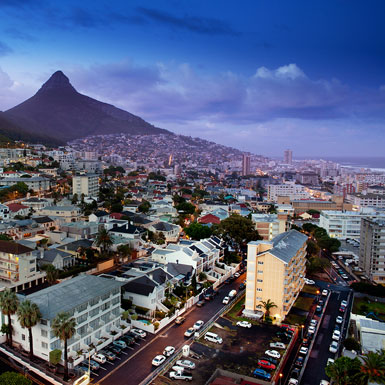
Coastal BeachesSouth Africa is a large country located at the southern tip of Africa, bordered by the Atlantic and Indian Oceans. It is known for its diverse landscapes, including savannas, mountains, and coastal regions, as well as its rich cultural heritage shaped by multiple ethnic groups and a complex history. The country has a mixed economy with significant natural resources, including gold, diamonds, and platinum, alongside growing sectors in technology and finance. South Africa offers a vibrant lifestyle with world-class cities like Cape Town and Johannesburg, excellent outdoor recreation opportunities, and a relatively developed infrastructure compared to other African nations. The country is home to iconic wildlife and national parks, most notably Kruger National Park. Life in South Africa combines modern urban amenities with access to natural beauty, though visitors and residents should be aware of safety considerations in certain areas.
 PassportCard Expat Health Insurance
Get Quote
Never worry about paying your medical bills out of pocket again. The innovative PassportCard allows for a stress-free experience for all expat families, remote travelers, and workers. With a 24/7 customer service and an outstanding customer base of over 2 Million clients, it will feel like medical care at home. Get up to 10% off on your policy now.
PassportCard Expat Health InsuranceNever worry about paying your medical bills out of pocket again. The innovative PassportCard allows for a stress-free experience for all expat families, remote travelers, and workers. With a 24/7 customer service and an outstanding customer base of over 2 Million clients, it will feel like medical care at home. Get up to 10% off on your policy now.
Get Quote
Podcasts
Episode 6: Jake Barber - Expat Finance Expert and Lifelong Expat



Episode 8: Jake Barber - The Expat Finance Expert Returns
Living in South Africa
Best Places to Live in South Africa
Visa & Residency
Obtaining a residency in South Africa involves several steps and the process can be quite bureaucratic, but it is manageable with the right preparation. The most common types of visas for expats seeking residency are the Critical Skills Visa, General Work Visa, and Intra-Company Transfer Visa. The Critical Skills Visa is aimed at individuals who possess skills or qualifications deemed critical by the South African government. Applicants must provide proof of their qualifications and an evaluation by the South African Qualifications Authority. This visa can lead to permanent residency if certain conditions are met. The General Work Visa requires a job offer from a South African employer and the employer must prove that the position could not be filled by a South African citizen. The Intra-Company Transfer Visa is for employees who are being transferred by their current employer to a branch, affiliate, or subsidiary in South Africa. The process for each visa involves submitting a completed application form along with various supporting documents, such as a passport valid for at least 30 days after the intended return date, a yellow fever vaccination certificate if the applicant traveled through or was in a yellow fever endemic area, proof of financial means, and a medical and radiological report. The application is submitted to a South African embassy, consulate, or Department of Home Affairs office. The processing time can vary greatly, from several weeks to several months. It is recommended to start the application process well in advance of the intended move date. The difficulty of the process can depend on the type of visa and the individual's circumstances, but generally, it is considered to have an average level of difficulty compared to other countries.
Healthcare in South Africa
South Africa has a two-tiered system comprising both a public and a private sector. The public healthcare system serves the majority of the population and is funded by the government, but it often faces challenges such as underfunding, staff shortages, and long waiting times. In contrast, the private healthcare sector offers higher quality services with better facilities and shorter waiting times, but it is also much more expensive and accessible primarily to middle and upper-class citizens or those with adequate health insurance. The cost of private healthcare is high compared to public healthcare, which is subsidized and more affordable, but still may be out of reach for many South Africans. Expats and digital nomads can access public healthcare services, but they are typically required to have health insurance or pay out of pocket for private care to ensure a higher standard of treatment. It is advisable for expats and digital nomads to have comprehensive health insurance that covers medical costs in private hospitals.
Cost of Living
South Africa offers relatively affordable living compared to developed Western nations, though costs vary significantly between cities and neighborhoods. Housing in major cities like Cape Town and Johannesburg ranges from moderate to expensive, with property prices and rental costs higher in desirable areas; however, affordable options exist in suburban and township areas. Daily expenses including groceries, dining, and transportation are generally low to moderate, making South Africa an attractive destination for expatriates seeking good value for money.
Weather
South Africa experiences a subtropical to temperate climate with significant regional variation. The country has a summer season from November to March, characterized by warm to hot temperatures and occasional rainfall, particularly in coastal and eastern regions. Winter months from June to August are mild to cool, with minimal rainfall in most areas except the southwestern Cape, which receives winter precipitation. Seasonal variation is moderate overall, with coastal areas experiencing more temperate conditions year-round compared to inland regions.
Educational System in South Africa
The educational system in South Africa is structured to provide learning opportunities from early childhood development to tertiary education. The system is divided into three levels: General Education and Training (GET), Further Education and Training (FET), and Higher Education and Training (HET). Children typically start school at age 5 or 6 with Grade R, which is the reception year before Grade 1. Primary school runs from Grade 1 to Grade 7, and secondary school from Grade 8 to Grade 12. The school year in South Africa runs from January to December, with public schools following a four-term calendar. Students complete their National Senior Certificate (NSC) at the end of Grade 12, which is required for entrance into tertiary education. The quality of education can vary significantly between public schools, with those in affluent areas generally offering a higher standard of education compared to under-resourced schools in less affluent areas. There are also many private schools that offer different curricula, including the International Baccalaureate (IB) and the British GCSE and A-levels. South Africa also has a number of special needs schools catering to children with disabilities. The government has been working to improve the educational system, but challenges such as resource allocation, teacher training, and infrastructure development remain.
Living in South Africa
Healthcare in South Africa
Best Places to Live in South Africa
Moving to South Africa