Bern
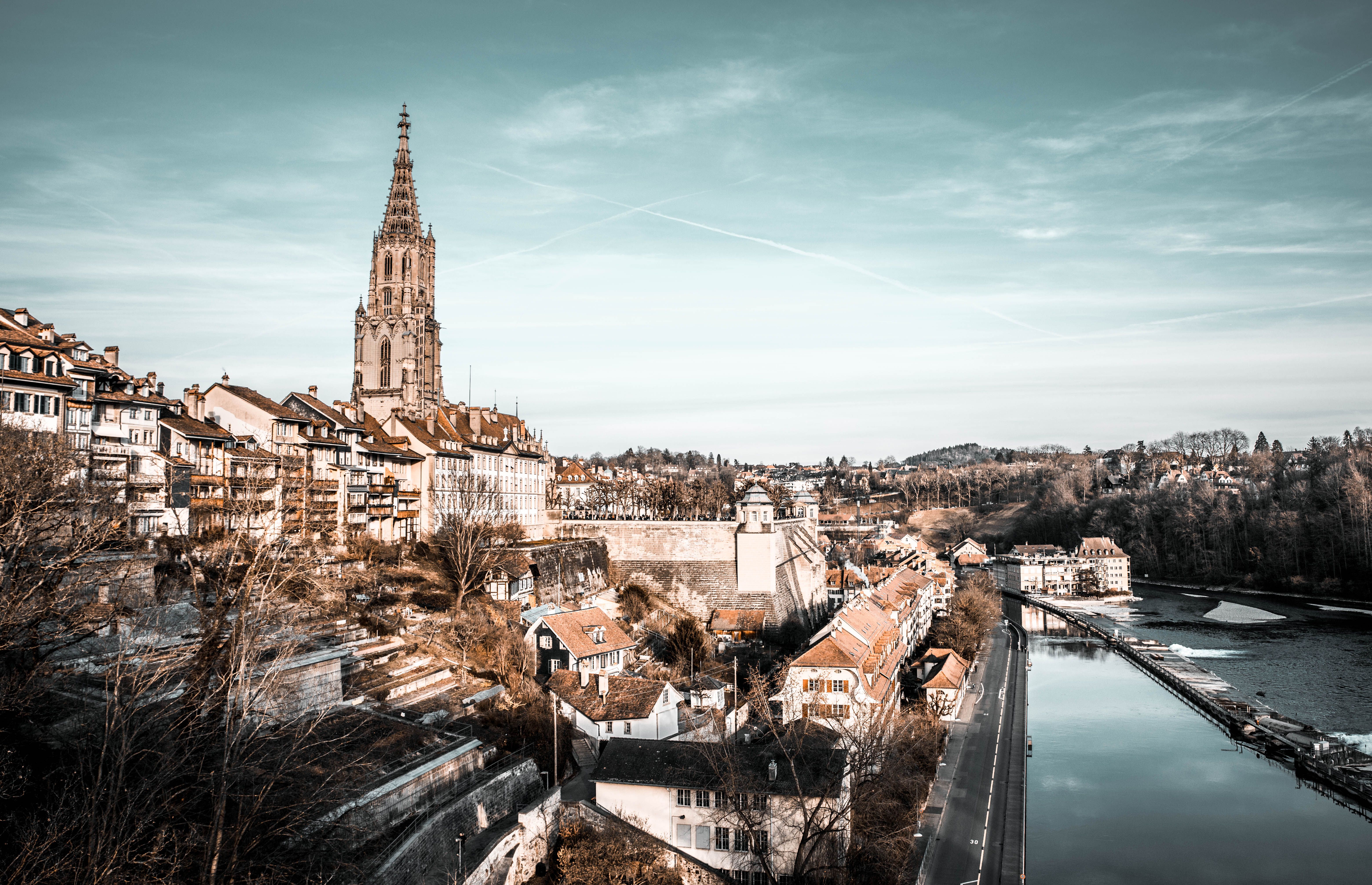
Urban RiverfrontBern became Switzerland's federal capital in 1848, though its origins trace back to the 12th century when Duke Berchtold V founded the city on a dramatic bend of the Aare River. The medieval Old Town, a UNESCO World Heritage site, remains largely intact—arcaded streets, sandstone buildings, and the iconic Zytglogge clock tower create an atmosphere that feels suspended between centuries. Today Bern functions as the political heart of Switzerland while maintaining the character of a mid-sized European city rather than a sprawling capital. The Aare wraps around the city in a horseshoe, and locals swim in its cold, clear waters during summer. Beyond government offices and parliament, Bern hosts world-class museums, a thriving cultural scene, and a population that balances formality with genuine warmth. The surrounding region transitions quickly from urban streets to forested hills and Alpine foothills, making day trips to mountain villages and hiking trails accessible within an hour.
 SJB Global
Connect
SJB-Global is a top-rated financial advisory firm specializing in expat financial advice worldwide, offering retirement planning & tax-efficient solutions with a regressive fee model. Our clients benefit from their country’s most favorable tax environment by utilizing the efficient investment vehicles we offer. Our commitment to quality service is reflected in our stellar reviews, with over 300 testimonials boasting 95% five-star ratings.
Click connect to have our partner contact you via e-mail and/or phone.
SJB GlobalSJB-Global is a top-rated financial advisory firm specializing in expat financial advice worldwide, offering retirement planning & tax-efficient solutions with a regressive fee model. Our clients benefit from their country’s most favorable tax environment by utilizing the efficient investment vehicles we offer. Our commitment to quality service is reflected in our stellar reviews, with over 300 testimonials boasting 95% five-star ratings.
Connect
Click connect to have our partner contact you via e-mail and/or phone.
Visa & Residency
Obtaining a residency in Switzerland involves a structured process that can vary depending on the applicant's nationality, reasons for immigration, and the canton in which they intend to reside. The most common types of residency permits are the L Permit (short-term residence permit) and the B Permit (initial or temporary residence permit). The L Permit is suitable for expatriates planning to stay in Switzerland for up to one year. It is often granted to those with a fixed-term employment contract. The B Permit is for those intending to stay longer than a year and is usually tied to an indefinite employment contract or family reunification. Both permits require a valid employment contract or proof of financial means to support oneself. The process typically starts with securing a job or demonstrating the financial means to live in Switzerland. The employer or the individual must then apply to the cantonal migration office for the appropriate permit. This involves submitting various documents, including a valid passport, proof of address, employment contract, and sometimes a health insurance policy and a clean criminal record. For non-EU/EFTA nationals, the process can be more challenging due to stricter regulations and quotas. They must often secure a job with a Swiss employer who can prove that the position could not be filled by a local or EU/EFTA citizen. Once the application is submitted, the cantonal authorities review it, which can take several weeks or months. If approved, the applicant will receive a residence permit, allowing them to live and work in Switzerland. The permit also dictates the holder's rights regarding travel, change of employment, and family reunification. The difficulty of the process can vary. EU/EFTA citizens generally find it easier due to bilateral agreements that facilitate the movement of people, while non-EU/EFTA citizens may face a more complex process. It is essential to understand the specific requirements of the canton where one plans to reside, as regulations can differ across the country.
Cost of Living
Living in Bern requires a substantial budget. Rents for apartments in the Old Town or central neighborhoods rank among Switzerland's highest, and property purchase prices reflect the city's status and desirability. Groceries, dining, and services all carry Swiss price tags—expect to pay premium rates for everyday expenses. However, salaries in Bern tend to be competitive, particularly for government and professional sector work.
Weather
Bern experiences a temperate continental climate with cold, snowy winters and mild summers; precipitation is distributed throughout the year.
Healthcare in Bern
Inselspital, the University Hospital of Bern, provides comprehensive acute care and specialized services as the region's primary medical center. Several smaller clinics and private practices operate throughout the city, and Switzerland's mandatory health insurance system ensures broad coverage. Emergency departments maintain 24/7 availability with multilingual staff.
Schools in Bern
Bern has several international options including the International School of Bern (ISB), which offers the International Baccalaureate curriculum from primary through secondary levels. The city also hosts smaller international programs within Swiss schools that follow bilingual or multilingual frameworks.
Multiple public and private schools in Bern operate bilingual German-English or German-French programs, particularly at the secondary level. These schools integrate Swiss education standards with dual-language instruction, preparing students for both Swiss and international university systems.
Restaurants in Bern
Living in Bern