Hoi An
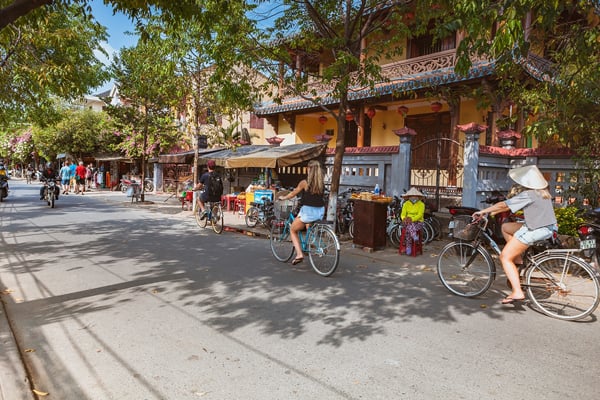
Country Coastal Beaches RiverfrontHoi An draws expats, digital nomads, and travelers seeking a slower pace in Southeast Asia—people drawn by affordable living, cultural immersion, and a genuinely walkable town center. This ancient port city on Vietnam's central coast retains the architecture and street layout of its 15th-century heyday, when Chinese and Japanese merchants built wooden shophouses and temples that still line the narrow lanes. The town's lantern-lit Old Quarter feels suspended in time, though it's very much alive with cafes, tailors, restaurants, and guesthouses. Beyond the historic core, Hoi An has expanded into surrounding neighborhoods where locals live ordinary lives—markets, schools, motorbike repair shops. The Thu Bon River runs through town, and beaches lie just a few kilometers away. What keeps people here is the combination: low cost, genuine community, excellent food, and the absence of the frenetic energy of Hanoi or Ho Chi Minh City. It's become a hub for remote workers and retirees from Europe and North America, though Vietnamese families and business owners remain the backbone of daily life.
 BlueCross BlueShield Global Solutions
Get Quote
BlueCross BlueShield Global Solutions (BCBS) offers global health plans for international assignments or trips lasting 6 months or longer. With access to over 1.7M medical providers in 190 countries around the world, BCBS provides members with solutions and industry-leading digital services - ensuring top-quality coverage to people who live, work, study and travel internationally.
BlueCross BlueShield Global SolutionsBlueCross BlueShield Global Solutions (BCBS) offers global health plans for international assignments or trips lasting 6 months or longer. With access to over 1.7M medical providers in 190 countries around the world, BCBS provides members with solutions and industry-leading digital services - ensuring top-quality coverage to people who live, work, study and travel internationally.
Get Quote
Visa & Residency
Obtaining a residency in Vietnam involves several steps and can vary depending on the type of visa. For expatriates looking to reside in Vietnam, the most common types of visas are the Temporary Residence Card (TRC) and the Business Visa (DN). The TRC can be valid for up to three years and is suitable for those who are employed or have family ties in Vietnam. To apply for a TRC, expats must first have a job with a Vietnamese company or be married to a Vietnamese citizen. The sponsoring entity or individual must provide necessary documents, such as a business license or marriage certificate, along with the applicant's passport and visa application form. The Business Visa (DN) is popular among expats and digital nomads who may not qualify for a TRC. It is typically issued for three to twelve months and can be extended. To obtain a DN visa, applicants must have a sponsor, which can be a Vietnamese company inviting them for business purposes. The process involves submitting a visa application form, a sponsorship letter from the company, and a passport valid for at least six months. Digital nomads often opt for the DN visa due to its flexibility and the relative ease of finding a sponsoring company. However, it's important to note that while the DN visa allows for a long-term stay, it does not grant the holder the right to work in Vietnam. Those wishing to work must obtain a work permit in addition to the visa. The process of obtaining a residency visa in Vietnam is considered average in terms of difficulty. It requires careful preparation of documents, an understanding of the legal requirements, and sometimes the assistance of a legal or expert. The Vietnamese government has been known to change visa policies, so it's crucial for expats to stay informed about the current regulations. Overall, with the correct documentation and a valid sponsor, expats can navigate the visa process successfully.
Cost of Living
Living costs in Hoi An remain remarkably affordable compared to Western countries or even major Vietnamese cities. A meal at a local restaurant costs a few dollars, rent for a modest apartment runs $200–400 monthly, and everyday goods are inexpensive. This affordability has made the town attractive to remote workers and retirees, though prices have crept upward in recent years as tourism and expat presence have grown.
Weather
Hoi An has a tropical climate with a monsoon season from September to December bringing heavy rain and occasional flooding, while the dry season from January to August offers warm, sunny weather ideal for exploring.
Healthcare in Hoi An
Hoi An Central Hospital provides basic emergency care and outpatient services, though serious conditions typically require transfer to Da Nang (30 km away) or Ho Chi Minh City. International clinics operate in the town center offering routine care, vaccinations, and minor procedures; many cater to expats and tourists. Dental and specialist services are limited locally.
Schools in Hoi An
Hoi An International School offers an IB curriculum from primary through secondary levels, drawing expat families and affluent Vietnamese households. Smaller options like Hoi An Academy provide English-medium instruction with Vietnamese language integration, though enrollment remains limited compared to larger cities.
Several local schools operate bilingual Vietnamese-English programs, including Hoi An Bilingual School, which emphasizes dual-language proficiency from early grades. These programs typically serve both local and expat communities but lack the depth of curriculum found in dedicated international institutions.
Restaurants in Hoi An
Living in Hoi An
Moving to Hoi An
Healthcare in Hoi An