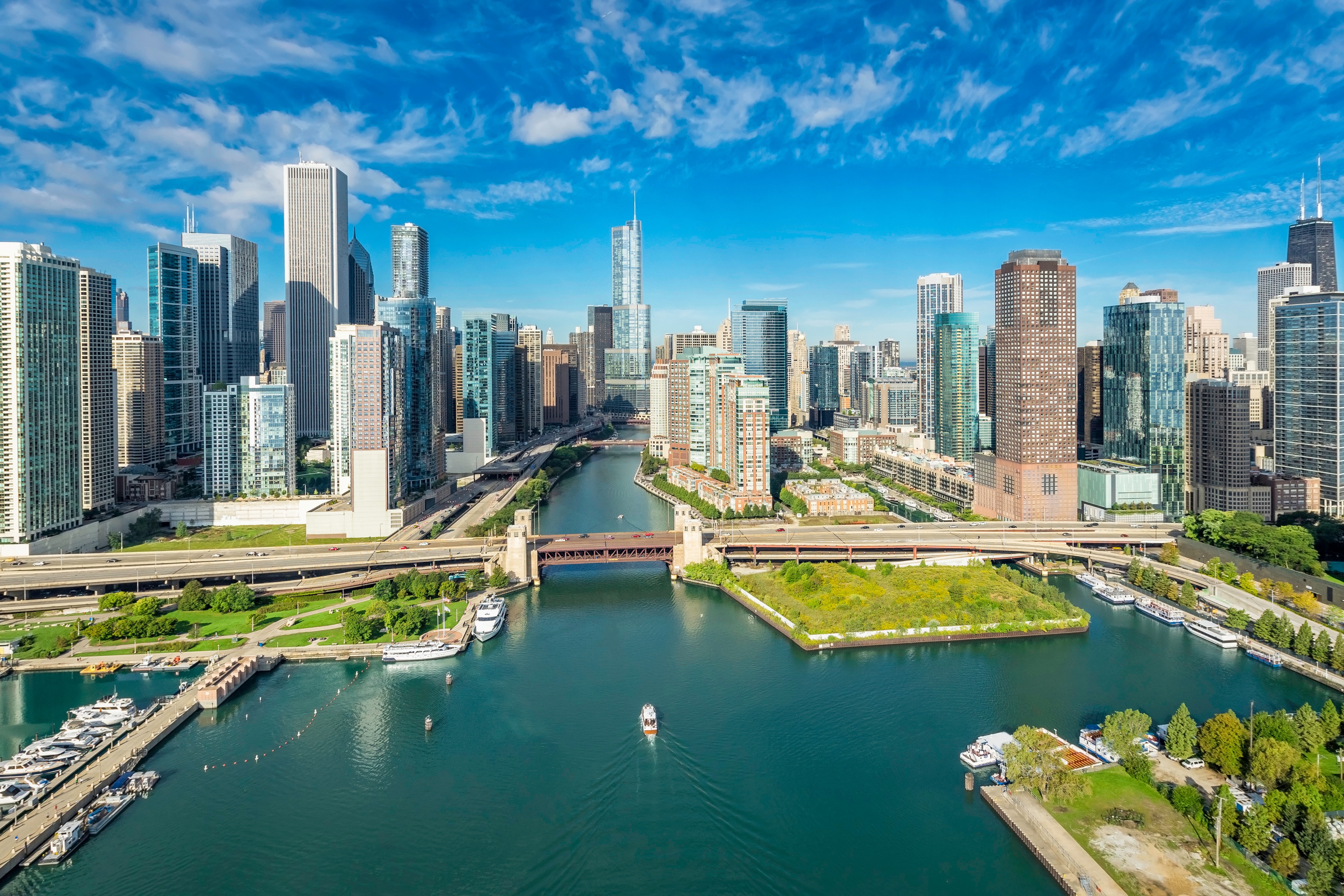
Illinois
Illinois is a Midwestern state in the heart of the United States, dominated by the Chicago metropolitan area in the north and vast agricultural plains throughout the rest of the state. The state is a major economic and cultural hub, home to Fortune 500 companies, world-class museums, and a diverse population. Chicago is known for its iconic architecture, deep-dish pizza, and vibrant neighborhoods, while central and southern Illinois offer a more rural, small-town character. The state has a strong economy spanning finance, manufacturing, agriculture, and technology sectors. Illinois attracts people seeking urban sophistication, cultural amenities, and access to the Great Lakes region, though winters can be harsh and the state faces fiscal challenges.
Podcasts

Episode 6: Jake Barber - Expat Finance Expert and Lifelong Expat



Episode 8: Jake Barber - The Expat Finance Expert Returns
Best Places to Live in Illinois
Cost of Living
Illinois offers moderate cost of living compared to other major U.S. states, though prices vary significantly between Chicago and rural areas. In Chicago, median home prices range from $300,000–$500,000+ depending on neighborhood, while rental apartments average $1,200–$1,800 monthly for one-bedroom units in urban areas. Outside Chicago, housing is considerably more affordable, with homes often available for $150,000–$250,000. Daily expenses like groceries and utilities are generally reasonable, though Chicago's urban amenities command premium pricing.
Weather
Illinois experiences a continental climate with four distinct seasons and significant temperature variation. Winters are cold and snowy, with temperatures often dropping below freezing from December through February, while summers are warm and humid with temperatures frequently reaching the 80s–90s°F (27–32°C). Spring and fall are mild transitional seasons. Annual precipitation is moderate, with occasional severe weather including thunderstorms and tornadoes, particularly in spring.
Educational System in Illinois
The educational system in Illinois is structured to provide a range of learning opportunities for students from early childhood through secondary education. Public education in Illinois is mandatory for children ages 6 to 17, with kindergarten being optional. The system is divided into three main levels: elementary school (grades K-5), middle school or junior high (grades 6-8), and high school (grades 9-12). Children typically start kindergarten at the age of 5 and graduate from high school at around 18 years old. The state follows a standard American curriculum that includes English language arts, mathematics, sciences, social studies, physical education, and, in many schools, foreign languages and arts. Illinois is known for having a mix of urban, suburban, and rural schools, with varying resources and extracurricular activities available to students. The quality of education can vary significantly depending on the district and the funding it receives. Illinois also offers charter schools, magnet schools, and private schools as alternatives to the public education system. Additionally, the state supports special education services and programs for gifted students to cater to diverse educational needs. Parents moving to Illinois from another country can expect a supportive environment for their children's education, with a range of public and private options to choose from