
Algeria
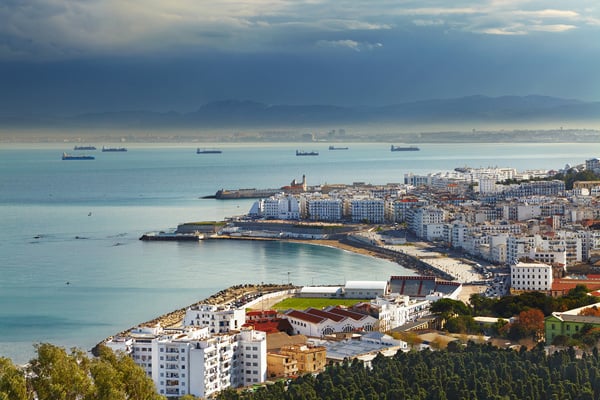
Coastal BeachesAlgeria is the largest country in Africa by area, located in North Africa along the Mediterranean Sea with the Sahara Desert covering much of its interior. The country has a rich cultural heritage blending Arab, Berber, and French influences, reflecting its diverse history and colonial past. The economy is primarily driven by oil and natural gas exports, though the government is working to diversify sectors. Algiers, the capital, is a vibrant coastal city, while inland regions offer dramatic desert landscapes and mountain terrain. Life in Algeria offers affordable living costs, warm hospitality, and access to both Mediterranean beaches and Saharan adventures, though infrastructure and services vary between urban and rural areas. The country is experiencing gradual modernization and development, with growing opportunities in various sectors.

SJB GlobalConnect
SJB-Global is a top-rated financial advisory firm specializing in expat financial advice worldwide, offering retirement planning & tax-efficient solutions with a regressive fee model. Our clients benefit from their country’s most favorable tax environment by utilizing the efficient investment vehicles we offer. Our commitment to quality service is reflected in our stellar reviews, with over 300 testimonials boasting 95% five-star ratings.
Click connect to have our partner contact you via e-mail and/or phone.
SJB GlobalSJB-Global is a top-rated financial advisory firm specializing in expat financial advice worldwide, offering retirement planning & tax-efficient solutions with a regressive fee model. Our clients benefit from their country’s most favorable tax environment by utilizing the efficient investment vehicles we offer. Our commitment to quality service is reflected in our stellar reviews, with over 300 testimonials boasting 95% five-star ratings.
Connect
Click connect to have our partner contact you via e-mail and/or phone.
Podcasts
Episode 8: Jake Barber - The Expat Finance Expert Returns
Episode 6: Jake Barber - Expat Finance Expert and Lifelong Expat
Living in Algeria
Visa & Residency
Obtaining a residency in Algeria involves several steps and can be somewhat challenging due to the bureaucratic processes. The most common types of residency visas for expats are the work visa and the family reunification visa. To apply for a work visa, an expat must first secure a job offer or a work contract from an Algerian employer. The employer must then obtain an authorization from the Ministry of Labor. The expat can then apply for a visa at the Algerian consulate in their home country, providing the necessary documents, including the work authorization, a passport valid for at least six months, application forms, photos, and a medical certificate. For family reunification, the process is similar, but the applicant must prove their family ties with an Algerian resident, such as a marriage certificate for a spouse or birth certificates for children. The process can be time-consuming and requires patience, as it involves multiple government agencies. The difficulty level is considered average, but it can vary based on individual circumstances and the efficiency of the Algerian bureaucracy at the time of application. It is important to note that all documents must be translated into Arabic or French and certified. Once in Algeria, expats must apply for a residency permit, which involves a separate application process and additional documentation. This permit must be renewed periodically. For digital nomads, Algeria does not offer a specific visa category. However, they may enter the country on a tourist visa or a temporary work visa if they intend to work remotely for a short period, usually up to 90 days. It is important for digital nomads to ensure they comply with Algerian laws regarding work and residency, as working on a tourist visa may not be legally permitted.
Healthcare in Algeria
The system in Algeria is a mix of public and private healthcare services. The public healthcare system is funded by the government and provides services to citizens at low or no cost. However, the quality of public healthcare can vary significantly, with urban areas typically having better facilities and more resources than rural areas. Private healthcare in Algeria offers higher quality services with more modern facilities and shorter waiting times, but at a higher cost. Expats and digital nomads can access public healthcare once they have a residence permit and are contributing to the social security system, although many opt for private health insurance to ensure access to private healthcare services.
Cost of Living
Algeria offers very affordable living costs compared to Western countries, with housing being particularly inexpensive outside major cities. Rental prices in Algiers range from $200-600 USD monthly for modest apartments, while property purchases average $1,500-3,000 USD per square meter in urban areas. Daily expenses including food, transportation, and utilities are low, making Algeria one of the most budget-friendly destinations in North Africa for expatriates.
Weather
Algeria experiences a Mediterranean climate along the coast with hot, dry summers and mild, wet winters, while inland and southern regions are dominated by the Sahara's extreme heat and aridity. Coastal areas see temperatures ranging from 10-28°C (50-82°F) annually, whereas desert regions can exceed 40°C (104°F) in summer. Rainfall is minimal throughout most of the country, concentrated in winter months along the coast, with the interior receiving very little precipitation. Seasonal variation is significant, with summer heat being intense and winter offering more temperate conditions in northern regions.
Educational System in Algeria
The educational system in Algeria is structured similarly to the French model, as Algeria was a French colony until 1962. Education in Algeria is mandatory and free for children between the ages of six and 16. The system is divided into three stages: primary education (enseignement primaire), middle school education (enseignement moyen), and secondary education (enseignement secondaire). Primary education lasts for five years, and upon completion, students receive a Certificate of Primary Education. Middle school also spans four years, culminating in the award of the Brevet d'Enseignement Moyen (BEM), which is necessary to enter secondary education. Secondary education lasts for three years, and students specialize in either general education or technical streams. At the end of this stage, students sit for the Baccalauréat exam, which determines their eligibility for higher education. The school year in Algeria typically starts in September and ends in June, with the main holidays in winter and spring, as well as an extended summer break. The quality of education varies, with urban schools generally better equipped and staffed than those in rural areas. The government has been working on improving the educational system by investing in infrastructure, teacher training, and curriculum development