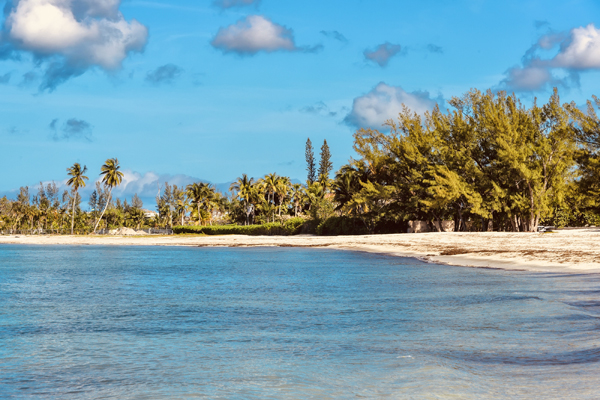
Nassau
Urban Coastal BeachesNassau, the capital of the Bahamas, draws retirees seeking year-round warmth, remote workers escaping colder climates, and families attracted to Caribbean living without the isolation of smaller islands. The city pulses with a mix of colonial architecture, modern development, and waterfront energy. Downtown Nassau centers on Bay Street, where colonial buildings house shops, restaurants, and financial offices reflecting the city's role as a regional hub. The harbor remains the city's lifeblood—ferries depart for the Out Islands, cruise ships anchor offshore, and fishing boats work the shallow banks. Residential neighborhoods spread across New Providence Island, from beachfront enclaves to inland communities. The city's rhythm blends Caribbean culture with international influences; you'll hear Bahamian Creole, English, and Spanish in markets and restaurants. Water defines daily life here—swimming, boating, and snorkeling are not weekend activities but part of the fabric. The island's interior holds mangrove forests and small lakes, though most visitors and residents orient toward the sea.
 BlueCross BlueShield Global Solutions
Get Quote
BlueCross BlueShield Global Solutions (BCBS) offers global health plans for international assignments or trips lasting 6 months or longer. With access to over 1.7M medical providers in 190 countries around the world, BCBS provides members with solutions and industry-leading digital services - ensuring top-quality coverage to people who live, work, study and travel internationally.
BlueCross BlueShield Global SolutionsBlueCross BlueShield Global Solutions (BCBS) offers global health plans for international assignments or trips lasting 6 months or longer. With access to over 1.7M medical providers in 190 countries around the world, BCBS provides members with solutions and industry-leading digital services - ensuring top-quality coverage to people who live, work, study and travel internationally.
Get Quote
Visa & Residency
The Bahamas offers several residency options for expatriates, including the Permanent Residence Permit and the Annual Residence Permit. The process of obtaining residency in the Bahamas can be considered average in terms of difficulty, but it does require the submission of various documents and adherence to the country's policies. To apply for a Permanent Residence Permit, expatriates must demonstrate financial independence and may be required to invest in property in the Bahamas. This type of permit is particularly popular among retirees and those who can afford to invest in the local real estate market. The investment threshold is usually quite high, and owning a residence in the Bahamas is a significant factor in the approval process. The Annual Residence Permit is another option, which is suitable for individuals who wish to reside in the Bahamas for a year at a time. This permit is popular among digital nomads and those who do not wish to make a permanent move to the country. To obtain this permit, applicants must provide evidence of financial self-sufficiency and may need to show a rental agreement or property ownership in the Bahamas. Both types of permits require applicants to submit a completed application form, a passport-sized photo, a valid passport, proof of financial independence (such as bank statements), and a medical certificate confirming good health. Additional documents, such as a police certificate, may also be required to prove the absence of a criminal record. The process involves submitting the application to the Department of Immigration and paying the relevant fees. The time frame for processing can vary, and it is advisable to apply well in advance of the intended move date. Once granted, the Permanent Residence Permit does not typically need to be renewed, while the Annual Residence Permit must be renewed each year. Overall, while the process is bureaucratic and requires various forms of documentation and potentially a significant financial investment, it is relatively straightforward for those who meet the criteria. Expatriates are encouraged to seek legal advice or assistance from a local immigration attorney to navigate the process effectively.
Cost of Living
Living in Nassau carries high costs, driven by the Bahamas' reliance on imports, tourism-based economy, and appeal to international residents. Housing—whether rental or purchase—commands premium prices, especially in waterfront and established neighborhoods. Groceries, utilities, and dining out cost significantly more than in the continental United States, though residents often offset this by shopping strategically and taking advantage of local markets for fresh produce and seafood.
Weather
Nassau has a tropical climate with warm temperatures year-round, averaging 75–85°F, and a hurricane season from June through November that brings afternoon thunderstorms and occasional severe weather.
Healthcare in Nassau
Princess Margaret Hospital, the primary public facility, provides emergency and general care but operates with capacity constraints and aging infrastructure. Private alternatives include Doctors Hospital and Lyford Cay Hospital, which offer modern equipment and shorter wait times for those with insurance or ability to pay out-of-pocket. Serious cases often require medical evacuation to Miami.
Schools in Nassau
Nassau has several international schools including Lyford Cay International School (IB curriculum), St. Andrew's School (British-influenced), and Nassau Christian Academy. Most follow either IB or American curricula and serve expat families alongside Bahamian students.
Bilingual education options exist but are limited compared to international schools. Some private institutions offer Spanish-English or French-English instruction, though enrollment and program depth vary by school.
Restaurants in Nassau
Living in Nassau