Dordogne
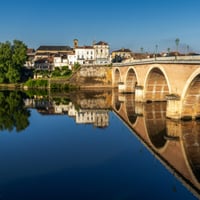
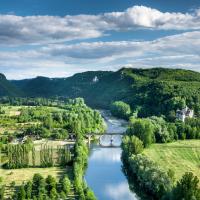
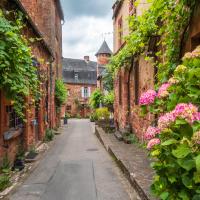
Country RiverfrontDordogne is a region in southwestern France that has captivated visitors for centuries with its limestone cliffs, medieval villages, and prehistoric heritage. The Dordogne River winds through a landscape dotted with châteaux, some perched dramatically on hillsides, others reflected in the water below. This corner of Aquitaine became a refuge for artists and writers in the 20th century, drawn by its combination of natural beauty and cultural depth. Today it remains a destination for those seeking authentic French countryside—not the manicured gardens of the Loire Valley, but something wilder and more textured. The region is famous for its cave paintings at sites like Les Eyzies, evidence of human habitation stretching back 40,000 years. Villages such as Sarlat-la-Canéda preserve Renaissance architecture in their narrow streets and golden-stone buildings. The local cuisine emphasizes duck, walnuts, and truffles, reflecting both the agricultural traditions and the forager's mindset of the region. Outdoor activities range from canoeing the river to hiking through forests and exploring underground grottos. The Dordogne appeals to travelers seeking history, natural landscapes, and a slower pace of life.
Podcasts

Episode 2: Finding the Good Life in France


 BlueCross BlueShield Global Solutions
Get Quote
BlueCross BlueShield Global Solutions (BCBS) offers global health plans for international assignments or trips lasting 6 months or longer. With access to over 1.7M medical providers in 190 countries around the world, BCBS provides members with solutions and industry-leading digital services - ensuring top-quality coverage to people who live, work, study and travel internationally.
BlueCross BlueShield Global SolutionsBlueCross BlueShield Global Solutions (BCBS) offers global health plans for international assignments or trips lasting 6 months or longer. With access to over 1.7M medical providers in 190 countries around the world, BCBS provides members with solutions and industry-leading digital services - ensuring top-quality coverage to people who live, work, study and travel internationally.
Get Quote
Visa & Residency
Obtaining a residency in France involves several steps and can vary in complexity depending on the type of visa applied for. The Talent Passport is a popular choice for highly skilled expats, which is valid for four years and renewable. It is designed for various categories of professionals including researchers, artists, and business founders. Another common option is the Long-stay visa equivalent to a residence permit (VLS-TS), which allows expats to live in France for up to a year without the need for a separate residence permit. Upon arrival in France, holders of this visa must validate it within three months. For digital nomads, the Long-stay visa for visitors is a suitable option. This visa does not permit employment in France but allows individuals to reside in the country for up to a year. Applicants must prove they have sufficient financial means, health insurance, and accommodation. The process generally starts with an application submitted to the French consulate or embassy in the applicant's home country. Required documentation typically includes a passport, application forms, photos, proof of financial means, health insurance, and a letter explaining the purpose of the stay. Some visas may require additional documents such as a job offer, proof of professional skills, or a business plan. Once the initial visa is granted and the individual arrives in France, they may need to undergo a medical examination and apply for a residence permit (carte de séjour) if planning to stay longer than the visa's validity. The difficulty of the process can vary, but France has made efforts to streamline visa applications for skilled professionals and entrepreneurs. However, navigating the French bureaucracy can still be challenging, and proficiency in French is often helpful. It is advisable to start the application process well in advance of the intended move date and to consult the official French visa website or a professional for the most current information and guidance.


Cost of Living
Living in Dordogne costs considerably less than major French cities or coastal regions, making it attractive to retirees and remote workers seeking rural France without urban price tags. Property values and rental costs remain reasonable compared to Paris or the Côte d'Azur, though popular villages have seen gradual increases. Local markets, regional wines, and agricultural products keep food expenses down for those who shop locally rather than relying on tourist-oriented establishments.
Weather
The Dordogne experiences a temperate oceanic climate with mild winters and warm summers, though rainfall is fairly distributed throughout the year.
Healthcare in Dordogne
Périgueux hosts the region's primary hospital, Centre Hospitalier Universitaire, offering general medicine, surgery, and emergency services. Smaller towns maintain local clinics and medical centers, though serious cases typically route to Périgueux or Bordeaux. English-speaking medical staff availability varies outside major facilities.
Restaurants in Dordogne
Living in Dordogne
Moving to Dordogne
Healthcare in Dordogne