


Rouen
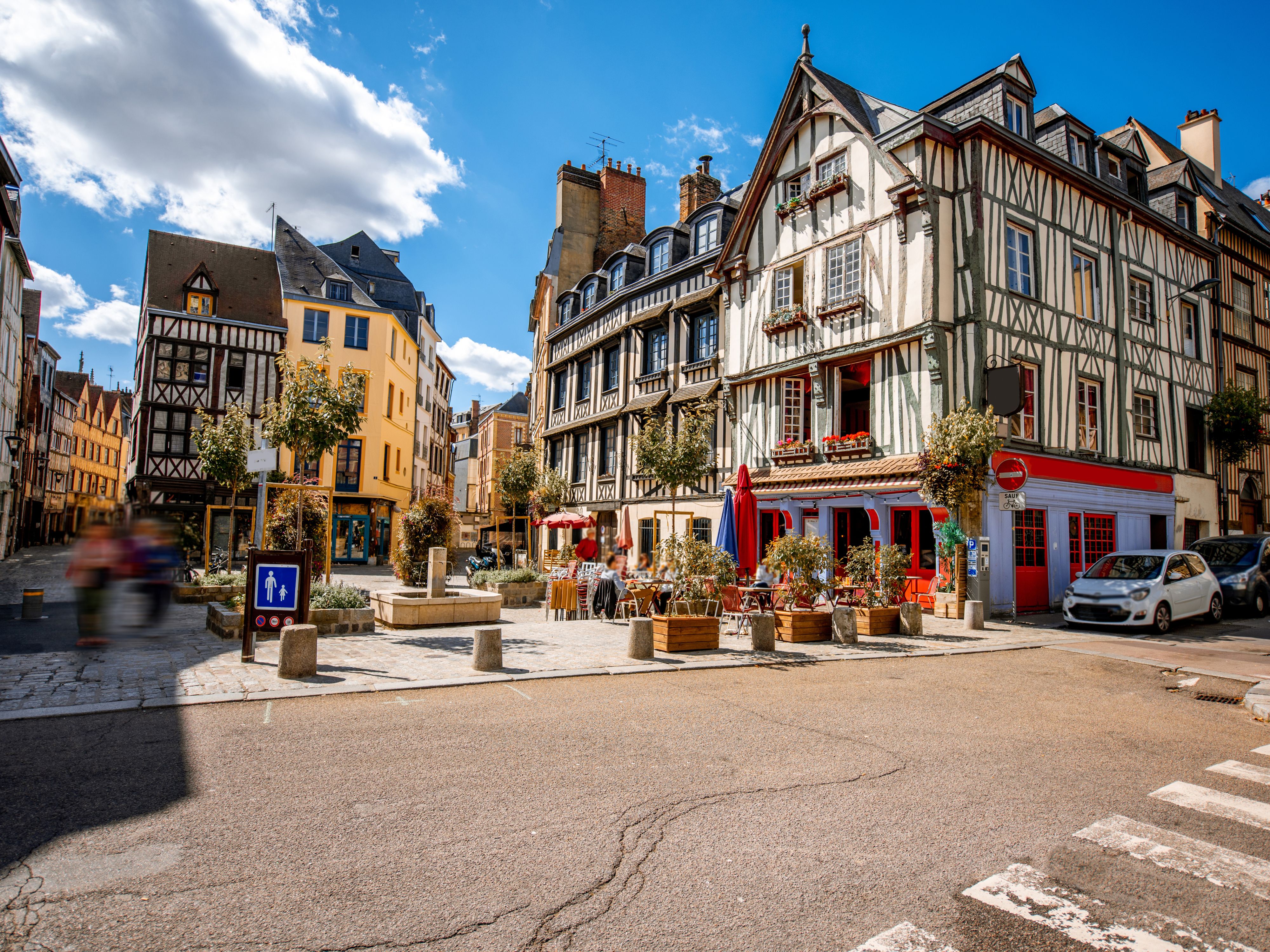
Urban RiverfrontRouen pulses with the rhythm of a working medieval city—not a museum piece, but a place where people actually live, work, and move through centuries-old streets on their way somewhere. The Seine curves through it, and the city rises in layers: Gothic spires puncture the skyline, half-timbered houses lean companionably against each other in the old quarter, and modern commerce hums along the riverbanks. Walking here feels like moving through different centuries at once. The cathedral dominates everything—Monet painted it dozens of times, obsessed with how light changed it—but what strikes you more is the everyday texture: the cafés where locals nurse coffee for hours, the markets that have operated in the same squares for generations, the narrow passages where you stumble onto sudden courtyards. Rouen is Normandy's heart, a port city that has absorbed centuries of trade, invasion, and reinvention. Joan of Arc was tried and executed here in 1431, a weight the city carries visibly. Today it balances serious history with genuine livability—it's a regional hub for Normandy, a university town, an industrial and commercial center. The waterfront has been revitalized in recent years, drawing people to walk and linger. This is a city that works, that breathes, that doesn't perform itself for tourists.
Keep reading. It is free.
Sign in to read the rest of this guide.