Guatemala
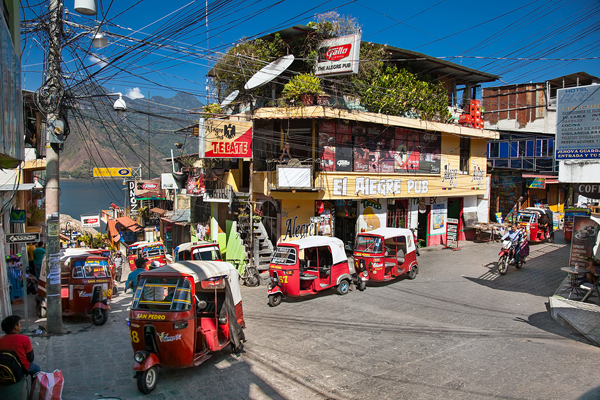
Coastal BeachesGuatemala is a Central American country located between Mexico and Honduras, known for its diverse landscapes ranging from Caribbean and Pacific coastlines to highland mountain ranges. The country has a rich Mayan cultural heritage that remains deeply embedded in its society, with indigenous traditions, languages, and customs still widely practiced. Guatemala's economy is primarily based on agriculture, tourism, and remittances, with coffee, cardamom, and bananas being major exports. The country offers a relatively low cost of living, vibrant local markets, colonial architecture in cities like Antigua, and access to natural attractions including volcanoes and Lake Atitlán. Life in Guatemala blends modern urban centers with traditional indigenous communities, offering expats a unique cultural experience. The country has been increasingly popular with digital nomads and retirees seeking affordable living with rich cultural immersion.
 PassportCard Expat Health Insurance
Get Quote
Never worry about paying your medical bills out of pocket again. The innovative PassportCard allows for a stress-free experience for all expat families, remote travelers, and workers. With a 24/7 customer service and an outstanding customer base of over 2 Million clients, it will feel like medical care at home. Get up to 10% off on your policy now.
PassportCard Expat Health InsuranceNever worry about paying your medical bills out of pocket again. The innovative PassportCard allows for a stress-free experience for all expat families, remote travelers, and workers. With a 24/7 customer service and an outstanding customer base of over 2 Million clients, it will feel like medical care at home. Get up to 10% off on your policy now.
Get Quote
Podcasts

Episode 6: Jake Barber - Expat Finance Expert and Lifelong Expat



Episode 8: Jake Barber - The Expat Finance Expert Returns
Living in Guatemala
Best Places to Live in Guatemala
Visa & Residency
Obtaining a residency in Guatemala involves several steps and the process can be considered average in terms of difficulty compared to other countries. The most common types of residency visas are the Pensionado Visa and the Rentista Visa. The Pensionado Visa is designed for retirees who receive a pension from their home country. To qualify, applicants must prove they receive a monthly pension of at least $1,000 USD, which is transferred into a Guatemalan bank. The Rentista Visa is for individuals who can prove a permanent income of at least $2,500 USD per month from investments, property rentals, or other sources outside of Guatemala. The application process for these visas typically involves gathering a series of documents, such as a valid passport, police clearance from the applicant's home country, health certificate, proof of income, and sometimes a birth certificate or marriage certificate if applicable. These documents often need to be apostilled or authenticated by the applicant's home country and translated into Spanish. Applicants must then submit their paperwork to the Guatemalan authorities, either in Guatemala or at a Guatemalan consulate abroad. After submission, the review process can take several months. Once approved, the applicant will receive a temporary residency card, which is typically valid for one year and can be renewed annually. After several years of temporary residency, individuals may apply for permanent residency. Digital nomads often use the Tourist Visa, which allows them to stay in Guatemala for 90 days. This visa can be extended for an additional 90 days without leaving the country, but further extensions require the individual to leave Guatemala for at least 72 hours before returning. Overall, while the process is bureaucratic and requires various documents, it is manageable with proper preparation and, in some cases, the assistance of a local attorney or visa specialist. The Guatemalan government is generally open to expats who can financially support themselves and contribute to the local economy.
Healthcare in Guatemala
The healthcare system in Guatemala is a mix of public and private services. The public healthcare system is managed by the Ministry of Public Health and Social Assistance and is available to all citizens and residents, including expats and digital nomads who have legal residency status. However, the quality of public healthcare can vary significantly, with urban areas typically having better facilities and more resources than rural areas. Private healthcare in Guatemala is known for providing higher quality services with more modern facilities and shorter wait times, but it is also more expensive. Many expats and digital nomads opt for private healthcare and often purchase private health insurance to cover the costs. Access to public healthcare for expats and digital nomads usually requires participation in the national social security system, which involves making contributions through employment or voluntary enrollment.
Cost of Living
Guatemala offers one of the lowest costs of living in Central America, making it attractive for budget-conscious relocators. Rental prices vary significantly by location: in Antigua or Lake Atitlán, a one-bedroom apartment in the city center rents for approximately $400-700 USD monthly, while in smaller towns or rural areas, prices can be $200-400 USD. Property purchases range from $80,000-150,000 USD for modest homes in popular expat areas, though prices are considerably lower outside tourist zones. Daily expenses including food, utilities, and transportation are very affordable, with a comfortable lifestyle possible on $1,000-1,500 USD per month outside major tourist areas.
Weather
Guatemala has a tropical and subtropical climate with two main seasons: the rainy season (May to October) and the dry season (November to April). Coastal and lowland areas are hot and humid year-round, while highland regions experience cooler temperatures due to elevation. Temperatures vary more by altitude than by season, with highland areas around Antigua and Lake Atitlán remaining pleasantly cool throughout the year. The country is located in a hurricane belt, though major storms are relatively infrequent.
Educational System in Guatemala
The educational system in Guatemala is structured into several levels: pre-primary (ages 4-6), primary (ages 7-12), secondary (ages 13-18), and higher education. Education is compulsory for children from ages 7 to 14, which includes the six years of primary education and the first two years of secondary education. The school year in Guatemala typically runs from January to October. Primary education focuses on basic literacy and numeracy skills, while secondary education is divided into middle school (basicos) and high school (diversificado), with the latter offering various vocational and academic tracks. The quality of education in Guatemala varies significantly, with private schools generally offering better resources and learning environments than public schools. Many families who move to Guatemala from abroad opt for private or international schools to ensure a higher standard of education for their children. Graduation from high school leads to a diploma that qualifies students to enter university.
Living in Guatemala
Healthcare in Guatemala
Best Places to Live in Guatemala
Moving to Guatemala