Israel
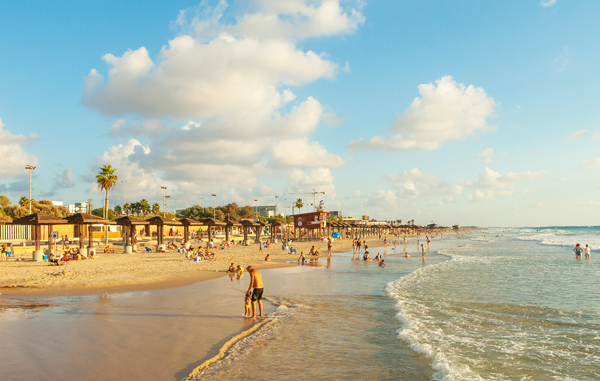
Coastal BeachesIsrael is a small country located in the Eastern Mediterranean, bordered by Lebanon, Syria, Jordan, Egypt, and the Palestinian territories. It spans diverse landscapes from the Mediterranean coast to the Negev Desert and the Dead Sea, the world's lowest point. The country has a rich cultural heritage blending Jewish, Arab, and international influences, with Hebrew as the primary language and English widely spoken. Israel has a highly developed economy with strengths in technology, agriculture, and services, earning it recognition as a global innovation hub. The society is dynamic and diverse, with a mix of modern cities, historical sites, and vibrant cultural scenes. Life in Israel offers both cosmopolitan urban experiences and access to natural attractions, though the region's geopolitical situation is an important consideration for potential residents.
 SJB Global
Connect
SJB-Global is a top-rated financial advisory firm specializing in expat financial advice worldwide, offering retirement planning & tax-efficient solutions with a regressive fee model. Our clients benefit from their country’s most favorable tax environment by utilizing the efficient investment vehicles we offer. Our commitment to quality service is reflected in our stellar reviews, with over 300 testimonials boasting 95% five-star ratings.
Click connect to have our partner contact you via e-mail and/or phone.
SJB GlobalSJB-Global is a top-rated financial advisory firm specializing in expat financial advice worldwide, offering retirement planning & tax-efficient solutions with a regressive fee model. Our clients benefit from their country’s most favorable tax environment by utilizing the efficient investment vehicles we offer. Our commitment to quality service is reflected in our stellar reviews, with over 300 testimonials boasting 95% five-star ratings.
Connect
Click connect to have our partner contact you via e-mail and/or phone.
Podcasts

Episode 6: Jake Barber - Expat Finance Expert and Lifelong Expat



Episode 8: Jake Barber - The Expat Finance Expert Returns
Living in Israel
Best Places to Live in Israel
Visa & Residency
Obtaining a residency in Israel involves several steps and can vary in difficulty depending on the type of visa and the applicant's circumstances. The B/1 Work Visa is a common option for expats who have secured employment in Israel. To obtain this visa, an individual must first receive a job offer from an Israeli company. The employer must then apply to the Ministry of Interior for a work permit on behalf of the employee. Once the work permit is approved, the employee can apply for the B/1 Work Visa at their local Israeli consulate or embassy. This visa is typically valid for one year and can be renewed. Another option for expats is the A/1 Temporary Resident Visa, which is often used by individuals eligible for Aliyah (Jewish immigration) under the Law of Return. Applicants must prove their Jewish heritage and may be required to undergo an interview at their local Israeli consulate or embassy. Upon approval, they can live in Israel and have the same rights as Israeli citizens, except for the right to vote. Digital nomads often use the B/2 Visitor's Visa, which is intended for tourists but can also be used by those who wish to stay in Israel for short-term work or study. This visa is valid for up to three months and can be extended under certain circumstances. The process for obtaining a residency visa in Israel requires patience and thorough documentation. Applicants must provide various documents, including a valid passport, proof of financial means, health insurance, and sometimes a police clearance certificate. The difficulty of the process can vary; it is generally straightforward for those with job offers or Jewish heritage but can be more challenging for others. It is advisable to consult with the Israeli consulate or a legal expert to ensure all requirements are met. Overall, while the process can be bureaucratic and time-consuming, it is manageable with proper preparation.
Healthcare in Israel
Israel's system is known for its high quality of services and is based on a universal healthcare model. All Israeli citizens and permanent residents are entitled to basic health care as a fundamental right. The system is funded through taxation and is administered by four non-profit health insurance organizations, known as "sick funds," which are regulated by the government. These provide a standard basket of medical services, including hospitalization, primary care, and various specialties. Private healthcare is also available and offers quicker access and more choice for those who can afford it. The quality of both public and private healthcare in Israel is generally considered to be high, with Israel being a hub for medical innovation and advanced treatments. The cost of public healthcare is relatively low due to government subsidies, while private healthcare costs can be significantly higher. Expats and digital nomads who become residents can gain access to public healthcare by joining one of the sick funds and paying the health insurance tax. Tourists, however, are not covered by the public healthcare system and should have travel insurance.
Cost of Living
Israel has a high cost of living, particularly in major cities like Tel Aviv and Jerusalem. Rental prices for a one-bedroom apartment in central Tel Aviv range from $1,200–$1,800 USD monthly, while property purchases average $8,000–$12,000 USD per square meter in desirable areas. Daily expenses including groceries, dining, and transportation are comparable to Western European standards, making Israel relatively expensive for international relocators.
Weather
Israel experiences a Mediterranean climate with hot, dry summers and mild, wet winters. Summer temperatures typically range from 28–35°C (82–95°F), while winter temperatures average 8–15°C (46–59°F). Rainfall is concentrated between November and March, with the south and desert regions receiving minimal precipitation. Coastal areas benefit from sea breezes that moderate summer heat.
Educational System in Israel
The educational system in Israel is known for its high standards and is compulsory from the age of three until the end of high school, usually around the age of 18. The system is divided into three tiers: primary education (grades 1-6), middle school (grades 7-9), and high school (grades 10-12). Children typically start school at the age of five or six, entering into a pre-primary framework known as kindergarten. Primary and middle schools focus on a broad curriculum, including Hebrew, mathematics, English, history, science, and physical education, among other subjects. High school students often have the option to specialize in certain subjects, depending on their interests and future career aspirations. The Israeli Matriculation, or Bagrut, is the high school graduation exam that is necessary for higher education in Israel. The quality of education is generally high, with a strong emphasis on science and technology. Israel's education system also includes religious and secular schools, catering to the diverse population of the country. Parents moving to Israel can expect a robust education system with a variety of options to suit their child's needs and interests.
Living in Israel
Healthcare in Israel
Best Places to Live in Israel
Moving to Israel