Modena
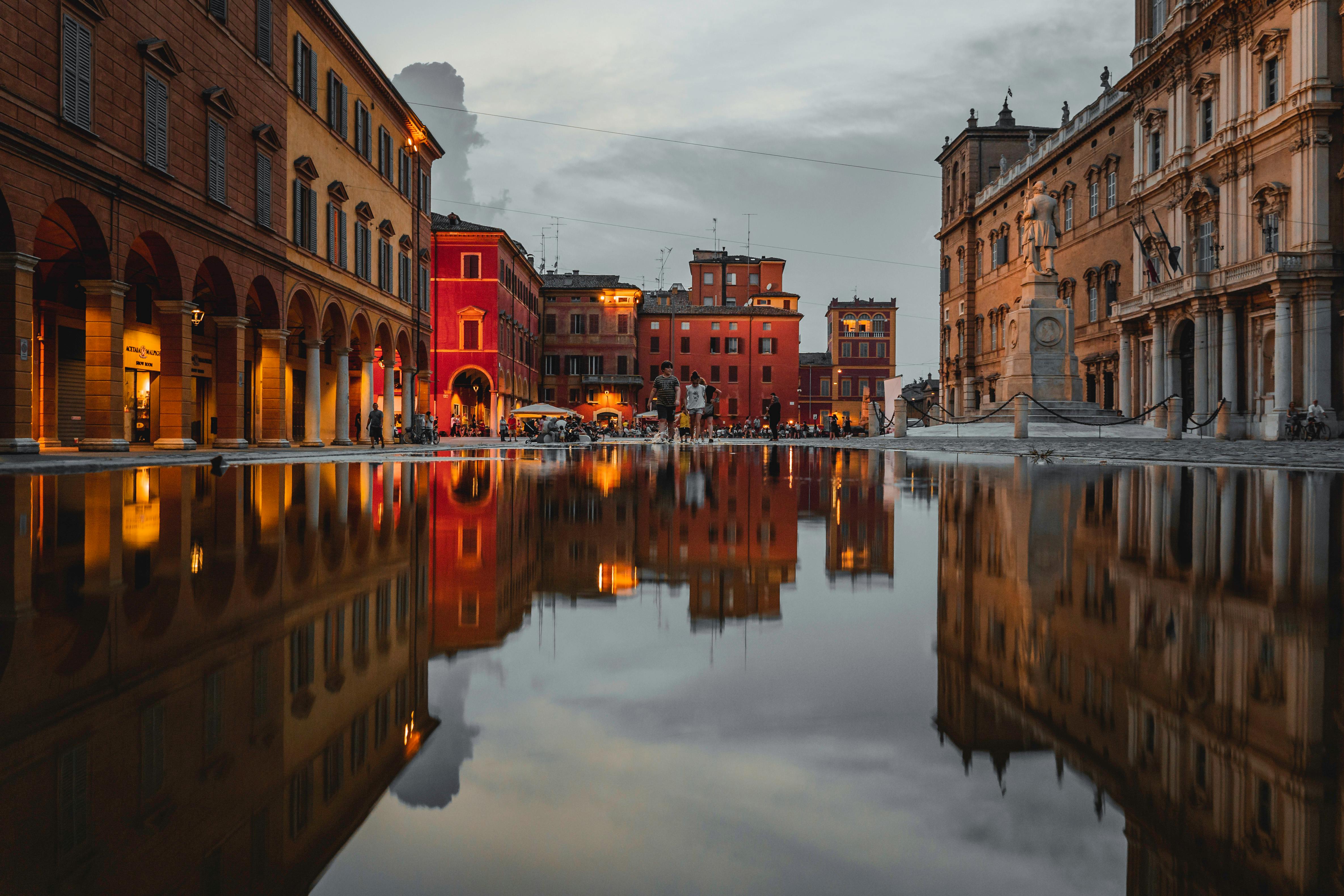
Urban RiverfrontModena sits in the heart of Emilia-Romagna, a region where food culture runs deeper than in almost anywhere else in Italy. Walk through the centro storico and you'll notice the arcaded streets first—they create a rhythm of shade and light, protection from both sun and rain, spaces where people linger. The Ghirlandina tower anchors the Piazza Grande, a medieval square that feels lived-in rather than museumified. This is a city built on trade and craft: balsamic vinegar production has shaped the local economy for centuries, and you can visit acetaia workshops where vinegar ages in wooden barrels in attic rooms. The Ducal Palace, the Cathedral, and the Torre Ghirlandina form a architectural triad that speaks to Modena's importance as a Renaissance seat of power. The city has a working quality—it's not performing itself for tourists. The food scene extends beyond restaurants into markets and food shops where locals buy ingredients with the seriousness of people who cook at home. Modena is also known for its automotive heritage, home to Ferrari, Lamborghini, and Ducati. The surrounding countryside produces Parmigiano-Reggiano cheese and Modena balsamic, making the region a destination for food pilgrims.
 Italian For A While
Connect
Become ‘Italian for a While’ with IFA! Learn in Italy on a 1-week to 12-month program - open to students, young adults, graduates, digital nomads, professionals, groups, faculty-led programs, and more. Take courses at an accredited school while immersing yourself in the language, life, and culture among your international peers. Submit an inquiry with IFA to learn more.
Click connect to have our partner contact you via e-mail and/or phone.
Italian For A WhileBecome ‘Italian for a While’ with IFA! Learn in Italy on a 1-week to 12-month program - open to students, young adults, graduates, digital nomads, professionals, groups, faculty-led programs, and more. Take courses at an accredited school while immersing yourself in the language, life, and culture among your international peers. Submit an inquiry with IFA to learn more.
Connect
Click connect to have our partner contact you via e-mail and/or phone.
Visa & Residency
Obtaining a residency in Italy involves several steps and the process can vary depending on the type of visa you are applying for. The most common types of visas for expats include the Elective Residence Visa and the Work Visa. The Elective Residence Visa is designed for individuals who can prove they have a high, steady income from sources outside of Italy and do not need to work in the country. Applicants must show they have sufficient funds to support themselves, a place to live, and comprehensive health insurance. This visa is valid for one year and can be renewed. The Work Visa is for those who have secured a job in Italy before entering the country. The employer must apply for a work permit on behalf of the employee, which is subject to quotas. Once the work permit is granted, the employee can apply for the visa. This process can be quite competitive and time-consuming due to the quota system. Other visas include the Student Visa and Family Reunification Visa. The process generally involves gathering the required documentation, such as a valid passport, proof of financial means, accommodation, and health insurance, and submitting an application to the Italian consulate or embassy in your home country. An appointment is usually required, and you may need to attend an interview. The difficulty of the process can vary; it is often described as average, but it can be challenging due to the bureaucracy and strict requirements. It is advisable to start the application process well in advance of your intended move date and to seek assistance from professionals if necessary. Once in Italy, you will need to apply for a residence permit (permesso di soggiorno) within eight days of arrival to stay legally. This additional step involves going to the local post office or police station (Questura) to submit the necessary paperwork. Overall, while the process can be bureaucratic and requires careful preparation, it is manageable with the right planning and support.
Cost of Living
Modena's cost of living is moderate compared to major Italian cities like Milan or Rome. Dining out at trattorias and local restaurants remains affordable, and housing costs, while rising, stay reasonable outside the immediate historic center. Groceries and everyday expenses reflect regional prices typical of northern Italy.
Weather
Modena experiences a humid continental climate with cold, damp winters and warm summers; fog is common in winter months, while summers can be quite hot and humid.
Healthcare in Modena
Ospedale Civile di Modena and Ospedale di Baggiovara serve the city and surrounding province with modern facilities and solid emergency care. The healthcare system benefits from Italy's national health service, though wait times for non-urgent procedures can stretch longer than in private facilities.
Schools in Modena
Modena has limited bilingual options; most are private institutions offering English-Italian or French-Italian instruction at primary and secondary levels. Scuola Primaria Bilingue and similar private schools exist but enrollment is competitive and tuition-dependent.
Restaurants in Modena
Living in Modena
Moving to Modena
Healthcare in Modena