Nara
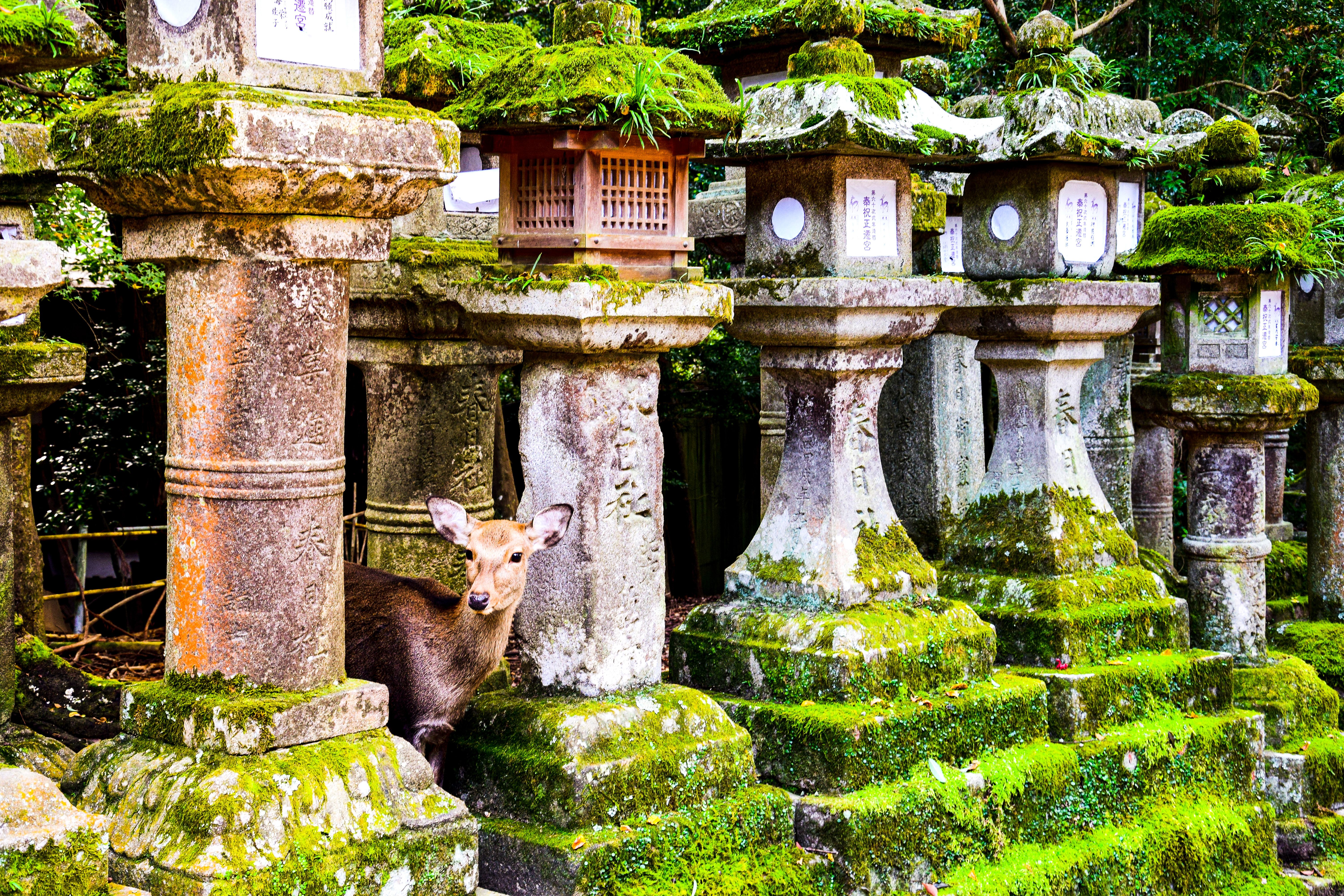
Urban RiverfrontNara draws history enthusiasts, families, and cultural pilgrims who come to walk among some of Japan's most significant temples and shrines. The city is home to Todai-ji Temple, one of the world's largest wooden structures, and serves as a living museum of classical Japanese Buddhism and architecture. Nara's defining feature is Nara Park, a sprawling 660-hectare woodland where hundreds of semi-wild deer roam freely among ancient monuments, creating an almost surreal landscape where wildlife and heritage coexist. The city center retains narrow streets lined with traditional wooden machiya houses, sake breweries, and small restaurants serving local specialties. Beyond the park, neighborhoods feel quieter and more residential than nearby Kyoto, with a slower pace that appeals to those seeking depth over crowds. The Yamato region's geography—surrounded by low mountains and accessible via direct rail from Osaka and Kyoto—makes Nara a base for both temple tourism and everyday living. Students, remote workers, and retirees have discovered that the city offers cultural richness without the overwhelming tourism infrastructure of its more famous neighbors.
 AGS Worldwide Movers
Get Quote
Relocating abroad soon? Make your move with AGS! AGS Worldwide Movers is a leader in the international moving industry. Our experience and expertise allows us to guarantee our clients the best quality moving services.
AGS Worldwide MoversRelocating abroad soon? Make your move with AGS! AGS Worldwide Movers is a leader in the international moving industry. Our experience and expertise allows us to guarantee our clients the best quality moving services.
Get Quote
Visa & Residency
Obtaining a residency in Japan involves several steps and the process can be quite meticulous, but it is manageable with the right documentation and preparation. The most common types of residency visas include the Highly Skilled Professional Visa, which is aimed at attracting skilled foreign professionals in certain fields; the Working Visa, for those with job offers in Japan in various categories such as Engineer, Specialist in Humanities, or International Services; and the Spouse or Child of Japanese National Visa, for those who have a family connection to a Japanese citizen. The process typically starts with securing a job offer or sponsorship from a Japanese company or individual, which is necessary for most types of work-related visas. The sponsor in Japan will often assist in the application process and provide necessary documentation, such as a Certificate of Eligibility (COE), which is required to apply for the visa at a Japanese embassy or consulate in the applicant's home country. Applicants must submit the COE, a valid passport, visa application form, photograph, and any additional required documents specific to the type of visa they are applying for. The requirements can vary greatly depending on the visa category, so it is crucial to check the specific criteria for the chosen visa type. Once the application is submitted, it can take several weeks to several months for the Japanese authorities to process the visa. If approved, the applicant will receive a visa that allows them to enter Japan. Upon arrival, they must register their residence at the local municipal office and apply for a Residence Card, which is necessary for daily life in Japan. The difficulty of the process can vary based on the applicant's circumstances and the type of visa. Some visas, like the Highly Skilled Professional Visa, have a points-based system and require proof of advanced education and specialized skills. Others, like the Spouse or Child of Japanese National Visa, may have more straightforward criteria but still require substantial documentation to prove the family relationship. Overall, while the process is systematic and can be time-consuming, it is generally considered average in difficulty compared to other countries, provided that the applicant meets the eligibility criteria and has all the necessary documentation in order.


Cost of Living
Living in Nara costs considerably less than Kyoto or Osaka, with rental apartments and housing prices reflecting its smaller size and less intense tourism economy. Groceries, dining, and local services remain affordable, though prices have gradually risen as the city attracts more remote workers and international residents seeking proximity to major cities without urban expense.
Weather
Nara experiences a humid subtropical climate with warm summers and mild winters, receiving moderate rainfall throughout the year with occasional snow in winter months.
Healthcare in Nara
Nara Prefectural General Medical Center handles major trauma and complex cases; Nara Medical University Hospital provides teaching-hospital-level care. Smaller clinics and dental practices are distributed throughout the city, though specialists often require travel to Osaka or Kyoto.
Schools in Nara
Nara has several international schools including Nara International School, which offers an English-language curriculum from kindergarten through high school. These institutions serve expat families and Japanese families seeking English-medium education, though options are more limited compared to larger metropolitan areas like Tokyo or Osaka.
Bilingual education options exist in Nara, primarily through private institutions that integrate Japanese and English instruction. However, availability and program depth vary, with most concentrated in central Nara city rather than outlying areas.
Restaurants in Nara
Living in Nara
Moving to Nara
Healthcare in Nara