Jordan
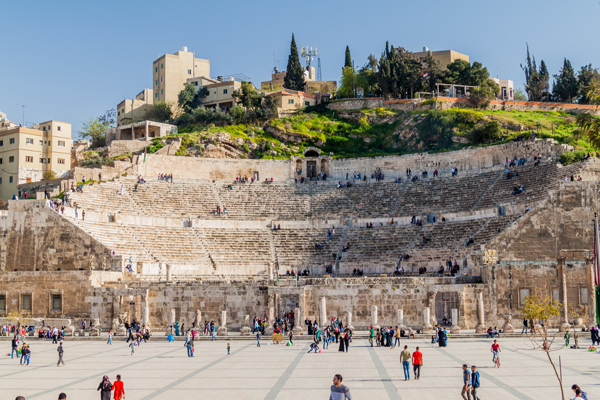
Coastal BeachesJordan is a Middle Eastern country located in the Levant region, bordered by Israel, Palestine, Syria, Iraq, and Saudi Arabia. The country is characterized by diverse landscapes ranging from the fertile Jordan Valley to the arid deserts of the south, including the famous Wadi Rum. Amman, the capital, is a vibrant modern city with a rich history blending ancient and contemporary culture. Jordan has a developing economy with tourism, phosphate mining, and services as key sectors. The culture is predominantly Arab and Muslim, with strong traditions of hospitality and family values. Life in Jordan offers a blend of Middle Eastern heritage, relatively modern urban amenities in Amman, and access to significant historical and natural attractions.
 PassportCard Expat Health Insurance
Get Quote
Never worry about paying your medical bills out of pocket again. The innovative PassportCard allows for a stress-free experience for all expat families, remote travelers, and workers. With a 24/7 customer service and an outstanding customer base of over 2 Million clients, it will feel like medical care at home. Get up to 10% off on your policy now.
PassportCard Expat Health InsuranceNever worry about paying your medical bills out of pocket again. The innovative PassportCard allows for a stress-free experience for all expat families, remote travelers, and workers. With a 24/7 customer service and an outstanding customer base of over 2 Million clients, it will feel like medical care at home. Get up to 10% off on your policy now.
Get Quote
Podcasts

Episode 8: Jake Barber - The Expat Finance Expert Returns



Episode 6: Jake Barber - Expat Finance Expert and Lifelong Expat
Living in Jordan
Visa & Residency
Obtaining a residency in Jordan involves several steps and can be considered an average challenge compared to other countries. The most common types of visas that expats apply for are the Work Visa and the Investor Visa. To obtain a Work Visa, an expat must first secure a job offer from a Jordanian employer. The employer must then apply for a work permit on behalf of the expat. This involves submitting various documents, including the employment contract, to the Ministry of Labor. Once the work permit is approved, the expat can apply for a Work Visa at the Jordanian embassy or consulate in their home country. For those looking to invest in Jordan, the Investor Visa is an option. To qualify, expats must invest a substantial amount of money in a Jordanian business or project, as defined by the Jordan Investment Commission. The process includes submitting a detailed business plan and proof of investment funds. Digital nomads often enter Jordan on a Tourist Visa, which typically allows a stay of up to two months. If they wish to stay longer, they can apply for a Temporary Residence Permit from the local police department in Jordan. This permit can be extended and allows the holder to live in Jordan for a specified period, usually one year, which can be renewed. The process for obtaining residency can be bureaucratic and time-consuming, requiring various documents such as a valid passport, proof of financial means, a clean criminal record, and medical certificates. Expats must also undergo a medical examination in Jordan. It is important to note that regulations can change, and it is advisable to check with the nearest Jordanian diplomatic mission or the official Jordanian government website for the most current information. The process may also vary depending on the expat's nationality, the purpose of stay, and other factors. Overall, while the process is manageable, it requires careful planning and adherence to all legal requirements.
Healthcare in Jordan
The system in Jordan is a mix of public and private services. The public healthcare system is accessible to all Jordanian citizens and legal residents, including expatriates who have obtained a work permit and residency. It is funded by the government and provides services at a lower cost, but it may suffer from longer wait times and limited resources compared to private facilities. Private healthcare in Jordan offers higher quality services with more modern facilities and shorter wait times, but at a higher cost. Private health insurance is popular among those who can afford it, including expats and digital nomads, to ensure access to private hospitals. Expats and digital nomads can access public healthcare once they have legal residency status, but many opt for private health insurance to cover medical services. The quality of healthcare in Jordan is generally considered good, especially in private hospitals in Amman, which are known for their advanced medical procedures and well-trained staff.
Cost of Living
Jordan offers relatively affordable living compared to Western countries, though costs have risen in recent years. Rent for a one-bedroom apartment in central Amman ranges from $400-700 USD monthly, while outside the city center it can be $250-400. Property purchases average $2,500-4,500 USD per square meter in desirable areas. Daily expenses including food, utilities, and transportation are moderate, making Jordan accessible for budget-conscious expats, particularly outside the capital.
Weather
Jordan experiences a Mediterranean to desert climate with hot, dry summers and mild winters. Summer temperatures in Amman typically range from 25-32°C (77-90°F), while winter temperatures drop to 5-15°C (41-59°F). Rainfall is concentrated in winter months (November to March), with the south and east receiving minimal precipitation. The Dead Sea region is notably warmer year-round due to its low elevation.
Educational System in Jordan
The educational system in Jordan is known for its focus on academic excellence and is structured into three levels: basic education, secondary education, and higher education. Basic education consists of ten years, starting at the age of six, and is divided into two cycles: the first cycle is from grade one to six, and the second cycle is from grade seven to ten. After completing basic education, students receive the General Certificate of Secondary Education (Tawjihi), which determines their eligibility for university education. Secondary education spans two years, from grade eleven to twelve, and is either academic or vocational. The academic stream prepares students for university, while the vocational stream equips them with specific job skills. Schools in Jordan are either public, private, or UNRWA schools for Palestinian refugees. The quality of education is generally high, especially in private schools and in urban areas. The Jordanian government provides free education in public schools up to the secondary level, and education is compulsory for children up to the age of 16. The school year typically starts in September and ends in June.
Living in Jordan
Healthcare in Jordan