Kazakhstan
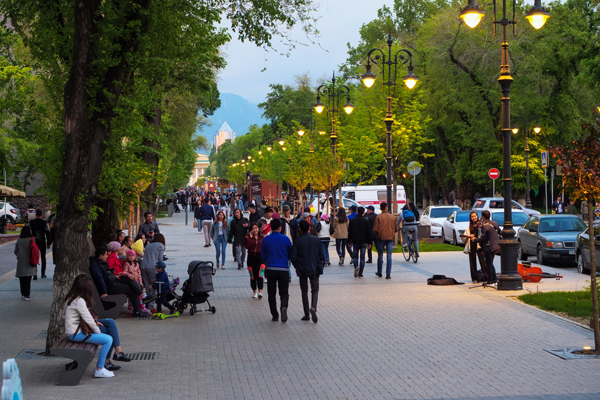
Coastal BeachesKazakhstan is a vast Central Asian country spanning over 2.7 million square kilometers, making it the world's largest landlocked nation. It borders Russia, China, Uzbekistan, Turkmenistan, and Kyrgyzstan, with significant portions of the Caspian Sea to its west. The country has a rich cultural heritage blending Turkic, Persian, and Russian influences, reflected in its diverse population and traditions. Kazakhstan's economy is primarily driven by oil and gas exports, though it is diversifying into technology, agriculture, and manufacturing. Major cities like Astana (the capital) and Almaty offer modern amenities and growing expatriate communities. Life in Kazakhstan combines Soviet-era infrastructure with rapid modernization, offering relatively affordable living costs and increasing opportunities for international professionals.
 BlueCross BlueShield Global Solutions
Get Quote
BlueCross BlueShield Global Solutions (BCBS) offers global health plans for international assignments or trips lasting 6 months or longer. With access to over 1.7M medical providers in 190 countries around the world, BCBS provides members with solutions and industry-leading digital services - ensuring top-quality coverage to people who live, work, study and travel internationally.
BlueCross BlueShield Global SolutionsBlueCross BlueShield Global Solutions (BCBS) offers global health plans for international assignments or trips lasting 6 months or longer. With access to over 1.7M medical providers in 190 countries around the world, BCBS provides members with solutions and industry-leading digital services - ensuring top-quality coverage to people who live, work, study and travel internationally.
Get Quote
Podcasts

Episode 6: Jake Barber - Expat Finance Expert and Lifelong Expat



Episode 8: Jake Barber - The Expat Finance Expert Returns
Living in Kazakhstan
Visa & Residency
Obtaining a residency in Kazakhstan involves several steps and can be considered an average challenge for expats. The most common type of visa for expats seeking residency is the C3 Long-term visa, which is designed for those who wish to stay in Kazakhstan for more than 90 days. This visa is suitable for various purposes, including work, business, and family reunification. To apply for a C3 visa, expats must first obtain an invitation letter from a Kazakhstan entity, such as an employer or a family member who is a resident of Kazakhstan. The inviting party must submit an application to the Migration Service of Kazakhstan to issue the invitation. Once the invitation is approved, it is sent to the expat, who can then apply for the visa at a Kazakh diplomatic mission in their home country or a country where they have legal residency. The application process requires submitting a completed application form, the original invitation letter, a passport valid for at least six months beyond the intended period of stay, passport-sized photographs, and other documents that may vary depending on the specific visa category. For example, those applying for a work visa would need to provide a work permit issued by the Kazakh authorities. Expats interested in the Business Program can apply for residency if they plan to engage in business activities in Kazakhstan. This program requires a significant investment in the country's economy and the establishment of a business that will contribute to the local market. Digital nomads often use the same C3 Long-term visa, which allows them to live in Kazakhstan for up to three years with the possibility of extension. This visa is attractive for digital nomads because it provides a relatively long period of stay compared to other countries' visas. Overall, while the process is bureaucratic and requires various documents and an invitation from within Kazakhstan, it is manageable with proper planning and preparation. Expats are advised to start the process well in advance of their intended move date and to consult with the Kazakh embassy or consulate for the most up-to-date information and specific requirements.
Healthcare in Kazakhstan
The system in Kazakhstan is a mix of public and private healthcare services. The public healthcare system is funded by the state and provides basic medical services to citizens and residents, often at low or no cost. However, the quality of public healthcare can vary significantly, with urban areas typically having better facilities and more skilled medical professionals than rural regions. Private healthcare in Kazakhstan offers higher quality services with more modern facilities and shorter waiting times, but at a higher cost. Expats and digital nomads can access public healthcare once they have registered with the local authorities and obtained the necessary health insurance. It is common for expats to opt for private healthcare due to the higher standard of care and the language barrier in public hospitals.
Cost of Living
Kazakhstan offers relatively low cost of living compared to Western countries and many developed Asian nations. Rental prices vary significantly by city: in Astana, a one-bedroom apartment in the city center costs approximately $400-700 monthly, while in Almaty prices are similar or slightly higher. Property purchase prices range from $1,500-3,500 per square meter in major cities. Daily expenses including food, transportation, and utilities are affordable, making Kazakhstan an economical choice for expatriates.
Weather
Kazakhstan experiences a continental climate with extreme seasonal variations. Winters are long and harsh, with temperatures dropping to -20°C or lower in many regions, while summers are warm to hot, reaching 25-35°C. The country receives limited precipitation, with most falling in spring and early summer. Seasonal transitions are brief, and weather can be unpredictable, particularly in spring.
Educational System in Kazakhstan
The educational system in Kazakhstan has undergone significant reforms since the country's independence from the Soviet Union. Education is compulsory until the age of 18, which includes primary, basic secondary, and general secondary education. Children typically start school at the age of 6 or 7, beginning with primary education that lasts for 4 years. Following this, they enter basic secondary education, which lasts for 5 years, and then general secondary education for 2 years. The system is designed to provide a comprehensive education that includes Kazakhstani history, mathematics, science, literature, and foreign languages, among other subjects. Schools in Kazakhstan are making strides to integrate technology and modern teaching methodologies into their curricula. The quality of education can vary, with urban schools generally having better resources than rural ones. There are also a number of international schools, particularly in cities like Nur-Sultan and Almaty, which cater to expatriate families and offer education systems from other countries, such as the British or American systems. The academic year in Kazakhstan typically starts in September and ends in June, with a summer break in between. Upon completion of general secondary education, students receive a Certificate of Secondary Education, which is necessary for admission to higher educational institutions
Living in Kazakhstan
Healthcare in Kazakhstan
Moving to Kazakhstan