Mokpo
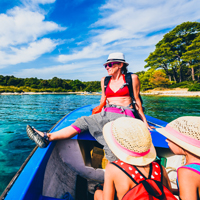
Urban Coastal BeachesMokpo sits at the southwestern tip of South Korea's Jeolla Province, where the Yellow Sea meets the city's harbor in a landscape of working docks and fishing boats. The waterfront pulses with activity—seafood markets overflow with the day's catch, restaurants serve raw fish and grilled squid to locals and visitors, and the salt air carries the smell of the sea. Beyond the harbor, the city spreads inland with modest residential neighborhoods, small shops, and temples tucked into hillsides. Mokpo functions as a regional port city and gateway to the nearby islands of the Dadohae Archipelago, which draw hikers and nature seekers. The city has a working-class character distinct from Korea's glittering megacities; it feels lived-in rather than polished. Cultural attractions include museums dedicated to Korean modern art and maritime history, while the surrounding waters offer boat tours and island excursions. The pace is slower than Seoul or Busan, and the cost of living reflects that. For those seeking a coastal Korean experience away from the tourist crush, Mokpo offers genuine maritime culture and access to some of Korea's most remote and beautiful island landscapes.
 PassportCard Expat Health Insurance
Get Quote
Never worry about paying your medical bills out of pocket again. The innovative PassportCard allows for a stress-free experience for all expat families, remote travelers, and workers. With a 24/7 customer service and an outstanding customer base of over 2 Million clients, it will feel like medical care at home. Get up to 10% off on your policy now.
PassportCard Expat Health InsuranceNever worry about paying your medical bills out of pocket again. The innovative PassportCard allows for a stress-free experience for all expat families, remote travelers, and workers. With a 24/7 customer service and an outstanding customer base of over 2 Million clients, it will feel like medical care at home. Get up to 10% off on your policy now.
Get Quote
Visa & Residency
Obtaining a residency in Korea involves several steps and the process can vary depending on the type of visa. For expatriates, the F-2 Long-Term Residency Visa and the E-7 Special Occupation Visa are among the most popular. The F-2 visa is for those who have stayed in Korea for an extended period on a different visa and wish to change their status to long-term residency. Applicants must meet certain eligibility criteria, such as having a certain level of income, points based on age, Korean language proficiency, and volunteer activities. The E-7 visa is for those who have specialized skills in fields that Koreans cannot fulfill. To obtain this visa, an applicant must have a job offer from a Korean company and the company must prove that the role cannot be filled by a Korean citizen. For digital nomads, the H-1 Working Holiday Visa is a popular choice. This visa is available to citizens of countries that have a reciprocal holiday agreement with Korea. It allows young people, usually between the ages of 18 and 30, to live in Korea for up to 12 months, during which they can work and travel. The application process for the H-1 visa typically requires a valid passport, proof of financial support, a return ticket or funds to purchase one, and a plan for the stay in Korea. The process for obtaining a residency visa generally starts with securing a job or other qualifying activity in Korea, which is often the most challenging part. Once an individual has a sponsor or an employment contract, they can apply for the visa at a Korean embassy or consulate in their home country. The application requires various documents, including a completed application form, passport photos, and relevant certificates or letters from the employer or sponsor. The processing time can vary, but it usually takes a few weeks to a few months. After arriving in Korea, the individual must report to the office to obtain an Alien Registration Card. The difficulty of the process can vary greatly depending on the applicant's circumstances, the type of visa, and the current immigration policies. However, it is generally considered to be of average difficulty compared to other countries.
Cost of Living
Living expenses in Mokpo run considerably below those of Seoul or other major Korean cities. Rent for a modest apartment costs a fraction of what you'd pay in the capital, and local seafood markets offer fresh fish and produce at prices that reflect the city's working fishing economy rather than tourist markup. Dining out remains affordable, especially at neighborhood restaurants serving regional specialties.
Weather
Mokpo has a humid subtropical climate with warm summers and mild winters, though the coastal location means frequent wind and occasional typhoons during late summer and early autumn.
Healthcare in Mokpo
Mokpo has several general hospitals and clinics, with Mokpo Hospital and Mokpo Christian Hospital serving as the main facilities for serious cases. English-speaking staff can be inconsistent outside major hospitals, so having translation support or a Korean speaker on hand for complex medical situations is practical. Routine care and minor injuries are handled competently, though specialized treatment may require travel to Gwangju or Seoul.
Restaurants in Mokpo
Living in Mokpo
Moving to Mokpo
Healthcare in Mokpo