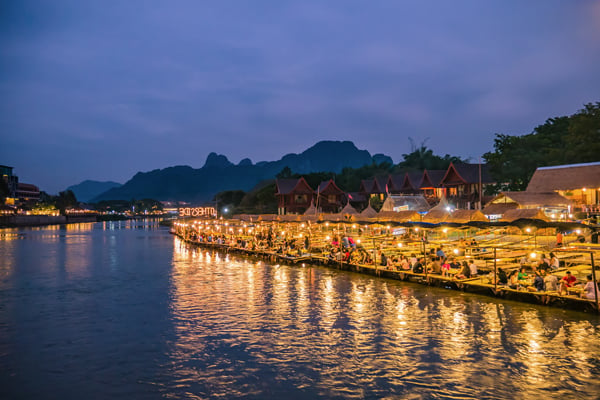
Laos
Laos is a landlocked Southeast Asian country bordered by Thailand, Vietnam, Cambodia, Myanmar, and China, known for its pristine natural landscapes and rich cultural heritage. The country is characterized by the Mekong River valley and mountainous terrain, with a population that maintains strong Buddhist traditions and a slower pace of life compared to neighboring nations. Laos has a developing economy primarily based on agriculture, hydropower, and increasingly tourism, attracting visitors interested in eco-tourism and cultural experiences. The capital, Vientiane, offers a blend of French colonial architecture and modern development, while smaller towns like Luang Prabang preserve traditional Lao culture. Life in Laos is generally relaxed and affordable, with a strong sense of community and connection to nature. The country is becoming increasingly popular with digital nomads and expats seeking a low-cost, laid-back lifestyle in Southeast Asia.
 SJB Global
Connect
SJB-Global is a top-rated financial advisory firm specializing in expat financial advice worldwide, offering retirement planning & tax-efficient solutions with a regressive fee model. Our clients benefit from their country’s most favorable tax environment by utilizing the efficient investment vehicles we offer. Our commitment to quality service is reflected in our stellar reviews, with over 300 testimonials boasting 95% five-star ratings.
Click connect to have our partner contact you via e-mail and/or phone.
SJB GlobalSJB-Global is a top-rated financial advisory firm specializing in expat financial advice worldwide, offering retirement planning & tax-efficient solutions with a regressive fee model. Our clients benefit from their country’s most favorable tax environment by utilizing the efficient investment vehicles we offer. Our commitment to quality service is reflected in our stellar reviews, with over 300 testimonials boasting 95% five-star ratings.
Connect
Click connect to have our partner contact you via e-mail and/or phone.
Podcasts

Episode 8: Jake Barber - The Expat Finance Expert Returns



Episode 6: Jake Barber - Expat Finance Expert and Lifelong Expat
Living in Laos
Best Places to Live in Laos
Visa & Residency
Obtaining a residency in Laos involves several steps and can vary depending on the type of visa applied for. The most common types of visas for expats seeking residency are the Business Visa and the Work Visa. The Business Visa is suitable for those who are involved in business activities or are considering investing in Laos. To apply for a Business Visa, one must have an invitation or sponsorship from a company registered in Laos. The Work Visa is for individuals who have secured employment in Laos and requires a sponsorship from the employing company. The process begins with the applicant gathering the necessary documents, which typically include a passport valid for at least six months, visa application forms, passport-sized photos, and supporting documents such as a letter of invitation from a Lao company or a work contract. The applicant must then submit these documents to a Lao embassy or consulate, or in some cases, can apply on arrival at certain entry points if they are eligible. Once the initial visa is granted, which is usually a single-entry visa valid for 30 days, expats must then apply for a stay permit or work permit, as well as a residence card if they plan to stay longer. This involves additional paperwork and can be done within Laos at the relevant government departments, such as the Department or the Ministry of Labour and Social Welfare. The difficulty of the process can vary. It is generally considered average in terms of complexity, but it can be time-consuming and may require the assistance of a local sponsor or legal advisor, especially to navigate the bureaucratic procedures and ensure compliance with all regulations. It is important to note that regulations can change, and it is advisable to check the most current information from official sources or consult with professionals who specialize in Lao immigration law. For digital nomads, the Tourist Visa is the most common option. It allows them to live in Laos for 30 days, with the possibility of extending the visa for longer stays. However, this visa does not permit formal employment, and those wishing to work legally in Laos will need to apply for the appropriate work-related visas.
Healthcare in Laos
The system in Laos is a mix of public and private facilities, with the public sector providing basic healthcare services to the majority of the population. The quality of healthcare in Laos varies significantly, with urban areas having better facilities and more skilled healthcare professionals than rural areas. Public healthcare is often underfunded and understaffed, leading to challenges in accessing quality care, especially for complex medical conditions. Private healthcare is available and generally offers higher quality services, but at a cost that is unaffordable for many Laotians. Expats and digital nomads can access public healthcare, but many opt for private healthcare or travel to neighboring countries for more advanced medical treatments. The cost of healthcare is relatively low compared to Western standards, but payment is usually expected upfront.
Cost of Living
Laos offers one of the lowest costs of living in Southeast Asia, making it highly attractive for budget-conscious expats and digital nomads. Rental accommodation ranges from $200-400 USD monthly for modest apartments in Vientiane to $100-200 in smaller towns, while property purchases are significantly cheaper than neighboring countries. Daily expenses including food, transportation, and utilities are very affordable, with local meals costing $1-3 USD and overall monthly living expenses for a single person ranging from $500-1000 USD depending on lifestyle choices.
Weather
Laos experiences a tropical monsoon climate with three distinct seasons: the hot season (March-May) with temperatures reaching 35-40°C, the rainy/monsoon season (June-October) with heavy precipitation, and the cool season (November-February) with more moderate temperatures ranging from 15-25°C. The rainy season brings lush green landscapes but can make travel challenging due to flooding in some areas. Humidity is generally high year-round, particularly during and after the monsoon season. The best time to visit or relocate is typically November to February when weather is most pleasant.
Educational System in Laos
The educational system in Laos is structured to provide basic education to all citizens, although it faces challenges such as limited resources and accessibility, especially in rural areas. Education is compulsory for five years of primary education, starting at the age of six. After completing primary school, students can continue to lower secondary school for four years, followed by three years of upper secondary school. The school year in Laos typically starts in September and ends in May. The Lao education system is divided into four levels: pre-primary, primary, secondary, and tertiary education. Pre-primary education is not compulsory and includes kindergarten for children aged three to five. Primary education, which is compulsory, is from Grade 1 to Grade 5, where students learn basic literacy and numeracy. Secondary education is divided into lower secondary (Grade 6 to Grade 9) and upper secondary (Grade 10 to Grade 12). Students who complete lower secondary education can either enter the workforce, attend vocational schools, or continue to upper secondary education, which prepares them for university entrance. The quality of education varies significantly, with urban areas having better-equipped schools and more qualified teachers compared to rural areas. The government of Laos has been working with various international organizations to improve the education system, focusing on increasing access to education and improving educational outcomes.
Living in Laos
Healthcare in Laos