Liechtenstein
Liechtenstein is a small, wealthy Alpine country nestled between Switzerland and Austria in central Europe, known for its stunning mountain scenery and exceptional quality of life. With a population of around 39,000, it is one of Europe's smallest nations but punches well above its weight economically, thriving as a global financial center and hub for precision manufacturing and pharmaceuticals. The country is characterized by picturesque villages, pristine natural landscapes, and a strong commitment to environmental conservation. Liechtenstein maintains a unique political status as a constitutional monarchy and is not an EU member, though it has close ties with Switzerland. The culture blends German-speaking Alpine traditions with cosmopolitan influences, and residents enjoy excellent public services, low unemployment, and high living standards. Life here is orderly, safe, and oriented toward outdoor recreation and family values.
 BlueCross BlueShield Global Solutions
Get Quote
BlueCross BlueShield Global Solutions (BCBS) offers global health plans for international assignments or trips lasting 6 months or longer. With access to over 1.7M medical providers in 190 countries around the world, BCBS provides members with solutions and industry-leading digital services - ensuring top-quality coverage to people who live, work, study and travel internationally.
BlueCross BlueShield Global SolutionsBlueCross BlueShield Global Solutions (BCBS) offers global health plans for international assignments or trips lasting 6 months or longer. With access to over 1.7M medical providers in 190 countries around the world, BCBS provides members with solutions and industry-leading digital services - ensuring top-quality coverage to people who live, work, study and travel internationally.
Get Quote
Podcasts

Episode 6: Jake Barber - Expat Finance Expert and Lifelong Expat


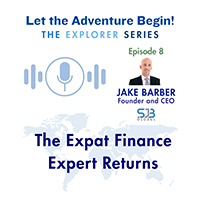
Episode 8: Jake Barber - The Expat Finance Expert Returns
Living in Liechtenstein
Best Places to Live in Liechtenstein
Visa & Residency
Obtaining a residency in Liechtenstein involves several steps and can be considered an average challenge due to the country's small size and limited number of visas issued annually. The most common visa for expats seeking residency is the Type D Visa, which is suitable for those who have a work contract with a company in Liechtenstein or intend to live in the country for more than three months. To apply for a Type D Visa, the applicant must first secure a job or prove that they have sufficient financial means to support themselves without taking employment from residents. The employer in Liechtenstein typically initiates the work permit application process on behalf of the expat. This involves submitting various documents, including a valid passport, proof of accommodation, a clean criminal record, and a health insurance policy that covers Liechtenstein. Once the work permit is approved, the expat can apply for the Type D Visa at the Swiss embassy or consulate in their home country, as Switzerland represents Liechtenstein in visa matters. The application must be made before entering Liechtenstein or the Schengen Area. The visa allows the holder to stay in Liechtenstein for the duration of their work contract or up to one year, with the possibility of extension if the work contract is extended or if the individual can prove they have the means to support themselves. The process can be somewhat bureaucratic and requires careful attention to detail, as any missing or incorrect information can lead to delays or rejection of the application. It is recommended to start the application process well in advance of the intended move date. Additionally, due to the limited number of people allowed to move to Liechtenstein each year, it is advisable to ensure that all criteria are met to the highest standard to increase the chances of a successful application.
Healthcare in Liechtenstein
Liechtenstein has a high standard of healthcare, with a system that combines public and private services. The public system is funded by a combination of government budget allocations and mandatory health insurance. All residents must have health insurance, which covers a significant portion of medical costs, although private insurance is also available for additional coverage. The quality of healthcare in both public and private facilities is generally excellent, with well-trained medical staff and modern equipment. Healthcare costs can be high, but the mandatory insurance helps to mitigate these expenses for residents. Expats and digital nomads can access public healthcare once they have registered for residency and obtained mandatory health insurance. They can also opt for private healthcare services, which might offer quicker access to specialists and more luxurious accommodations.
Cost of Living
Liechtenstein has one of the highest costs of living in Europe, comparable to Switzerland and significantly above most other countries. Rental prices for a one-bedroom apartment in central areas typically range from 1,200-1,800 CHF (approximately $1,300-1,950 USD) monthly, while property purchases exceed 10,000 CHF per square meter in desirable locations. Daily expenses including groceries, dining, and utilities are substantially higher than European averages, though wages and salaries are correspondingly elevated to match the cost structure.
Weather
Liechtenstein experiences a temperate continental climate with four distinct seasons. Winters are cold and snowy, particularly in the mountainous regions, with temperatures often dropping below freezing from December through February. Summers are mild to warm, with temperatures typically ranging from 15-25°C (59-77°F), and the region receives moderate rainfall throughout the year. Spring and autumn are transitional seasons with variable weather and are popular times for outdoor activities.
Educational System in Liechtenstein
The educational system in Liechtenstein is known for its high quality and is similar to the Swiss education system. Education is compulsory for all children starting at the age of 4 with two years of kindergarten. After kindergarten, students enter primary school, Volksschule, which lasts for five years. Following primary school, students attend Oberschule or Realschule for three years, which is a lower secondary education that focuses on general education. Alternatively, they can attend Gymnasium, which is more academically oriented and lasts for four years, leading to the Matura, a qualification for university entrance. Students who complete their lower secondary education can also opt for vocational education and training programs, combining apprenticeships in a company and vocational education at a vocational school in a dual system, known as Berufsmittelschule. This can last between two and four years. The school year in Liechtenstein typically starts in late August or early September and ends in June. The language of instruction is German, and the curriculum places a strong emphasis on language learning, mathematics, natural sciences, and social studies. Liechtenstein also offers special education services for students with additional needs. The country's small size allows for a personalized approach to education, and schools often have modern facilities and a low student-to-teacher ratio, ensuring individual attention and support.
Moving to Liechtenstein