Malaysia
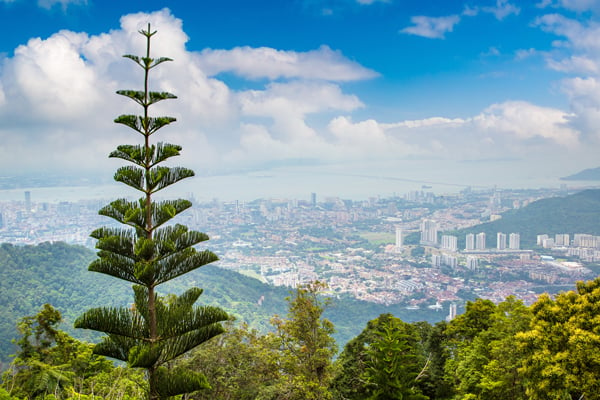
Coastal BeachesMalaysia is a Southeast Asian nation comprising Peninsular Malaysia and the states of Sabah and Sarawak on the island of Borneo. The country is known for its multicultural society, blending Malay, Chinese, Indian, and indigenous cultures with a mix of modern urban centers and natural landscapes. The economy is relatively developed and diversified, with strong sectors in technology, manufacturing, palm oil, and tourism. Malaysia offers a tropical lifestyle with modern amenities, affordable living costs compared to Western countries, and a strategic location for business in Southeast Asia. The country has a stable political system and is generally welcoming to expatriates, particularly in major cities like Kuala Lumpur and Penang. Life in Malaysia combines contemporary infrastructure with traditional cultural experiences and natural beauty.
 BlueCross BlueShield Global Solutions
Get Quote
BlueCross BlueShield Global Solutions (BCBS) offers global health plans for international assignments or trips lasting 6 months or longer. With access to over 1.7M medical providers in 190 countries around the world, BCBS provides members with solutions and industry-leading digital services - ensuring top-quality coverage to people who live, work, study and travel internationally.
BlueCross BlueShield Global SolutionsBlueCross BlueShield Global Solutions (BCBS) offers global health plans for international assignments or trips lasting 6 months or longer. With access to over 1.7M medical providers in 190 countries around the world, BCBS provides members with solutions and industry-leading digital services - ensuring top-quality coverage to people who live, work, study and travel internationally.
Get Quote
Podcasts

Episode 6: Jake Barber - Expat Finance Expert and Lifelong Expat



Episode 8: Jake Barber - The Expat Finance Expert Returns
Living in Malaysia
Best Places to Live in Malaysia
Visa & Residency
Obtaining a residency in Malaysia can be a straightforward process, but it requires careful preparation and adherence to the country's policies. The most popular residency visa program for expats is the Malaysia My Second Home (MM2H) program. This program allows foreigners to obtain a long-term visa to live in Malaysia, provided they meet certain financial criteria. The process involves submitting a range of documents, including proof of financial capability, such as bank statements showing liquid assets, a minimum monthly income, and a medical insurance policy. Applicants must also undergo a medical check-up in Malaysia. The MM2H visa is initially valid for a period of ten years and is renewable. It is particularly attractive to retirees and expats looking for a long-term stay in Malaysia. The application can be submitted directly or through an authorized agent, which can simplify the process. However, the Malaysian government occasionally revises the MM2H requirements, so it is essential to check the latest regulations. For those not eligible for the MM2H program or seeking alternative options, there are employment passes for professionals who have a job offer in Malaysia. These require sponsorship from a Malaysian company and are typically valid for 1-2 years, renewable as long as the employment continues. While Malaysia does not have a specific visa for digital nomads, many opt to use the tourist visa, which allows them to stay for up to 90 days. This visa does not permit employment in Malaysia, so digital nomads must ensure their income is sourced from outside the country. Overall, the process of obtaining a residency visa in Malaysia is considered average in terms of difficulty. It is essential to comply with all requirements and stay updated on any changes to immigration policies. Expats are advised to plan their visa application well in advance and seek professional advice if necessary.
Healthcare in Malaysia
Malaysia offers a comprehensive healthcare system that includes both public and private healthcare services. The public healthcare system is heavily subsidized by the government, making it highly affordable for citizens. It is funded by taxes and provides a wide range of services from general treatment to complex surgeries. However, due to high demand, public facilities may experience long wait times and limited availability of certain treatments. Private healthcare in Malaysia is known for its high quality and efficiency, with shorter wait times and more comfortable amenities. It is more expensive than public healthcare but still reasonably priced compared to Western standards. Expatriates and digital nomads can access public healthcare by paying out-of-pocket at a higher rate than citizens or they can opt for private healthcare, which many choose due to its higher quality and immediate access. Some expats may be covered by their employment benefits or choose to purchase private health insurance.
Cost of Living
Malaysia offers relatively affordable living costs compared to Western countries, though prices vary significantly between Kuala Lumpur and other regions. Rental accommodation ranges from RM1,500-3,000 monthly for a one-bedroom apartment in central Kuala Lumpur, with significantly lower costs in secondary cities like Penang or Johor Bahru. Property purchase prices in Kuala Lumpur average RM800,000-1.2 million for a modest apartment, while suburban areas offer better value. Daily expenses including food, transportation, and utilities are economical, with local meals costing RM5-15 and public transport being very affordable.
Weather
Malaysia experiences a tropical climate with warm temperatures year-round, typically ranging from 25-32°C (77-90°F). The country has two main monsoon seasons: the Southwest Monsoon (May to September) and the Northeast Monsoon (November to March), with the latter bringing heavier rainfall to the east coast. Humidity is consistently high throughout the year, usually between 70-90%. Rainfall is abundant and distributed across most months, with no true dry season, though some regions experience drier periods during specific monsoon transitions.
Educational System in Malaysia
The educational system in Malaysia is a reflection of its diverse culture and commitment to academic excellence. Education is overseen by the Ministry of Education and is mandatory for children between the ages of 6 and 15, which covers primary and lower secondary education. The system is divided into pre-school, primary education, secondary education, and post-secondary education. Pre-school, for children aged 4 to 6, is optional. Primary education starts at the age of 7 and lasts for six years, leading to the Ujian Pencapaian Sekolah Rendah (UPSR) examination. Secondary education is divided into lower secondary, which is Form 1 to Form 3, and upper secondary, which is Form 4 and Form 5. At the end of Form 3, students take the PT3 examination, and at the end of Form 5, students sit for the Sijil Pelajaran Malaysia (SPM), which is equivalent to the O-Level examination. Students may then choose to continue to Form 6 (lower and upper), which leads to the Sijil Tinggi Persekolahan Malaysia (STPM), or enter vocational and technical schools. The medium of instruction is Bahasa Malaysia, but English is a compulsory subject in all schools. are available, offering British, American, and other international curricula, and are popular among expatriates. The quality of education is generally high, with a focus on holistic development and ICT literacy.
Living in Malaysia
Healthcare in Malaysia
Best Places to Live in Malaysia
Moving to Malaysia