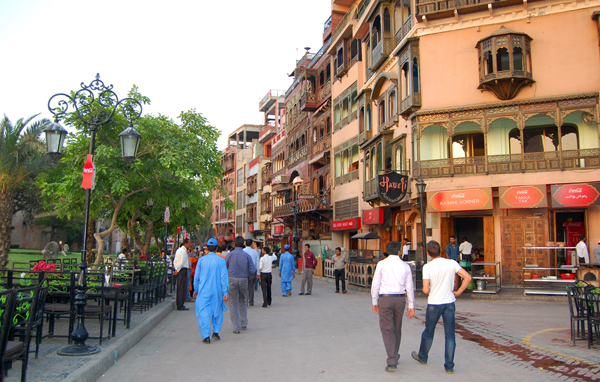
Pakistan
Coastal BeachesPakistan is a South Asian nation located in the northwestern part of the Indian subcontinent, bordered by India, Afghanistan, Iran, and China. The country is characterized by diverse geography ranging from the Indus River plains to the Karakoram and Hindu Kush mountain ranges. Pakistan has a rich cultural heritage blending Islamic traditions with South Asian influences, reflected in its architecture, cuisine, and festivals. The economy is primarily based on agriculture, textiles, and services, with growing sectors in technology and manufacturing. Major cities like Karachi, Lahore, and Islamabad serve as cultural and economic hubs. Life in Pakistan offers vibrant bazaars, warm hospitality, and a strong sense of community, though infrastructure and services vary significantly between urban and rural areas.
 PassportCard Expat Health Insurance
Get Quote
Never worry about paying your medical bills out of pocket again. The innovative PassportCard allows for a stress-free experience for all expat families, remote travelers, and workers. With a 24/7 customer service and an outstanding customer base of over 2 Million clients, it will feel like medical care at home. Get up to 10% off on your policy now.
PassportCard Expat Health InsuranceNever worry about paying your medical bills out of pocket again. The innovative PassportCard allows for a stress-free experience for all expat families, remote travelers, and workers. With a 24/7 customer service and an outstanding customer base of over 2 Million clients, it will feel like medical care at home. Get up to 10% off on your policy now.
Get Quote
Podcasts

Episode 8: Jake Barber - The Expat Finance Expert Returns



Episode 6: Jake Barber - Expat Finance Expert and Lifelong Expat
Living in Pakistan
Best Places to Live in Pakistan
Visa & Residency
Obtaining a residency in Pakistan involves several steps and can be an average challenge depending on the applicant's country of origin, the type of visa, and the purpose of stay. The most common types of visas that expats apply for are Work Visas and Business Visas. To apply for a Work Visa, an expat must have a job offer from a registered company in Pakistan. The company acts as a sponsor and submits a visa application to the Board of Investment in Pakistan. Once the application is approved, the expat can apply for a visa at the Pakistani embassy or consulate in their home country. The Work Visa is usually valid for one year and can be extended. For a Business Visa, the applicant must have a letter of invitation from a registered company in Pakistan or from a trade organization affiliated with the Chamber of Commerce and Industry. The Business Visa can be valid for up to five years with multiple entries, depending on the nature of the business and the applicant's nationality. Tourist Visas are also available for those who wish to explore business opportunities or for digital nomads who plan to stay for shorter periods. The Tourist Visa is typically valid for three months. The process for obtaining a visa involves submitting the required documents, which may include a passport with at least six months' validity, completed visa application forms, passport-sized photographs, a letter of invitation or sponsorship, and proof of financial means. Additional documents may be required depending on the specific visa category. The processing time can vary, and it is advisable to apply well in advance of the intended travel date. It is important to note that the visa policy can change, and it is recommended to check the latest requirements with the Pakistani embassy or consulate. Overall, while the process can be bureaucratic and time-consuming, it is generally manageable with the proper documentation and sponsorship.
Healthcare in Pakistan
The system in Pakistan comprises both public and private sectors. The public healthcare system is underfunded and faces challenges such as a shortage of medical staff, inadequate facilities, and limited resources, which often results in long waiting times and variable quality of care. Despite these challenges, public healthcare is free at the point of delivery for Pakistani citizens. The private healthcare sector, on the other hand, offers better facilities and quality of care but at a higher cost, making it less accessible to the lower-income population. Private hospitals and clinics are mostly concentrated in urban areas. Expats and digital nomads can access public healthcare, but many opt for private healthcare due to higher standards and shorter waiting times. It is advisable for expats and digital nomads to have private health insurance to cover the costs of private healthcare.
Cost of Living
Pakistan offers a low cost of living compared to Western countries and many Asian nations. Rental housing in major cities like Karachi and Lahore ranges from $200-800 USD monthly for modest apartments, while property purchases average $1,500-3,000 USD per square meter in urban areas. Daily expenses including food, transportation, and utilities are significantly affordable, with a comfortable lifestyle sustainable on $800-1,500 USD monthly in most cities.
Weather
Pakistan experiences a subtropical climate with distinct seasonal variations. Summers (May-September) are hot and humid, particularly in the plains, with temperatures often exceeding 40°C (104°F). Winters (November-February) are mild to cool in most regions, though northern areas can experience significant snowfall. The monsoon season (July-September) brings heavy rainfall to parts of the country, while other regions remain relatively dry year-round.
Educational System in Pakistan
The educational system in Pakistan is overseen by the Ministry of Education and is divided into five levels: primary (grades one through five), middle (grades six through eight), high (grades nine and ten, leading to the Secondary School Certificate), intermediate (grades eleven and twelve, leading to a Higher Secondary School Certificate), and university programs leading to undergraduate and graduate degrees. Education is compulsory for children between the ages of five and sixteen. The academic year typically starts in March or April and ends in October, with exams conducted at the end of each term. Private and public schools exist, with the private schools generally offering higher quality education but at a higher cost. The medium of instruction varies; it can be English or Urdu, with English often associated with higher quality education. The curriculum includes a combination of compulsory subjects like English, Urdu, Mathematics, and Science, as well as elective subjects in higher grades. The quality of education can vary significantly depending on the region, the type of school, and the resources available.
Living in Pakistan
Healthcare in Pakistan