Santiago
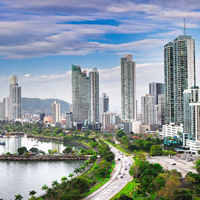
Urban RiverfrontSantiago is the capital and largest city of Chile, located in the central valley of the country. As the nation's political, economic, and cultural hub, Santiago serves as the center of Chilean government, finance, and commerce. The city is characterized by its modern skyline, historic colonial architecture, and vibrant neighborhoods that reflect centuries of development. Santiago offers a diverse cultural scene with world-class museums, galleries, theaters, and restaurants showcasing both traditional Chilean cuisine and international dining. The city is surrounded by natural beauty, with the Andes Mountains visible from many locations and numerous parks providing green spaces for residents and visitors. Santiago's infrastructure includes efficient public transportation, shopping districts, and business centers that make it a major South American metropolis. The city experiences distinct seasons and serves as a gateway to Chile's diverse regions, from the Atacama Desert to the south and the wine valleys nearby.
 Business Panama Group
Connect
The Business Panama Group is a well-established group of companies, professionals and alliance partners with 20 years of experience promoting and facilitating business, investments, real estate, immigration and tourism in Panama by providing information, business development and support services to individual and corporate investors.
Click connect to have our partner contact you via e-mail and/or phone.
Business Panama GroupThe Business Panama Group is a well-established group of companies, professionals and alliance partners with 20 years of experience promoting and facilitating business, investments, real estate, immigration and tourism in Panama by providing information, business development and support services to individual and corporate investors.
Connect
Click connect to have our partner contact you via e-mail and/or phone.
Visa & Residency
Panama is known for its welcoming stance towards expatriates and retirees, offering a variety of options that cater to different needs. The process of obtaining a residency visa in Panama involves several steps and the complexity can vary depending on the type of visa applied for. Two of the most popular visas are the Friendly Nations Visa and the Pensionado Visa. The Friendly Nations Visa is designed for citizens from a list of countries that Panama considers to have friendly relations with. Applicants must demonstrate economic ties to the country, which can typically be done by opening a local bank account with a minimum balance and either buying property in Panama or establishing a business. This visa leads to permanent residency and is a popular route for expats looking to work or start a business in Panama. The Pensionado Visa, on the other hand, is aimed at retirees. To qualify, applicants must prove they receive a lifetime pension of at least $1,000 per month. This visa offers numerous benefits, including discounts on services and entertainment in the country. It is a straightforward option for those looking to retire in Panama. For digital nomads, Panama introduced the Short Stay Visa for Remote Workers, which allows them to live in Panama for up to 9 months, with the possibility of extending for another 9 months. Applicants must provide proof of employment or business ownership outside of Panama, and show that they earn a stable monthly income. The general process for obtaining a residency visa in Panama involves hiring a local attorney to help navigate the legal requirements, preparing and submitting the necessary documentation (such as passport copies, proof of income, and health certificates), and paying the associated fees. After the application is submitted, it may take several months to be processed. Once approved, applicants usually receive a temporary residency card, and eventually, a permanent residency card. The process is considered to be easier and more streamlined than in many other countries, making Panama an attractive destination for expats and retirees.
Cost of Living
The cost of living in Santiago is moderate compared to other major South American capitals and international cities. While housing and dining in central neighborhoods can be relatively expensive, overall expenses for groceries, transportation, and utilities remain reasonable. The city offers a range of accommodation options and amenities at various price points, making it accessible to different budgets.
Weather
Santiago has a Mediterranean climate with warm, dry summers and mild, wet winters. The city enjoys abundant sunshine throughout the year, with temperatures typically ranging from cool in winter to warm in summer.
Healthcare in Santiago
Santiago has excellent healthcare infrastructure with modern private hospitals and clinics meeting international standards, including facilities like Clínica Alemana and Hospital Militar. Public healthcare is available through the national system, though private options are often preferred by expats for shorter wait times and English-speaking staff. Medical professionals are well-trained and equipment is up-to-date in major facilities.
Schools in Santiago
Santiago has several established international schools including The Nido de Aguilas, Santiago College, and Colegio Británico, offering IB, American, and British curricula. These schools serve the expatriate community and provide education in English alongside Spanish instruction.
Bilingual schools in Santiago blend Spanish with English or other languages throughout the curriculum. Options include schools like Colegio Alemán and various other institutions offering dual-language programs at primary and secondary levels.
Restaurants in Santiago
Healthcare in Santiago
_Logo-Panleb.jpg)