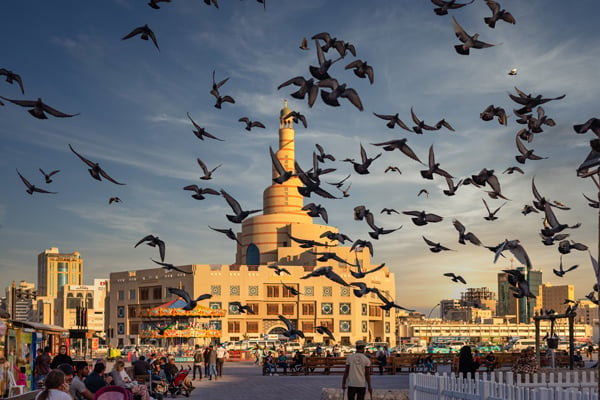
Qatar
Coastal BeachesQatar is a small, wealthy peninsula nation located on the Persian Gulf in the Middle East, bordered by Saudi Arabia. It is one of the world's richest countries per capita, driven primarily by vast natural gas and oil reserves. The capital and largest city, Doha, is a modern metropolis with striking contemporary architecture, luxury shopping, and world-class amenities. Qatar has a unique blend of traditional Arab culture and rapid modernization, with a significant expatriate population comprising the majority of residents. The country is known for hosting major international events, including the 2022 FIFA World Cup, and has invested heavily in sports, culture, and infrastructure. Life in Qatar offers high living standards, excellent healthcare and education, but comes with strict laws and a conservative social environment.
 AGS Worldwide Movers
Get Quote
Relocating abroad soon? Make your move with AGS! AGS Worldwide Movers is a leader in the international moving industry. Our experience and expertise allows us to guarantee our clients the best quality moving services.
AGS Worldwide MoversRelocating abroad soon? Make your move with AGS! AGS Worldwide Movers is a leader in the international moving industry. Our experience and expertise allows us to guarantee our clients the best quality moving services.
Get Quote
Podcasts

Episode 8: Jake Barber - The Expat Finance Expert Returns



Episode 6: Jake Barber - Expat Finance Expert and Lifelong Expat
Living in Qatar
Best Places to Live in Qatar
Visa & Residency
Obtaining a residency in Qatar generally involves securing a job or having family ties in the country. The most common type of residency visa is the Work Visa, which requires a sponsorship from a Qatari employer. The process begins with the employer applying for approval from the Ministry of Labour. Once approved, the expat can apply for an entry visa, which allows them to enter Qatar. After arrival, the expat must undergo a medical check-up and fingerprinting. The employer then completes the residence permit process by submitting the necessary documents to the Ministry of Interior. Family Visas are available for the immediate family members of sponsored expatriates. The sponsoring family member must meet certain income thresholds and provide accommodation proof to apply for family visas. Investor Visas are another option, available to those who invest a substantial amount in the Qatari economy. This visa grants the holder residency without the need for a Qatari sponsor. For those not planning to work or join family in Qatar, a Tourist Visa or a Business Visa might be suitable. These are typically short-term and do not grant residency but can be used by digital nomads or business travelers. The Tourist Visa is often obtained on arrival or through an online application process, depending on the traveler's nationality. The Business Visa requires an invitation from a company in Qatar and is intended for short-term business activities. Overall, while the process can be straightforward for those with a job offer, it can be more challenging for those trying to establish residency through other means. The bureaucracy can be complex, and the need for a sponsor means that expats have limited independence in the process. However, with proper documentation and a Qatari sponsor, the process is quite manageable.
Healthcare in Qatar
The system in Qatar is a combination of public and private services. The public healthcare system is managed by the Supreme Council of Health and the primary provider of public healthcare is the Hamad Medical Corporation (HMC). HMC operates an extensive network of hospitals and clinics throughout the country, offering a high standard of care. The quality of public healthcare in Qatar is generally considered to be good, with modern facilities and well-trained medical staff. Private healthcare is also available and offers an alternative for those seeking more immediate or specialized treatments. Private healthcare providers are numerous and include multi-specialty hospitals and clinics. The cost of public healthcare is heavily subsidized for Qatari nationals, while expatriates are required to have health insurance to cover their medical expenses. Expats and digital nomads can gain access to public healthcare by obtaining a health card, which allows them to use the services at a subsidized rate. However, many expats and digital nomads opt for private healthcare due to shorter waiting times and the availability of more diverse services.
Cost of Living
Qatar has one of the highest costs of living in the world, particularly for housing. Rental prices for apartments in central Doha range from $1,500-$4,000+ USD monthly for modest accommodations, with luxury properties significantly higher. Property purchase prices are extremely expensive, often exceeding $500,000 USD for modest homes. Daily expenses including groceries, dining, and utilities are also notably high, though somewhat offset by tax-free salaries for many expatriate workers.
Weather
Qatar experiences an extremely hot desert climate with scorching summers and mild winters. Summer temperatures (June to September) regularly exceed 45°C (113°F), with humidity levels making it feel even hotter, particularly near coastal areas. Winter months (December to February) are pleasant, ranging from 15-25°C (59-77°F). Rainfall is minimal throughout the year, with most precipitation occurring in winter months.
Educational System in Qatar
The educational system in Qatar is known for its high standards and is designed to provide students with a comprehensive and diverse learning experience. Education in Qatar is overseen by the Supreme Education Council and the Ministry of Education and Higher Education. The system is divided into several stages: preschool, primary, preparatory, and secondary education. Preschool, or kindergarten, is available to children from the age of three. Primary education starts at the age of six and lasts for six years. Following primary school, students enter the preparatory stage, which lasts for three years and serves as a transition phase to secondary education. Secondary education also spans three years, and students can choose between general secondary education or specialized schools that focus on areas such as science, technology, or the arts. The academic year in Qatar typically starts in September and ends in June. Public education is free for Qatari citizens, and the government has invested heavily in educational infrastructure, including state-of-the-art facilities and technology. English is widely taught and used as a second language, and there are also many private and catering to the expatriate community, offering various international curricula and languages. Students graduate from secondary school at around the age of 18, after which they can choose to enter the workforce or pursue higher education. The Qatari government places a strong emphasis on education as a means of developing a knowledge-based economy, and as such, the quality of education is generally high.
Living in Qatar
Healthcare in Qatar