Russia
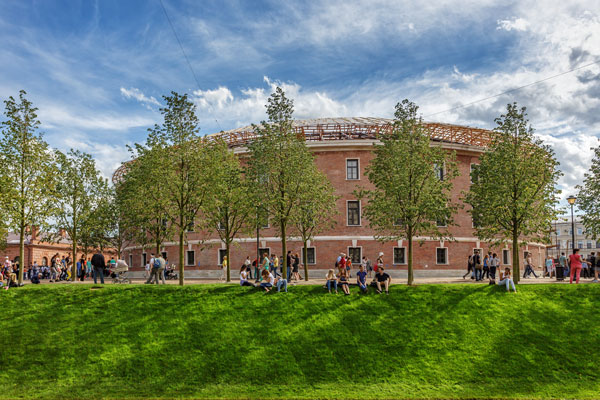
Coastal BeachesRussia is the world's largest country by area, spanning Eastern Europe and Northern Asia across 11 time zones with diverse landscapes ranging from European plains to Siberian forests and Pacific coastlines. The culture is deeply rooted in literature, classical music, ballet, and visual arts, with a rich history spanning centuries of tsars, revolutions, and Soviet influence. The economy is resource-based, heavily dependent on oil and natural gas exports, though it faces international sanctions and economic challenges. Life in Russia varies dramatically between major cities like Moscow and St. Petersburg, which offer modern amenities and vibrant cultural scenes, and remote regions with limited infrastructure. The Russian people are known for their resilience, strong family values, and pride in their cultural heritage. Relocating to Russia requires navigating visa requirements, language barriers, and understanding the current geopolitical climate.
 BlueCross BlueShield Global Solutions
Get Quote
BlueCross BlueShield Global Solutions (BCBS) offers global health plans for international assignments or trips lasting 6 months or longer. With access to over 1.7M medical providers in 190 countries around the world, BCBS provides members with solutions and industry-leading digital services - ensuring top-quality coverage to people who live, work, study and travel internationally.
BlueCross BlueShield Global SolutionsBlueCross BlueShield Global Solutions (BCBS) offers global health plans for international assignments or trips lasting 6 months or longer. With access to over 1.7M medical providers in 190 countries around the world, BCBS provides members with solutions and industry-leading digital services - ensuring top-quality coverage to people who live, work, study and travel internationally.
Get Quote
Podcasts

Episode 6: Jake Barber - Expat Finance Expert and Lifelong Expat



Episode 8: Jake Barber - The Expat Finance Expert Returns
Living in Russia
Best Places to Live in Russia
Visa & Residency
Obtaining a residency in Russia involves several steps and can be somewhat complex, depending on the applicant's circumstances. The process typically starts with obtaining a Temporary Residence Permit (TRP), which is valid for three years and can be extended. To apply for a TRP, a foreign national must first have a valid visa to enter Russia, such as a tourist, business, or student visa. Once in Russia, the applicant must submit a TRP application to the local office of the Federal Migration Service, including various documents such as a passport, visa, migration card, proof of income, and a medical certificate proving the applicant is free of certain diseases. After living in Russia with a TRP for one year, expats can apply for a Permanent Residence Permit (PRP), which is valid for five years and can be renewed. The PRP application requires similar documentation as the TRP, along with proof of the applicant's ability to speak Russian. The difficulty of the process can vary based on the applicant's nationality, Russian language proficiency, and ability to fulfill all the requirements. It is important to note that the Russian government has quotas for the number of TRPs issued each year, which can affect the chances of obtaining one. Additionally, the process can be bureaucratic and time-consuming, often requiring assistance from a legal professional or an agency that specializes in Russian law. For digital nomads, Russia offers a Business Visa that can be used for short-term stays. This visa allows them to stay in Russia for up to 90 days within any 180-day period. It is suitable for those who wish to work remotely while living temporarily in Russia. However, it does not lead to residency. Those looking for longer-term options would need to explore other types of visas and permits as mentioned above.
Healthcare in Russia
The system in Russia is a mix of public and private services. The state provides basic healthcare to all citizens and registered residents through a compulsory health insurance program. This public healthcare is funded by taxes and is generally free at the point of service, although there can be issues with accessibility, waiting times, and quality in some regions. Private healthcare in Russia is available and offers higher standards of service and shorter waiting times, but at a higher cost. Expats and digital nomads can access public healthcare if they are legally employed in Russia and contribute to the compulsory health insurance system. Otherwise, they typically rely on private health insurance. The quality of healthcare can vary significantly between urban and rural areas, with Moscow and St. Petersburg having the best facilities.
Cost of Living
Cost of living in Russia is generally low to moderate, particularly outside major cities, with Moscow and St. Petersburg being significantly more expensive than regional areas. Rent in Moscow city center averages $800-1,500 USD monthly for a one-bedroom apartment, while outside the center it drops to $400-700. Property purchases range from $3,000-8,000 USD per square meter in major cities to $500-2,000 in provincial areas. Daily expenses including food, transportation, and utilities are considerably cheaper than Western Europe or North America, making Russia affordable for those with Western incomes.
Weather
Russia experiences extreme continental climate variations, with winters in Siberia dropping below -40°C (-40°F) and lasting 6-8 months, while summers can be warm but brief. European Russia has more moderate winters around -10°C (14°F) with longer growing seasons. Coastal regions like Vladivostok have milder winters but still experience significant seasonal swings. Precipitation is moderate across most regions, with snow covering much of the country during winter months.
Educational System in Russia
The educational system in Russia is known for its strong emphasis on rigorous academics and comprehensive subject coverage. Education in Russia is compulsory for children from the age of 6 to 15, which includes primary and basic secondary education. The system is divided into four main levels: pre-school education, primary education, basic general education, and secondary education. Pre-school education is not compulsory and caters to children aged 3 to 6 years. Primary education begins at age 6 and lasts for four years, where students are taught basic subjects. Following primary education, children move on to basic general education which lasts for five years and covers grades 5 to 9. After completing grade 9, students have the option to continue their secondary education for two more years (grades 10 and 11), which can either be general secondary education or vocational secondary education. General secondary education prepares students for higher education, while vocational education provides specialized training for various trades. The school year typically runs from September to June, and the curriculum includes subjects such as Russian language, mathematics, history, science, and physical education, among others. Upon completion of secondary education, students receive a certificate of secondary complete general education and can take the Unified State Exam (USE) if they wish to apply for higher education institutions. The quality of education is generally high, with a strong focus on science and technology, and Russia has a literacy rate of over 99%.