
Educational System in Senegal


Summary: The one tip that you hear expats living in Senegal repeatedly sharing with newcomers is not to buy a home when you first move to Senegal. Rent for a few months or longer so that you have time to find the right neighborhood. Give yourself time to ensure that Senegal is right for you for the long term. If you've already taken time to do those things and are ready to take the plunge and become a property owner, here are tips about buying a home in Senegal.
Moving to Senegal with your family comes with numerous considerations, one of the most significant being your children's education. The educational system in Senegal is structured and offers various options for expats, from public to private and international schools. Understanding the system will help you make informed decisions about your children's schooling. Here's a comprehensive guide to help you navigate the educational landscape in Senegal.
What are the main stages of education in Senegal and what are the names of those stages?
The Senegalese educational system is primarily based on the French model and is divided into three main stages. These stages are Elementary School (École Élémentaire), Middle School (Collège), and High School (Lycée). Each stage has its unique focus and caters to different age groups.
Elementary School (École Élémentaire)
Elementary School in Senegal caters to children aged 6 to 11 and is divided into five levels: CI (Cours d'Initiation), CP (Cours Préparatoire), CE1 (Cours Élémentaire 1), CE2 (Cours Élémentaire 2), and CM1/CM2 (Cours Moyen 1/2). The focus is on building a strong foundation in reading, writing, mathematics, and basic science. Instruction is primarily in French, with some introduction to local languages like Wolof.
Middle School (Collège)
Middle School, or Collège, is for students aged 11 to 15 and spans four years: 6ème, 5ème, 4ème, and 3ème. During these years, the curriculum broadens to include subjects like history, geography, science, and foreign languages. Students are prepared for the Brevet de Collège, a national exam that marks the end of middle school.
High School (Lycée)
High School, or Lycée, caters to students aged 15 to 18 and is divided into three years: Seconde, Première, and Terminale. Students can choose between different tracks, such as sciences, literature, or economics. The final year culminates in the Baccalauréat, a national exam that determines university admission.
How does a newcomer from a different country enroll their kids in school?
To enroll your children in a Senegalese school, you will typically need to provide a valid passport, a residence permit, previous school records, and a birth certificate. It's essential to contact the school directly for specific requirements, as they may vary. Some schools may also require an entrance exam to assess the student's level.
My children are still learning Wolof, can they enroll in a public school?
While the primary language of instruction in Senegalese public schools is French, there is some inclusion of local languages like Wolof. However, if your children are still learning Wolof, they may face initial challenges. It's recommended to supplement their education with language support or consider bilingual schools if available.
Are there public bilingual schools? (Where are they and how do international students get admitted)
Public bilingual schools are not common in Senegal, but there are some private and that offer bilingual programs. These schools are typically located in major cities like Dakar. Admission requirements vary, but usually include an application, an entrance exam, and previous school records. It's best to contact the schools directly for detailed information.
What types of private schools are common in Senegal?
Private schools in Senegal include Catholic schools, international schools, and other private institutions offering various curricula. International schools often follow the French, American, or British educational systems and may offer the International Baccalaureate (IB) program. Private schools generally provide smaller class sizes and additional resources.
Do expats typically send their children to public or private school? How expensive are Private schools in Senegal?
Expat families often choose private or international schools for their children due to the language of instruction and the familiarity of the curriculum. Private schools in Senegal can be expensive, with tuition fees ranging from around 1,000,000 CFA to over 5,000,000 CFA per year, depending on the school and the grade level.
Are you allowed to homeschool while living in Senegal?
Homeschooling is not widely recognized or regulated in Senegal. While there is no explicit law against it, the educational system is structured around traditional schooling methods. If you choose to homeschool, it's essential to ensure that your children can integrate back into the school system or pursue higher education in the future.
May kids attend online school instead of a local school while living in Senegal?
Online schooling is an option for expat families living in Senegal. Several international schools offer online programs that follow various curricula. However, it's important to consider the time zone differences and the social aspects of traditional schooling. Ensure that any online program you choose is accredited and recognized internationally.
About the Author
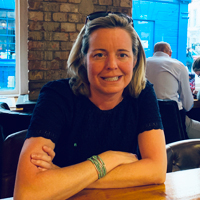 Betsy Burlingame is the Founder and President of Expat Exchange and is one of the Founders of Digital Nomad Exchange. She launched Expat Exchange in 1997 as her Master's thesis project at NYU. Prior to Expat Exchange, Betsy worked at AT&T in International
and Mass Market Marketing. She graduated from Ohio Wesleyan University
with a BA in International Business and German.
Betsy Burlingame is the Founder and President of Expat Exchange and is one of the Founders of Digital Nomad Exchange. She launched Expat Exchange in 1997 as her Master's thesis project at NYU. Prior to Expat Exchange, Betsy worked at AT&T in International
and Mass Market Marketing. She graduated from Ohio Wesleyan University
with a BA in International Business and German.
Some of Betsy's articles include 12 Best Places to Live in Portugal, 7 Best Places to Live in Panama and 12 Things to Know Before Moving to the Dominican Republic. Betsy loves to travel and spend time with her family. Connect with Betsy on LinkedIn.
Additional Information: