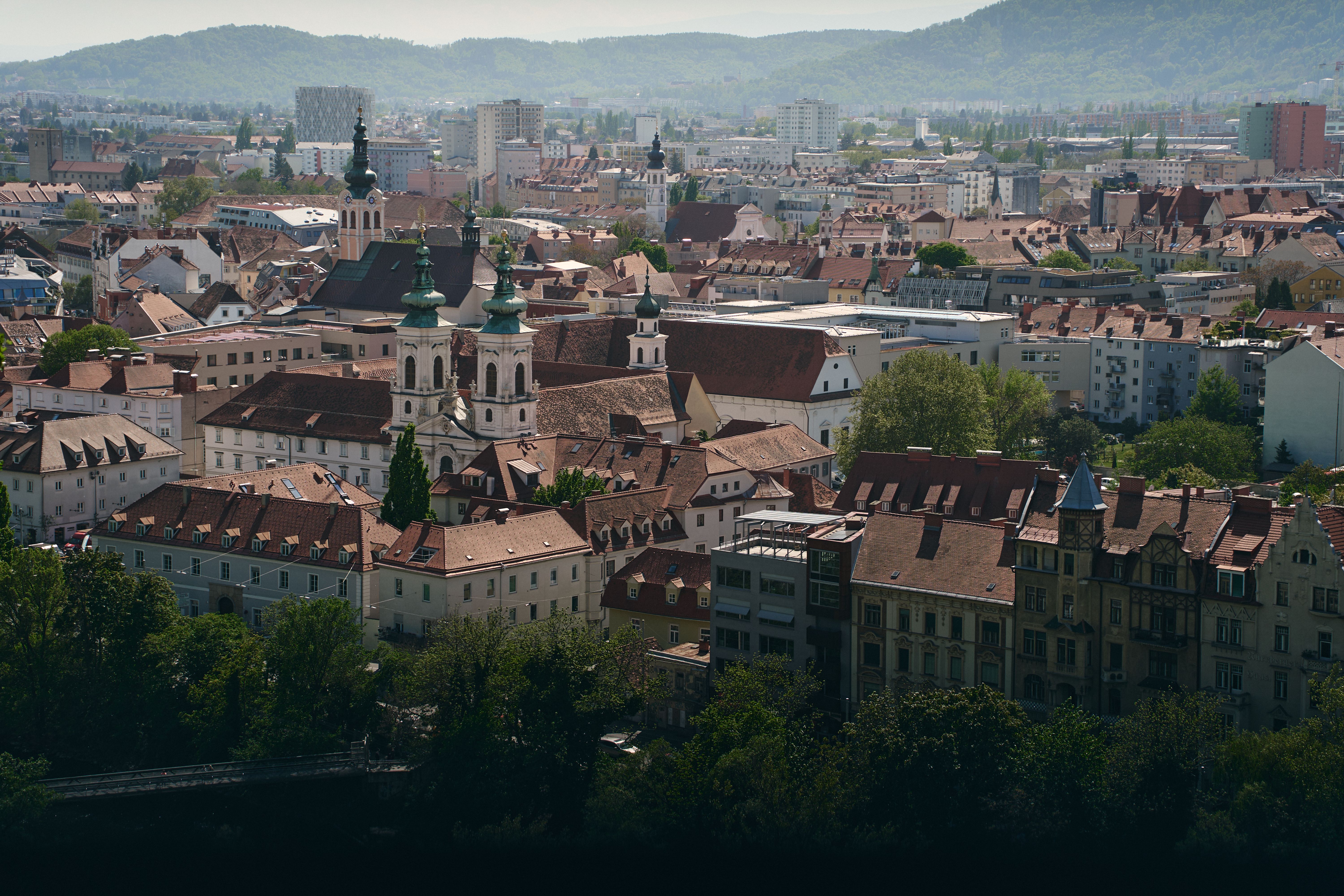
Graz
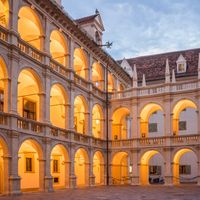
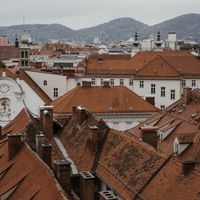
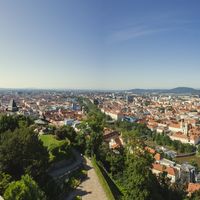
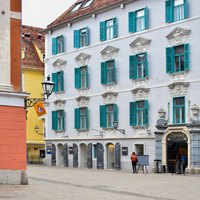
Urban RiverfrontGraz is the capital city of Styria (Steiermark) in southeastern Austria and the country's second-largest city. Located in the Mur River valley, Graz is renowned for its well-preserved medieval Old Town, which has been designated a UNESCO World Heritage Site. The city's historic center features narrow winding streets, Renaissance and Baroque architecture, and the iconic Graz Cathedral. The Schlossberg, a prominent hill overlooking the city, is crowned with a clock tower that has become the symbol of Graz. The city blends historical charm with contemporary culture, hosting numerous museums, galleries, and cultural institutions. Graz is known for its vibrant student population, which gives the city a youthful energy and lively atmosphere. The surrounding Styrian region is famous for its wine production and green landscapes. The city serves as an important cultural and economic hub in the region, with a strong emphasis on innovation and technology. Graz is easily accessible and well-connected to other major European cities, making it an attractive destination for both tourists and residents.
 SJB Global
Connect
SJB-Global is a top-rated financial advisory firm specializing in expat financial advice worldwide, offering retirement planning & tax-efficient solutions with a regressive fee model. Our clients benefit from their country’s most favorable tax environment by utilizing the efficient investment vehicles we offer. Our commitment to quality service is reflected in our stellar reviews, with over 300 testimonials boasting 95% five-star ratings.
Click connect to have our partner contact you via e-mail and/or phone.
SJB GlobalSJB-Global is a top-rated financial advisory firm specializing in expat financial advice worldwide, offering retirement planning & tax-efficient solutions with a regressive fee model. Our clients benefit from their country’s most favorable tax environment by utilizing the efficient investment vehicles we offer. Our commitment to quality service is reflected in our stellar reviews, with over 300 testimonials boasting 95% five-star ratings.
Connect
Click connect to have our partner contact you via e-mail and/or phone.
Visa & Residency
Obtaining a residency in Austria involves several steps and the process can be somewhat complex, depending on the type of visa and the applicant's circumstances. The Red-White-Red Card is a popular option for skilled workers from third countries. It is based on a points system that considers factors such as professional qualifications, work experience, language skills, and age. To apply, one must have a job offer in Austria that corresponds with their qualifications. The application process involves gathering necessary documents, such as proof of accommodation, health insurance, and a no criminal record certificate, and submitting them to the Austrian embassy or consulate in one's home country or directly to the Austrian authorities if legally residing in Austria. Another option for expats is the Family Reunification Visa, which allows family members of Austrian residents to live in Austria. The main requirement is proof of a family relationship, such as marriage or parenthood, with an Austrian resident. For those who do not qualify for the Red-White-Red Card or Family Reunification Visa, there are other types of permits such as the Student Visa or the Job Seeker Visa. The Job Seeker Visa allows individuals to enter Austria for six months to look for work. If they find a job that meets certain criteria, they can then apply for a Red-White-Red Card. The process can be challenging due to the need for accurate documentation and navigating the legal requirements. It is advisable to start the application process well in advance of the intended move date and to consult with the Austrian embassy or a legal expert specializing in Austrian law. The difficulty of the process can vary greatly depending on the individual's situation and preparedness. However, Austria has a well-defined immigration system, and with the correct preparation, obtaining a residency visa is a manageable task for most expats.


Cost of Living
The cost of living in Graz is moderate compared to other major Austrian cities like Vienna. Housing, food, and transportation are reasonably priced, making it an affordable option for residents and students. The city offers good value for money while maintaining high quality of life standards.
Weather
Graz experiences a temperate continental climate with warm summers and cold winters, with average temperatures ranging from around 0°C in January to 20°C in July.
Healthcare in Graz
Graz has well-developed healthcare facilities including the Universitätsklinikum (University Hospital), one of Austria's leading medical centers, and several other modern hospitals and clinics. The healthcare system is of high quality with comprehensive services and English-speaking staff available at major facilities. Emergency medical services are efficient and accessible throughout the city.
Schools in Graz
Graz has several international schools including the Graz International School, which offers an English-language curriculum following international standards. The city also has schools offering IB programs and other international educational frameworks.
Graz offers bilingual schools with German-English instruction, including options that combine Austrian education standards with English-language components. These schools serve both local and expatriate families seeking multilingual education.
Restaurants in Graz
Living in Graz
Moving to Graz
Healthcare in Graz