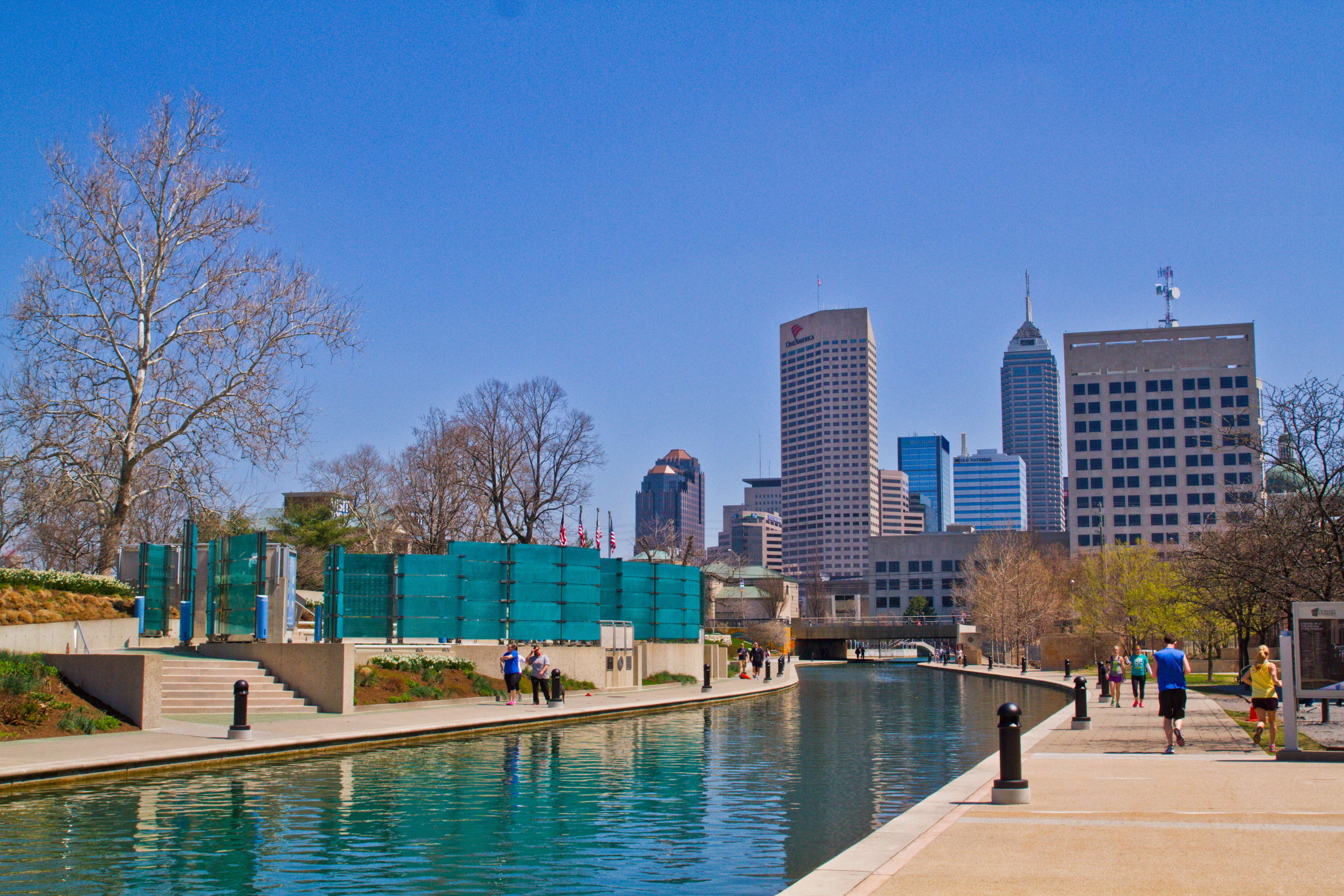


Indianapolis
Urban RiverfrontIndianapolis moves at a steady, purposeful pace. The city sprawls across central Indiana with wide streets and a downtown core that feels both accessible and genuinely alive—not overdeveloped, not sleepy. There's a working-city quality here: people have jobs, they move through their days, they know their neighborhoods. The White River cuts through town, and while it's not a defining feature the way rivers are in some cities, it anchors parks and green space that break up the urban grid. The downtown has seen real investment in recent years—restaurants, galleries, and mixed-use developments have taken root without erasing what was already there. The neighborhoods vary considerably: some are tree-lined and residential with early-20th-century homes, others are more industrial or transitional. The cultural institutions—museums, theaters, the zoo—are solid and well-attended. Sports runs deep here, particularly basketball, and that civic pride shows. The surrounding areas blend into suburbs and then farmland fairly quickly, so you're never far from open space. The city has a Midwestern directness to it: people are friendly without being effusive, the pace is moderate, and there's little pretense. It's a place where you can actually afford to live, work, and build a life without the constant financial pressure of coastal cities.
Cost of Living
Housing in Indianapolis remains genuinely affordable compared to most major U.S. cities—you can find solid homes in good neighborhoods without spending a fortune or taking on crushing debt. Groceries, utilities, and dining out are all reasonably priced. Property taxes are moderate for Indiana, and there's no state sales tax on groceries, which helps. Overall, a middle-class income stretches further here than in coastal metros.
Weather
Indianapolis has a humid continental climate with four distinct seasons. Summers are warm and humid, winters are cold with moderate snowfall, and spring and fall are mild and pleasant.
Healthcare in Indianapolis
Indiana University Health operates the dominant network, with IU Health Methodist and IU Health University Hospital as the major trauma centers handling complex cases. Franciscan Health and Community Health Network provide secondary capacity across the metro. Response times are generally solid in the urban core but can stretch in outer ring suburbs.
Schools in Indianapolis
Indianapolis has several international-focused schools including Herron High School, which offers International Baccalaureate (IB) programming, and Cathedral High School with IB offerings. The International School of Indiana provides a full IB curriculum from elementary through high school.
Bilingual education options exist primarily through Spanish-English dual immersion programs at select public schools, including some elementary schools in the Indianapolis Public Schools system. Private institutions also offer bilingual instruction, though options are more limited compared to larger metropolitan areas.
Restaurants in Indianapolis