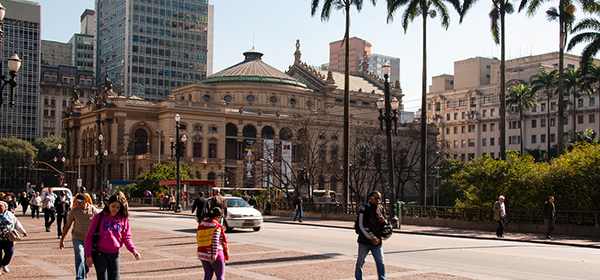
Sao Paulo
Urban RiverfrontSão Paulo is the largest city in Brazil and one of the most populous metropolitan areas in the world, serving as the country's economic and cultural powerhouse. Located in southeastern Brazil, the city is a vibrant hub of commerce, industry, and innovation, with a skyline dominated by modern skyscrapers and a complex network of neighborhoods each with distinct character. The city pulses with energy, featuring world-class museums, galleries, theaters, and music venues that showcase Brazilian and international art and culture. São Paulo's diverse culinary scene reflects its multicultural population, offering everything from traditional Brazilian cuisine to international dining experiences. The city is known for its dynamic street art, bustling markets, and lively nightlife that extends into the early morning hours. Despite its urban density and traffic challenges, São Paulo offers numerous parks and green spaces where residents and visitors can escape the urban environment. The city's economy drives much of Brazil's growth, with headquarters of major corporations, financial institutions, and startups concentrated throughout the metropolitan area. São Paulo's influence extends beyond Brazil, making it a major player in Latin American business, culture, and politics.
 Oliveira Lawyers
Get Quote
Oliveira Lawyers is the foremost Brazilian law firm dedicated to representing the interests of foreign citizens in Brazil. From immigration to real estate and other life events, our bilingual attorneys got you covered! Main services include immigration, real estate, notary services, tax services, collections, family law, and litigation.
Oliveira LawyersOliveira Lawyers is the foremost Brazilian law firm dedicated to representing the interests of foreign citizens in Brazil. From immigration to real estate and other life events, our bilingual attorneys got you covered! Main services include immigration, real estate, notary services, tax services, collections, family law, and litigation.
Get Quote
Visa & Residency
Obtaining a residency in Brazil involves several steps and can vary in complexity depending on the type of visa applied for. The two most common types of visas for expats are the Permanent Visa (VIPER) and the Temporary Visa (VITEM). The Permanent Visa is typically for those who have family ties in Brazil, such as a Brazilian spouse or child, or for those who are retiring in Brazil with a transfer of a sufficient monthly income. The Temporary Visa encompasses various categories, including work, study, and research. For a work visa, the applicant must first secure a job with a Brazilian company, which will sponsor the visa. The company must prove that the position cannot be filled by a local worker. The Temporary Visa for work is usually valid for up to two years and can be converted into a permanent visa after this period. Digital nomads often use the Temporary Visa (VITEM-V), which is intended for artistic or cultural activities, including sports, but can be adapted for remote workers. This visa allows them to live in Brazil for up to one year and can be extended for another year. The application process generally involves submitting various documents, such as a passport, birth certificate, proof of income or employment, and a criminal background check. Applicants must also fill out the appropriate application forms and pay the required fees. Some visas require registration with the Federal Police in Brazil within 90 days of arrival. The difficulty of the process can vary. It is considered average, but it can be challenging due to bureaucratic hurdles and the need for proper documentation and sponsorship. It is highly recommended to consult with the Brazilian consulate or embassy in the applicant's home country, as well as potentially hiring a legal representative or specialist to assist with the process. The exact requirements and procedures can change, so up-to-date information should be sought during the application process.
Cost of Living
The cost of living in São Paulo is high compared to other Brazilian cities, particularly in desirable neighborhoods and for imported goods. Housing, dining at quality restaurants, and international services command premium prices due to the city's status as Brazil's economic center. However, costs remain moderate compared to major global cities, offering relatively good value for certain amenities and services.
Weather
São Paulo has a subtropical climate with warm temperatures year-round, experiencing a rainy season from November to March and a drier season from April to October.
Healthcare in Sao Paulo
São Paulo has excellent healthcare infrastructure with numerous private and public hospitals offering high-quality medical services, including several internationally accredited facilities. Major hospitals like Hospital Sírio-Libanês and Hospital Albert Einstein are among the best in Latin America. The city provides comprehensive healthcare options, though public system wait times can be lengthy and private insurance or out-of-pocket costs are recommended for expats.
Schools in Sao Paulo
São Paulo has several established international schools including Escola Americana de São Paulo (American curriculum), St. Paul's School (British curriculum), and Bandeirantes (IB program). These schools offer English-language education and follow international curricula.
São Paulo has numerous bilingual schools offering Portuguese-English instruction, such as Escola Bilíngue Pueri Domus and Escola Bilíngue Viva. These schools blend Brazilian and international educational approaches.
Restaurants in Sao Paulo
Living in Sao Paulo
Best Places to Live in Sao Paulo
Moving to Sao Paulo
Healthcare in Sao Paulo