Plovdiv
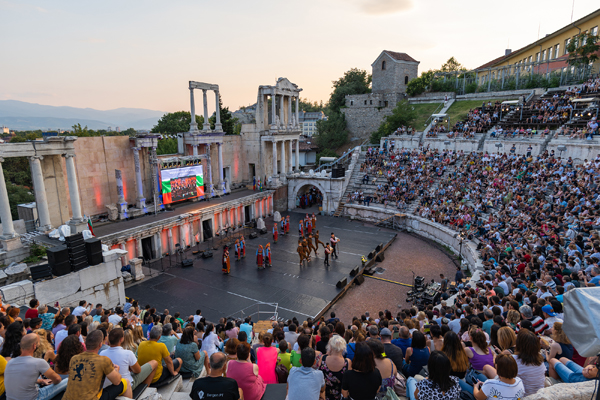
Urban RiverfrontPlovdiv is Bulgaria's second-largest city and one of Europe's oldest continuously inhabited settlements, perched on seven hills along the Maritsa River in south-central Bulgaria. The city draws a mix of residents—young professionals seeking affordable urban life, artists and creatives drawn to its bohemian Old Town quarters, families taking advantage of lower living costs than Western Europe, and retirees from across the continent. The Old Town, with its narrow cobblestone streets and 19th-century National Revival houses painted in ochre and cream, feels almost frozen in time, while the modern city spreads across the plains below with Soviet-era apartment blocks and contemporary development. Plovdiv's Roman amphitheater, still used for concerts and performances, anchors the city's identity as a place where ancient history isn't museum-bound but woven into daily life. The city has experienced a cultural renaissance in recent years, with independent galleries, craft breweries, and restaurants opening in restored Ottoman and Bulgarian mansions. Street art covers many walls, and the riverside promenade has become a gathering spot for locals. Unlike Sofia's intensity, Plovdiv moves at a slower pace while maintaining genuine urban energy—walkable neighborhoods, a functioning market culture, and a student population that keeps things lively without overwhelming the place.
 PassportCard Expat Health Insurance
Get Quote
Never worry about paying your medical bills out of pocket again. The innovative PassportCard allows for a stress-free experience for all expat families, remote travelers, and workers. With a 24/7 customer service and an outstanding customer base of over 2 Million clients, it will feel like medical care at home. Get up to 10% off on your policy now.
PassportCard Expat Health InsuranceNever worry about paying your medical bills out of pocket again. The innovative PassportCard allows for a stress-free experience for all expat families, remote travelers, and workers. With a 24/7 customer service and an outstanding customer base of over 2 Million clients, it will feel like medical care at home. Get up to 10% off on your policy now.
Get Quote
Visa & Residency
Obtaining a residency in Bulgaria involves several steps and can be considered an average challenge compared to other European countries. The process begins with determining the appropriate type of visa. Expats typically apply for a D-type visa for long-term residence if they plan to stay in Bulgaria for more than 90 days within a six-month period. This visa is suitable for various purposes, including employment, study, family reunification, or conducting business. To apply for a D-type visa, expats must submit their application to the nearest Bulgarian embassy or consulate in their home country. The required documents usually include a valid passport, proof of accommodation in Bulgaria, health insurance, a criminal record check from the applicant's home country, and evidence of sufficient financial means to support their stay. Depending on the purpose of the long-term stay, additional documents such as a work permit, proof of enrollment in an educational institution, or documents related to family ties in Bulgaria may be required. Once the D-type visa is granted, it allows the holder to enter Bulgaria and apply for a long-term residence permit, which is valid for up to one year and can be renewed annually. The application for a residence permit is submitted to the Migration Directorate or the respective regional directorate of the Ministry of Interior after arriving in Bulgaria. Digital nomads often use the same D-type visa to enter Bulgaria. They can stay for up to 6 months and, during this period, apply for a long-term residence permit if they wish to extend their stay. The process for digital nomads is similar to other expats, with the emphasis on proving they can work remotely and have sufficient funds to support themselves without taking local jobs. Overall, while the process involves bureaucracy and the gathering of various documents, it is relatively straightforward if all the requirements are met. Expats and digital nomads are advised to start the application process well in advance of their intended move date to allow for any potential delays.
Cost of Living
Plovdiv remains one of Bulgaria's most affordable major cities, with apartment rentals and dining costs a fraction of Western European standards. A comfortable lifestyle—including rent, food, and entertainment—is achievable on a modest budget, which explains its growing appeal to remote workers and retirees from higher-cost countries.
Weather
Plovdiv experiences a temperate continental climate with warm summers reaching the high 80s Fahrenheit and cold winters dropping below freezing, with moderate rainfall spread throughout the year.
Healthcare in Plovdiv
Plovdiv has several public hospitals including Kaspela Hospital and the University Hospital, which provide general and specialized care. Private clinics operate throughout the city and offer faster appointment access, though costs exceed public facilities. Emergency services function, though response times and equipment quality vary by location.
Schools in Plovdiv
Plovdiv has several international options, including the American College of Sofia's Plovdiv campus and British-curriculum schools. These institutions typically follow IB or Western curricula and serve expat families, though enrollment can be limited compared to larger European cities.
Bulgarian schools with English-language tracks exist throughout the city, particularly in state and private institutions. Bilingual programs tend to emphasize English from primary level onward, though availability and quality vary by school.
Restaurants in Plovdiv