Bamberg
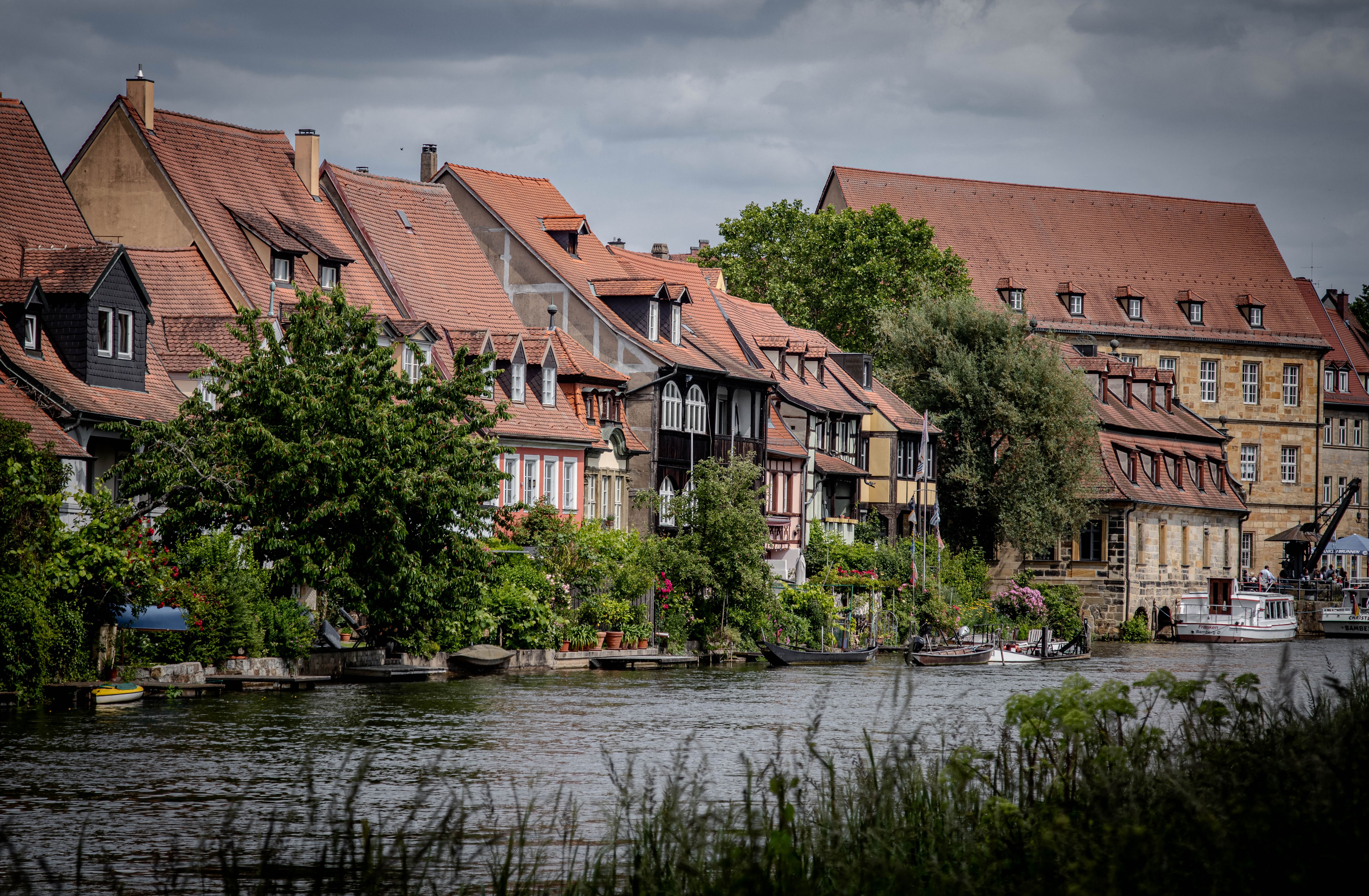
Urban RiverfrontBamberg draws history enthusiasts, culture seekers, and families who want to live in a place where medieval architecture isn't a museum exhibit but the actual streetscape. The city sits in Franconia, in the state of Bavaria, and its identity centers on the Regnitz River, which splits the old town into distinct quarters. The UNESCO-listed Altstadt (old town) features narrow lanes lined with half-timbered houses, baroque facades, and the imposing Bamberg Cathedral, which dominates the skyline. The Drudenhaus and other Renaissance structures reflect centuries of prince-bishop rule. Locals and newcomers alike navigate by foot or bicycle through car-free zones, past independent bookshops, galleries, and cafes. The city's beer culture runs deep—Bamberg is famous for its smoked lager (Rauchbier) and has more breweries per capita than most German cities. Beyond the old town, residential neighborhoods offer quieter living with good schools and parks. The surrounding region provides access to hiking, wine routes through Franconia, and day trips to larger Bavarian cities.
 SJB Global
Connect
SJB-Global is a top-rated financial advisory firm specializing in expat financial advice worldwide, offering retirement planning & tax-efficient solutions with a regressive fee model. Our clients benefit from their country’s most favorable tax environment by utilizing the efficient investment vehicles we offer. Our commitment to quality service is reflected in our stellar reviews, with over 300 testimonials boasting 95% five-star ratings.
Click connect to have our partner contact you via e-mail and/or phone.
SJB GlobalSJB-Global is a top-rated financial advisory firm specializing in expat financial advice worldwide, offering retirement planning & tax-efficient solutions with a regressive fee model. Our clients benefit from their country’s most favorable tax environment by utilizing the efficient investment vehicles we offer. Our commitment to quality service is reflected in our stellar reviews, with over 300 testimonials boasting 95% five-star ratings.
Connect
Click connect to have our partner contact you via e-mail and/or phone.
Visa & Residency
Obtaining a residency in Germany involves several steps and the process can vary depending on the type of visa one is applying for. For expatriates, the most common types of residency visas include the EU Blue Card, Residence Permit for Employment, and Residence Permit for Self-Employed Business Purposes. The EU Blue Card is targeted at highly skilled professionals from non-EU countries who have a job offer in Germany with a minimum salary threshold. Applicants must have a recognized university degree or equivalent. The Residence Permit for Employment is for those who have a specific job offer in Germany, while the Residence Permit for Self-Employed Business Purposes is for entrepreneurs planning to start a business in Germany. To apply for any of these visas, one must first secure a job offer or prove their business plan's viability. The next step is to schedule an appointment with the German embassy or consulate in one's home country to submit the visa application. Required documents typically include a valid passport, proof of health insurance, proof of accommodation in Germany, and relevant certificates or diplomas. For the freelance visa, which is popular among digital nomads, applicants must also provide evidence of their freelance work, such as contracts or letters of intent from potential clients, and prove that their work is in demand in Germany. Once the initial visa is granted, which allows entry into Germany, expatriates must then register with the local residents' registration office and apply for a residence permit to stay longer than the visa's validity. The residence permit application process involves providing additional documentation, such as proof of financial stability and a clean criminal record. The duration of the residence permit can vary, but it is often issued for one year and can be renewed. The EU Blue Card, for example, can lead to permanent residency after 33 months, or 21 months with a B1 level of German language proficiency. Overall, while the process can be bureaucratic and requires thorough preparation, it is generally considered average in terms of difficulty compared to other countries. It is essential to start the application process well in advance of the intended move date and to ensure all paperwork is meticulously completed and accurate.
Cost of Living
Living in Bamberg costs less than Munich or other major German cities, though prices have climbed as the city attracts remote workers and young professionals. Rent for a one-bedroom apartment in the center runs moderately, while outside the Altstadt it drops noticeably. Groceries, dining, and utilities align with German averages. Property ownership remains accessible compared to other UNESCO heritage towns in Europe.
Weather
Bamberg experiences a temperate continental climate with cold, snowy winters and mild summers; expect significant rainfall year-round.
Healthcare in Bamberg
Bamberg has two main hospitals: Sozialstiftung Bamberg operates the primary acute care facility with general medicine, surgery, and emergency departments, while smaller clinics handle specialized care. Response times are typically quick given the city's compact size, and English-speaking staff are available at major facilities, though communication can be limited at smaller practices.
Restaurants in Bamberg
Living in Bamberg