Potsdam
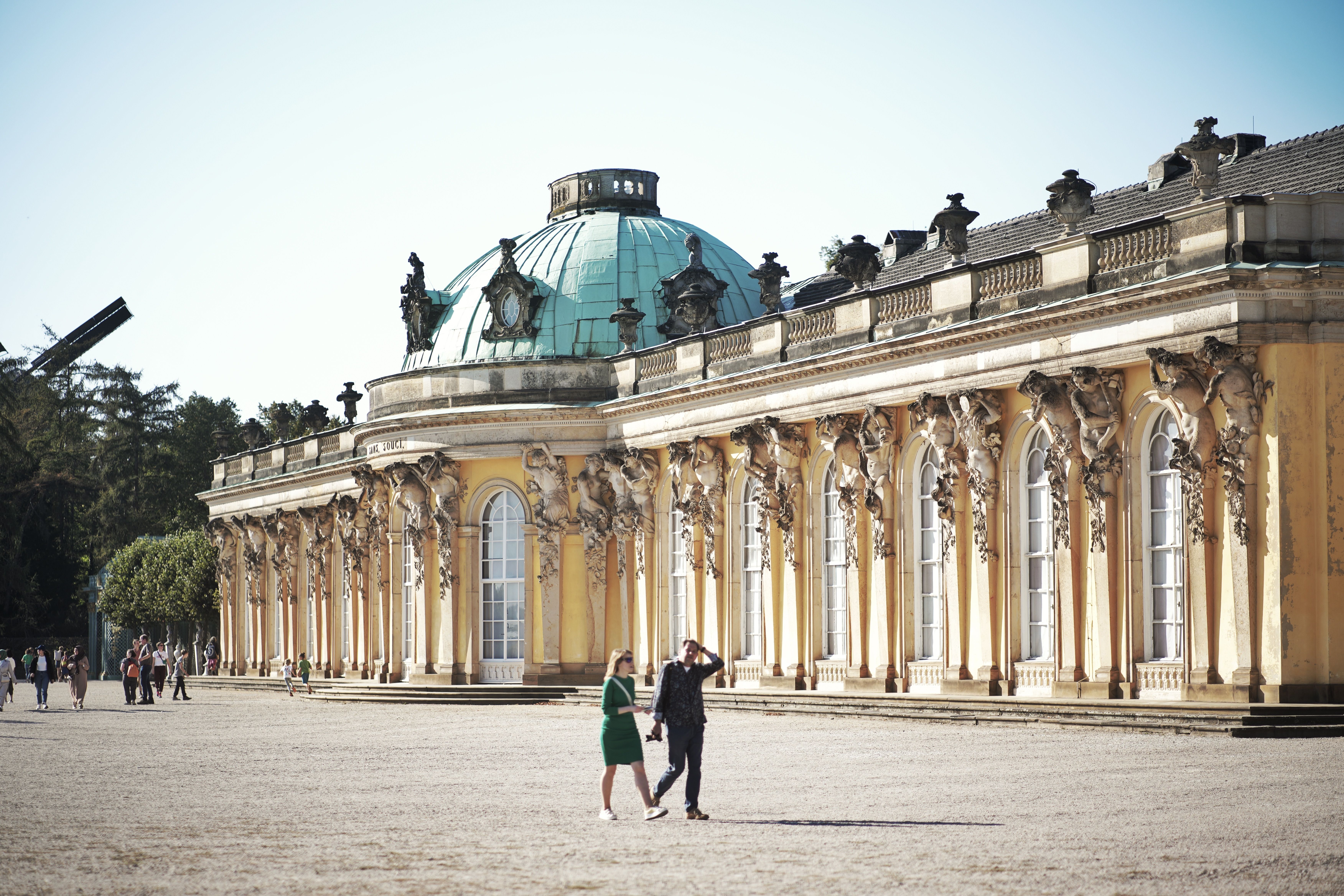
Suburban RiverfrontPotsdam sits just southwest of Berlin, a city where 18th-century palaces rise unexpectedly from tree-lined avenues and the Havel River winds through neighborhoods of elegant villas and modernist apartments. Walking through the Altstadt, you notice the German Baroque architecture first—the Nikolaikirche's copper dome, the gabled townhouses—but what catches you is how green everything is, how the water keeps appearing around corners. This is a place built for contemplation and power: Frederick the Great's Sanssouci Palace dominates the landscape, its gardens sprawling across hillsides, yet Potsdam never feels like a museum. Young professionals and families live here alongside the tourists. The city has a quieter rhythm than Berlin, with independent cafes, bookshops, and galleries clustered in the old town and around the Filmmuseum (Potsdam was once Germany's film capital). The university brings intellectual energy. Cycling is the default transport. The surrounding lakes—Griebnitzsee, Müggelsee—offer swimming and sailing in summer. Potsdam functions as both a destination in its own right and a refuge from Berlin's intensity, connected by S-Bahn in under an hour.
 BlueCross BlueShield Global Solutions
Get Quote
BlueCross BlueShield Global Solutions (BCBS) offers global health plans for international assignments or trips lasting 6 months or longer. With access to over 1.7M medical providers in 190 countries around the world, BCBS provides members with solutions and industry-leading digital services - ensuring top-quality coverage to people who live, work, study and travel internationally.
BlueCross BlueShield Global SolutionsBlueCross BlueShield Global Solutions (BCBS) offers global health plans for international assignments or trips lasting 6 months or longer. With access to over 1.7M medical providers in 190 countries around the world, BCBS provides members with solutions and industry-leading digital services - ensuring top-quality coverage to people who live, work, study and travel internationally.
Get Quote
Visa & Residency
Obtaining a residency in Germany involves several steps and the process can vary depending on the type of visa one is applying for. For expatriates, the most common types of residency visas include the EU Blue Card, Residence Permit for Employment, and Residence Permit for Self-Employed Business Purposes. The EU Blue Card is targeted at highly skilled professionals from non-EU countries who have a job offer in Germany with a minimum salary threshold. Applicants must have a recognized university degree or equivalent. The Residence Permit for Employment is for those who have a specific job offer in Germany, while the Residence Permit for Self-Employed Business Purposes is for entrepreneurs planning to start a business in Germany. To apply for any of these visas, one must first secure a job offer or prove their business plan's viability. The next step is to schedule an appointment with the German embassy or consulate in one's home country to submit the visa application. Required documents typically include a valid passport, proof of health insurance, proof of accommodation in Germany, and relevant certificates or diplomas. For the freelance visa, which is popular among digital nomads, applicants must also provide evidence of their freelance work, such as contracts or letters of intent from potential clients, and prove that their work is in demand in Germany. Once the initial visa is granted, which allows entry into Germany, expatriates must then register with the local residents' registration office and apply for a residence permit to stay longer than the visa's validity. The residence permit application process involves providing additional documentation, such as proof of financial stability and a clean criminal record. The duration of the residence permit can vary, but it is often issued for one year and can be renewed. The EU Blue Card, for example, can lead to permanent residency after 33 months, or 21 months with a B1 level of German language proficiency. Overall, while the process can be bureaucratic and requires thorough preparation, it is generally considered average in terms of difficulty compared to other countries. It is essential to start the application process well in advance of the intended move date and to ensure all paperwork is meticulously completed and accurate.
Cost of Living
Rents and property prices in Potsdam have climbed steadily as Berlin's overflow has pushed outward, but remain noticeably lower than the capital. A one-bedroom apartment in the center runs roughly 30–40% less than comparable Berlin addresses. Groceries, dining, and utilities track close to German averages. The appeal to remote workers and young families has tightened the rental market, especially near the Altstadt and lakeside areas.
Weather
Potsdam has a temperate continental climate with cold winters (often below freezing) and mild summers; precipitation is moderate year-round, with the driest months typically in spring.
Healthcare in Potsdam
Ernst von Bergmann Hospital is the city's major medical facility, offering comprehensive acute care and emergency services with modern equipment and English-speaking staff available. Smaller clinics and specialist practices are distributed across Potsdam, and Berlin's larger medical centers are accessible via S-Bahn for specialized treatment.
Schools in Potsdam
Potsdam hosts the Potsdam International School, which offers the International Baccalaureate curriculum from primary through secondary levels. The school draws expat families and serves the international community across multiple language backgrounds.
Several schools in Potsdam operate bilingual German-English programs, including options within public and private institutions. These schools typically integrate English instruction across subject areas rather than as isolated language classes.
Local Schools
Restaurants in Potsdam
Living in Potsdam