Andorra
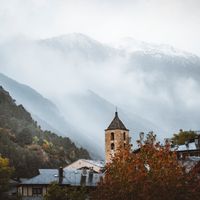
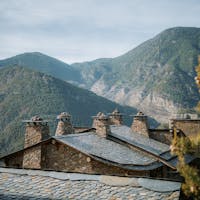
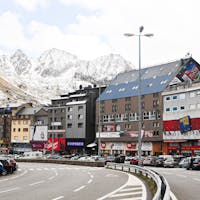
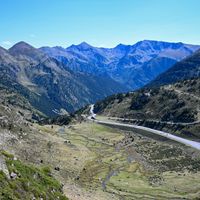
Andorra is a small, independent co-principality nestled in the eastern Pyrenees between France and Spain, with a population of around 77,000. The country is known for its stunning mountain landscapes, medieval architecture, and duty-free status, which has historically driven its economy through retail and tourism. Despite its tiny size (468 square kilometers), Andorra has developed a modern infrastructure with excellent healthcare, education, and quality of life standards. The culture blends Catalan influences with French and Spanish traditions, reflected in the local language, cuisine, and customs. Andorra's economy has diversified from retail to include banking, skiing, and outdoor tourism, making it an attractive destination for those seeking alpine living with European sophistication. The country maintains political stability and offers a unique lifestyle combining mountain tranquility with access to cosmopolitan amenities.
 BlueCross BlueShield Global Solutions
Get Quote
BlueCross BlueShield Global Solutions (BCBS) offers global health plans for international assignments or trips lasting 6 months or longer. With access to over 1.7M medical providers in 190 countries around the world, BCBS provides members with solutions and industry-leading digital services - ensuring top-quality coverage to people who live, work, study and travel internationally.
BlueCross BlueShield Global SolutionsBlueCross BlueShield Global Solutions (BCBS) offers global health plans for international assignments or trips lasting 6 months or longer. With access to over 1.7M medical providers in 190 countries around the world, BCBS provides members with solutions and industry-leading digital services - ensuring top-quality coverage to people who live, work, study and travel internationally.
Get Quote

Podcasts

Episode 8: Jake Barber - The Expat Finance Expert Returns


Episode 6: Jake Barber - Expat Finance Expert and Lifelong Expat
Living in Andorra
Best Places to Live in Andorra
Visa & Residency
Obtaining a residency in Andorra involves a series of steps and the process can be considered average in terms of difficulty. There are mainly two types of residency permits: active and passive. Active residency is for individuals who will work within Andorra, while passive residency is for those who do not seek employment within the country, such as retirees, investors, or digital nomads. The most common visa for expats is the Passive Residency Permit. To obtain this permit, applicants must prove they have sufficient financial means to support themselves without working in Andorra. This typically means showing an income that is at least 300% of the Andorran minimum wage plus 100% per each dependent. Additionally, applicants must invest a minimum of €400,000 in Andorra, which can include real estate, government bonds, or a deposit in an Andorran bank. Applicants must also provide a criminal record check, proof of international health insurance, and pass a medical examination. Once all the documentation is submitted, the government will review the application, which can take several months. If approved, the passive residency permit is initially granted for a period of two years and can be renewed thereafter. Renewals require the resident to spend at least 90 days per year in Andorra. For digital nomads, the Passive Residency Permit is also the most suitable option. It allows them to live in Andorra and work remotely for companies outside of Andorra. The application process and requirements are the same as for other expats seeking passive residency. Overall, while the financial requirements are significant, the process itself is straightforward if all the criteria are met. Expats and digital nomads often hire local lawyers or specialized agencies to assist with the application process to ensure all documents are correctly submitted and to navigate the bureaucracy more efficiently.
Healthcare in Andorra
Andorra's system is known for its high quality and is a mix of public and private services. The CASS (Caixa Andorrana de Seguretat Social) is the main public healthcare provider, funded by social security contributions from residents and employers. It covers most medical services, including hospitalization, prescriptions, and specialist care. Private healthcare is also available and is used by those seeking quicker access to specialists or elective procedures. The quality of both public and private healthcare in Andorra is generally considered to be good, with modern facilities and well-trained medical staff. Healthcare costs are relatively low compared to the United States, but higher than in some other European countries. Expats and digital nomads who become residents and contribute to the social security system can access public healthcare. Short-term visitors may need private insurance or pay out-of-pocket for medical services.
Cost of Living
Andorra has a high cost of living, particularly for housing, which is among the most expensive in the Pyrenees region. Rental prices for a one-bedroom apartment in the capital Andorra la Vella range from €800 to €1,200 monthly, while property purchases average €8,000 to €12,000 per square meter. Daily living expenses including groceries, dining, and utilities are relatively high compared to neighboring regions, though the duty-free status provides some savings on certain goods. Overall, Andorra is more affordable than Switzerland or Monaco but comparable to or slightly more expensive than major French or Spanish cities.
Weather
Andorra experiences a continental mountain climate with cold, snowy winters and mild summers. Winter temperatures typically range from -5°C to 5°C (23°F to 41°F) at lower elevations, with significant snowfall in higher areas making it ideal for skiing. Summers are cool and pleasant, with temperatures between 15°C and 25°C (59°F to 77°F), and the region receives moderate rainfall throughout the year. Spring and autumn are transitional seasons with variable weather and occasional precipitation.
Educational System in Andorra
The educational system in Andorra is unique due to its three separate schooling systems, which reflect the country's history and cultural influences. These systems are Andorran, French, and Spanish, and parents can choose which system their children will follow. Education is compulsory for children from the age of 6 until 16. The Andorran system is based on the Catalan model, with Catalan as the primary language of instruction. The French system operates similarly to that in France and uses French as the teaching language, while the Spanish system uses Spanish and follows the curriculum used in Spain. Schools in Andorra are generally well-regarded, with a strong emphasis on multilingual education, reflecting the country's position at the crossroads of France and Spain. The primary education phase includes cycles from first to third, which corresponds to ages 6 to 12. Secondary education is divided into two cycles: the first cycle is for students aged 12 to 15, and the second cycle is for those aged 15 to 16. After compulsory education, students can choose to pursue higher secondary education, which prepares them for university studies, vocational training, or enter the workforce. The quality of education in Andorra is considered to be high, with a strong emphasis on personal development, multilingualism, and adaptability. Class sizes are typically small, which allows for more personalized attention to students. The country also boasts a high literacy rate. For families moving to Andorra, it's important to note that while public schooling is free, there may be costs associated with school materials, extracurricular activities, and in some cases, enrollment in private or international schools.