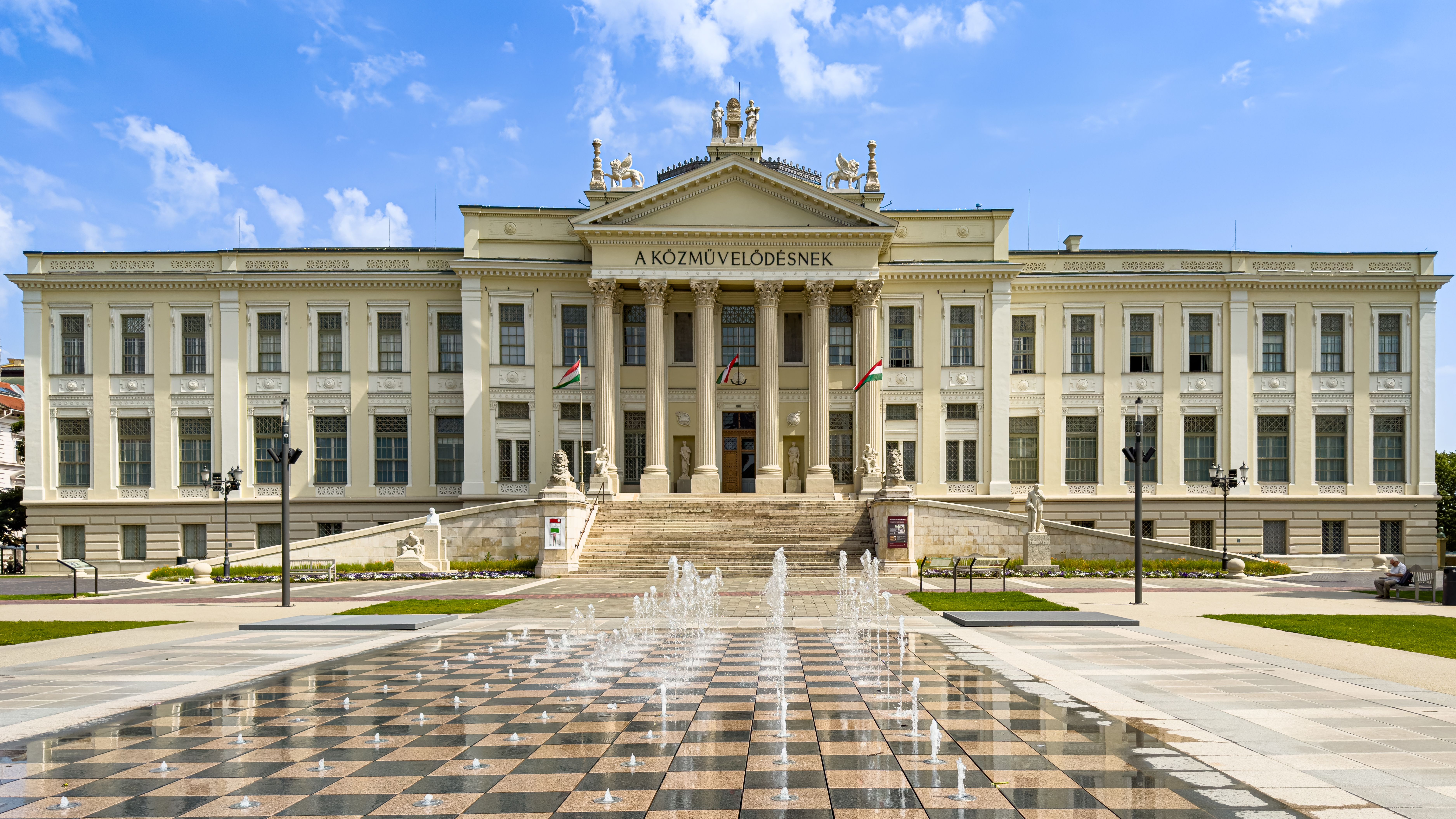
Szeged
Urban RiverfrontSzeged sits where the Tisza River curves through southern Hungary, a university city with wide tree-lined boulevards and a skyline punctuated by church spires. The Dóm tér, its central square, opens onto the massive Neo-Romanesque cathedral—a landmark visible from across the city. Walking through the inner districts, you'll find Art Nouveau facades alongside Ottoman-era remnants, evidence of centuries when this was a frontier town between empires. The city pulses with student energy; the university dominates daily life and culture. Markets overflow with paprika and local produce. The Tisza provides a recreational spine—locals swim, kayak, and cycle along its banks. Szeged has a reputation as Hungary's cultural capital outside Budapest, with theaters, galleries, and a summer open-air festival that draws visitors from across the region. The pace is deliberate, the atmosphere intellectual without pretension.
 BlueCross BlueShield Global Solutions
Get Quote
BlueCross BlueShield Global Solutions (BCBS) offers global health plans for international assignments or trips lasting 6 months or longer. With access to over 1.7M medical providers in 190 countries around the world, BCBS provides members with solutions and industry-leading digital services - ensuring top-quality coverage to people who live, work, study and travel internationally.
BlueCross BlueShield Global SolutionsBlueCross BlueShield Global Solutions (BCBS) offers global health plans for international assignments or trips lasting 6 months or longer. With access to over 1.7M medical providers in 190 countries around the world, BCBS provides members with solutions and industry-leading digital services - ensuring top-quality coverage to people who live, work, study and travel internationally.
Get Quote
Visa & Residency
Obtaining a residency in Hungary involves several steps and the process can be considered average in terms of difficulty. Expats looking to reside in Hungary typically apply for the National "D" Visa, which is a long-term visa that allows entry into Hungary for the purpose of obtaining a residence permit. The first step is to determine the appropriate type of residence permit based on the purpose of stay, such as employment, family reunification, study, or business activities. Applicants must submit their visa application at a Hungarian consulate or embassy in their home country. The required documents usually include a valid passport, proof of accommodation in Hungary, a round-trip flight reservation, proof of sufficient financial means to support oneself, and a comprehensive health insurance policy. For certain types of permits, additional documents such as a letter of invitation from a Hungarian employer or an acceptance letter from an educational institution may be required. Once the National "D" Visa is granted, it allows the holder to enter Hungary and stay while they apply for the actual residence permit. The application for the residence permit must be submitted within 30 days of arrival in Hungary at the regional directorate of the National Directorate-General for Aliens Policing. The processing time for the residence permit can vary, but it generally takes about 1-2 months. If approved, the residence permit is typically issued for one year and can be renewed. It is important to note that the process may require an in-person interview and additional documentation, depending on the specific circumstances of the applicant. Overall, while the process involves several bureaucratic steps, it is relatively straightforward for those who prepare adequately and meet all the requirements. Expats are advised to start the application process well in advance of their intended move date to allow sufficient time for processing and potential complications.
Cost of Living
Living costs in Szeged are notably lower than Budapest or Western European cities. Rent, groceries, and dining out remain affordable even as the city has modernized. A student-driven economy keeps prices accessible, though quality housing and dining options have become pricier in recent years as the city attracts more professionals and international residents.
Weather
Szeged experiences a continental climate with warm summers and cold winters; summers can be quite hot while winters bring frost and occasional snow.
Healthcare in Szeged
Szeged University Hospital (Szegedi Tudományegyetem Klinikai Központ) serves as the primary acute care facility and teaching hospital for the region, offering comprehensive services including emergency care, surgery, and specialized departments. Secondary facilities include the City Hospital and various outpatient clinics distributed across the city. Healthcare access is covered through Hungary's public system, with private clinics available for those seeking alternative options.
Schools in Szeged
Szeged has limited but functional international school options, primarily the British International School of Szeged, which follows the British curriculum and serves expat families. A few other schools offer partial international programs or IB tracks, though options are fewer than in Budapest.
Several schools in Szeged operate bilingual programs, particularly German-Hungarian and English-Hungarian tracks, reflecting the city's regional importance and proximity to Central European borders. These are typically integrated into public or private Hungarian schools rather than standalone bilingual institutions.
Restaurants in Szeged
Living in Szeged
Moving to Szeged
Healthcare in Szeged