Guadalajara
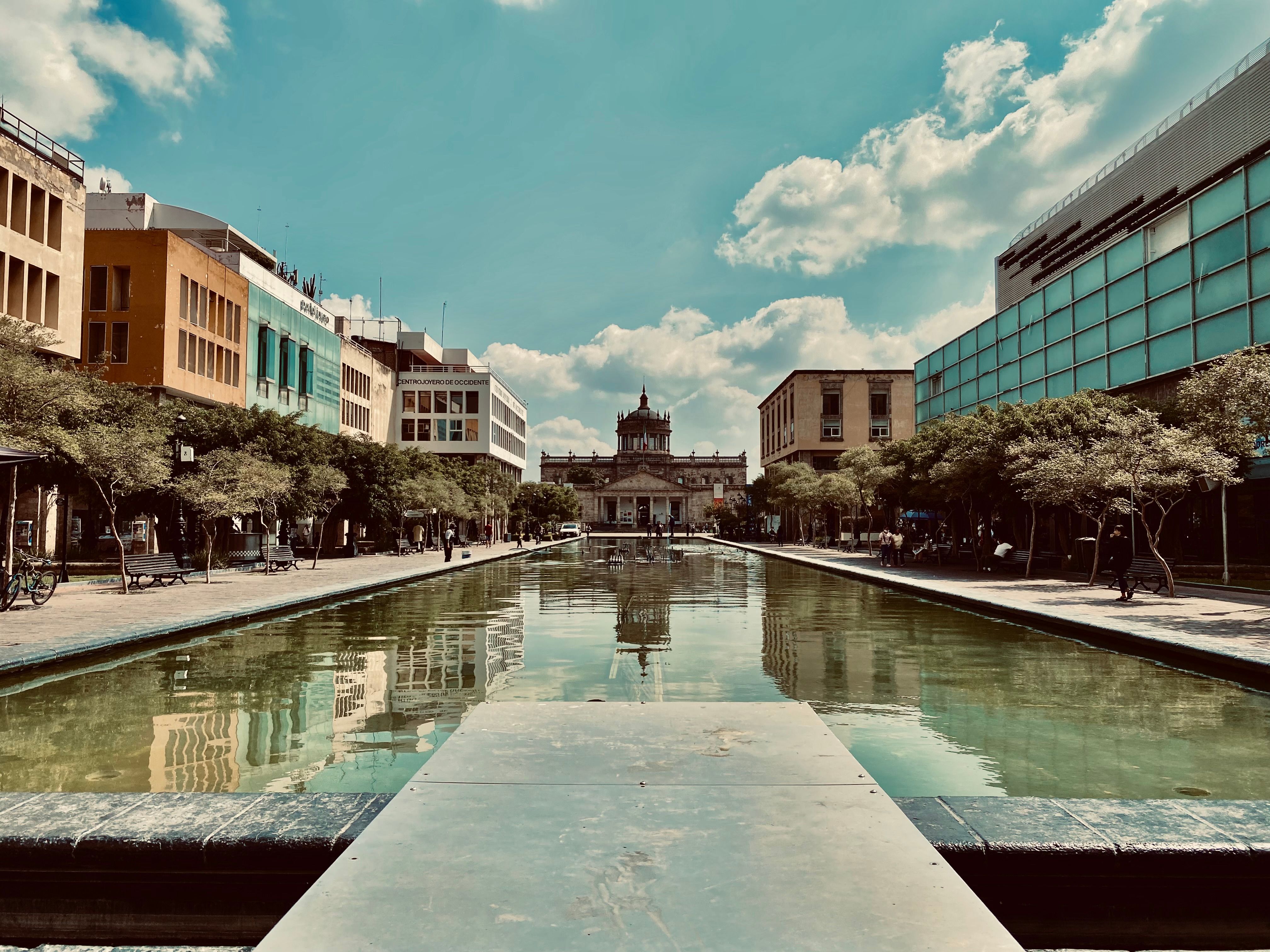
Urban RiverfrontGuadalajara is the capital and largest city of the state of Jalisco in western Mexico. It is the second-largest metropolitan area in Mexico and serves as a major cultural, economic, and educational hub. The city is known for its rich colonial architecture, vibrant arts scene, and significant contributions to Mexican culture and traditions. Guadalajara features a well-preserved historic center with impressive plazas, churches, and government buildings dating back centuries. The city is surrounded by a metropolitan area that blends historic neighborhoods with modern commercial districts. Guadalajara is recognized as a center for technology and innovation in Mexico, with a growing startup ecosystem. The city hosts numerous cultural institutions including museums, theaters, and galleries. It is also known for its culinary traditions and local cuisine. The surrounding region is characterized by agricultural lands and small towns. Guadalajara serves as a transportation hub connecting various parts of western Mexico.
 BlueCross BlueShield Global Solutions
Get Quote
BlueCross BlueShield Global Solutions (BCBS) offers global health plans for international assignments or trips lasting 6 months or longer. With access to over 1.7M medical providers in 190 countries around the world, BCBS provides members with solutions and industry-leading digital services - ensuring top-quality coverage to people who live, work, study and travel internationally.
BlueCross BlueShield Global SolutionsBlueCross BlueShield Global Solutions (BCBS) offers global health plans for international assignments or trips lasting 6 months or longer. With access to over 1.7M medical providers in 190 countries around the world, BCBS provides members with solutions and industry-leading digital services - ensuring top-quality coverage to people who live, work, study and travel internationally.
Get Quote
Visa & Residency
Obtaining a residency in Mexico is a process that can be straightforward if the applicant meets the necessary requirements and follows the steps diligently. There are primarily two types of residency visas: the Temporary Resident Visa and the Permanent Resident Visa. The Temporary Resident Visa is suitable for those who wish to stay in Mexico for more than six months but not longer than four years. It is popular among expats who are not yet ready to commit to permanent residency. To apply for this visa, one must visit a Mexican consulate abroad. The applicant will need to provide proof of sufficient economic means to support themselves, or they must show that they are employed or have a job offer in Mexico. The Permanent Resident Visa is for those who intend to settle in Mexico indefinitely and is often sought by retirees or those with family in Mexico. To qualify, applicants must meet stricter financial requirements or have certain family connections with Mexican citizens or other permanent residents. The application process for the Permanent Resident Visa is similar to that of the Temporary Resident Visa, but with additional documentation required to prove the applicant's long-term economic solvency or family ties. The difficulty of the process can vary based on individual circumstances, such as the applicant's nationality, financial situation, and the specific requirements of the Mexican consulate where the application is submitted. Generally, the process is considered average in terms of difficulty when compared to other countries. It is important to note that all documents must be translated into Spanish and apostilled or legalized, depending on the country of origin. Once the visa is approved, the applicant will receive a visa sticker in their passport, which must be exchanged for a resident card within 30 days of entering Mexico at the nearest office (Instituto Nacional de Migración). The process involves submitting various forms, taking photographs, and possibly attending an interview. Overall, while there are several steps to follow, the process is well-documented and can be navigated with patience and careful preparation.
Cost of Living
The cost of living in Guadalajara is moderate compared to major Mexican cities and international standards. Housing, food, and transportation are reasonably affordable, though prices have been increasing in popular neighborhoods and commercial areas. The city offers good value for residents seeking a balance between amenities and affordability.
Weather
Guadalajara has a subtropical highland climate with mild temperatures year-round, warm days and cool nights, and a rainy season from June to September.
Healthcare in Guadalajara
Guadalajara has several well-equipped private hospitals and clinics that meet modern healthcare standards, with facilities like Hospital Angeles and Hospital San Jose being among the better-known options. Public healthcare is available through the Mexican social security system, though private healthcare is generally preferred by expats for shorter wait times and English-speaking staff. The city has adequate medical services for routine care and emergencies, though serious cases may require travel to Mexico City.
Schools in Guadalajara
Guadalajara has several international schools including Colegio Americano de Guadalajara (American curriculum), Colegio Británico (British curriculum), and Colegio Alemán (German curriculum). These schools offer IB programs and serve the expatriate community with English-language instruction.
Multiple bilingual schools operate in Guadalajara, offering Spanish-English instruction at various levels. These schools blend Mexican and international curricula, providing a bridge between local and global education standards.
Restaurants in Guadalajara
Living in Guadalajara
Moving to Guadalajara
Healthcare in Guadalajara