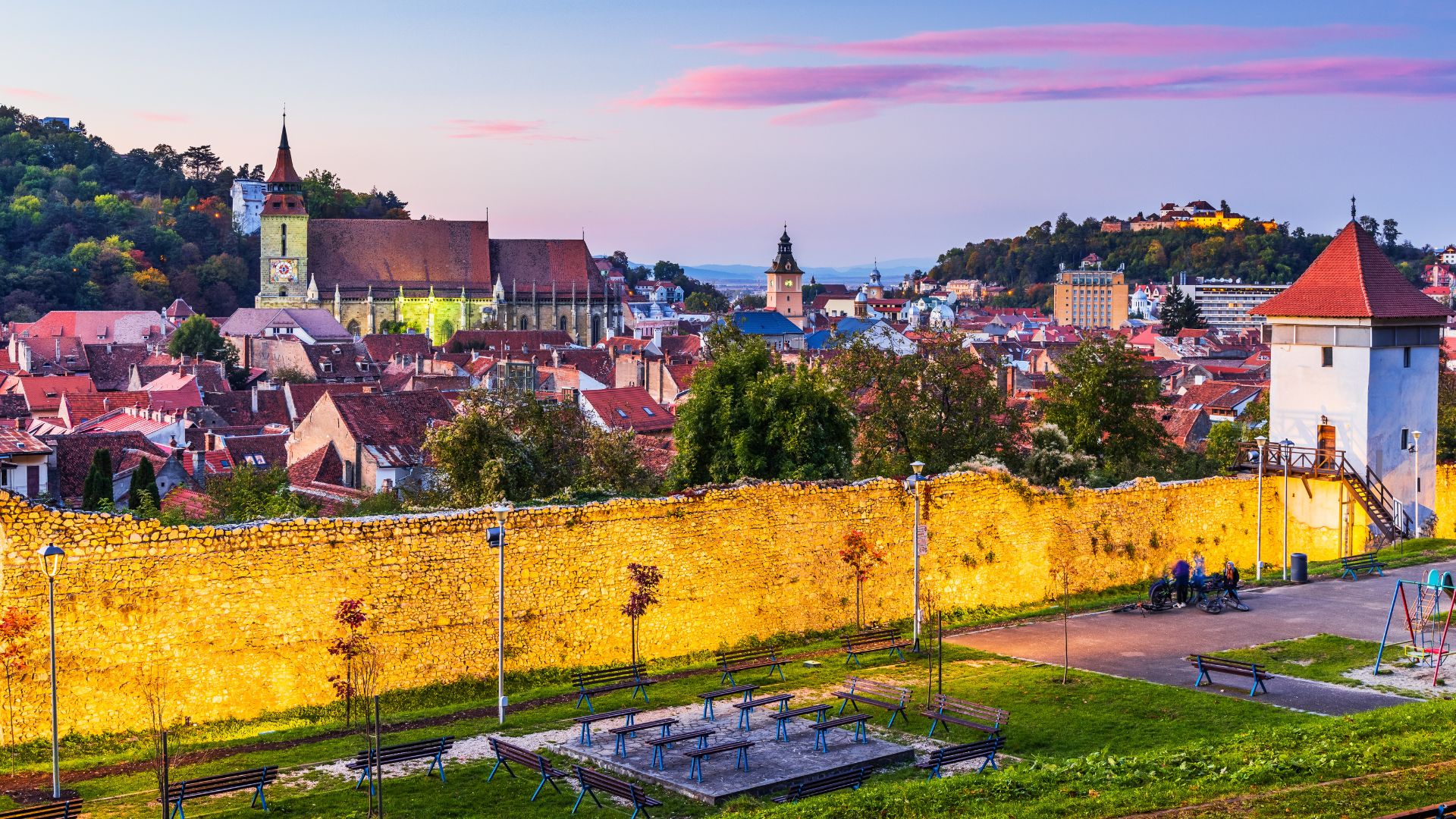
Brasov
Urban RiverfrontBrașov emerged in the 12th century as a Saxon settlement in Transylvania, its medieval core still visible in the narrow lanes radiating from Piața Sfatului. The city sits in a mountain valley where trade routes converged, and that strategic position shaped centuries of prosperity and cultural layering—German merchants, Romanian craftspeople, and Austro-Hungarian administrators all left their mark on the architecture and street life. Today Brașov is Romania's second-largest city, a place where Gothic spires rise above communist-era apartment blocks, and where the Carpathian peaks form a dramatic backdrop to daily life. The old town retains genuine character: the Black Church dominates the skyline, narrow cobbled streets host cafes and galleries, and the surrounding neighborhoods blend residential calm with growing creative energy. It's become a hub for outdoor enthusiasts—hiking, skiing, and mountain biking draw visitors year-round—but also a working city where young professionals and families have chosen to build lives away from Bucharest's intensity. The local food scene reflects both heritage and reinvention, with traditional Transylvanian dishes appearing alongside contemporary restaurants.
 PassportCard Expat Health Insurance
Get Quote
Never worry about paying your medical bills out of pocket again. The innovative PassportCard allows for a stress-free experience for all expat families, remote travelers, and workers. With a 24/7 customer service and an outstanding customer base of over 2 Million clients, it will feel like medical care at home. Get up to 10% off on your policy now.
PassportCard Expat Health InsuranceNever worry about paying your medical bills out of pocket again. The innovative PassportCard allows for a stress-free experience for all expat families, remote travelers, and workers. With a 24/7 customer service and an outstanding customer base of over 2 Million clients, it will feel like medical care at home. Get up to 10% off on your policy now.
Get Quote
Visa & Residency
Obtaining a residency in Romania involves several steps and the difficulty can vary depending on the type of visa and the applicant's circumstances. The process generally starts with the applicant determining the appropriate visa category. The Employment Visa (D/AM) is for those who have a job offer from a Romanian employer. The Family Reunification Visa (D/VF) is for family members of Romanian citizens or residents. The Business Visa (D/AE) is for entrepreneurs and business owners who want to conduct economic activities in Romania. Applicants must gather the required documents, which typically include a valid passport, application forms, passport-sized photos, proof of accommodation, health insurance, and a criminal record certificate. For the Employment Visa, an employment contract and a work permit are also required. For the Business Visa, proof of the business activity, such as company registration documents, is necessary. Once the documents are collected, the applicant must submit them to the nearest Romanian embassy or consulate. The processing time can vary, but it usually takes around 45 days for the visa to be issued. After arriving in Romania, expats must apply for a residence permit, which involves a separate application process with the Romanian Office. The difficulty of the process can be considered average, as it involves bureaucracy and the need to provide various documents. However, it is generally straightforward if all the requirements are met and the necessary paperwork is in order. It is advisable for expats to start the visa application process well in advance of their intended move date and to consult with the Romanian embassy or immigration experts if they have any questions or concerns.
Cost of Living
Living costs in Brașov remain reasonable compared to Western Europe or Bucharest, though prices have climbed as the city attracts remote workers and young families seeking mountain access without capital-city expense. Rent for a one-bedroom apartment in the center runs well below Western European equivalents, and groceries, dining, and utilities stay affordable. Property purchase prices have risen noticeably in recent years, especially for renovated old-town properties, but remain modest by international standards.
Weather
Brașov experiences a temperate continental climate with cold, snowy winters and mild summers; the mountain location means weather can shift quickly and precipitation is common throughout the year.
Healthcare in Brasov
Brașov has two main public hospitals—Spitalul Județean de Urgență and Spitalul Clinic de Pneumoftiziologie—plus several private clinics offering faster appointments and English-speaking staff. Public healthcare is affordable but can involve wait times; private options cost more but provide quicker access and better amenities. Emergency care is available 24/7, though serious cases may require transfer to Bucharest.
Schools in Brasov
Brasov has several international schools including Brasov International School, which offers curricula aligned with international standards. These institutions serve expat families and Romanian families seeking English-language education, though options remain more limited than in Bucharest.
Multiple bilingual schools operate in Brasov, offering Romanian-English instruction at primary and secondary levels. These schools blend local curriculum requirements with English-language instruction across core subjects.
Restaurants in Brasov