Panama
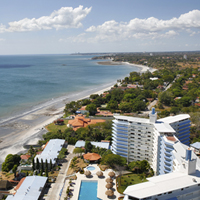
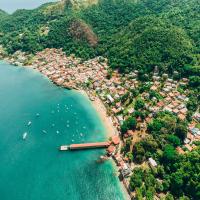
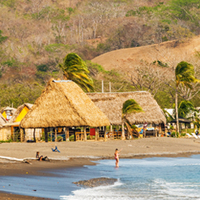
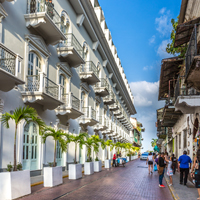
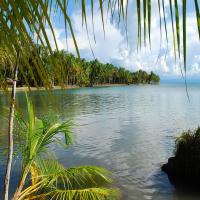
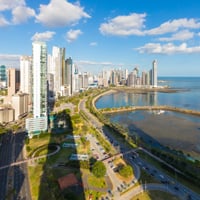
Coastal BeachesPanama is a Central American country located on a narrow isthmus connecting North and South America, bordered by Costa Rica and Colombia. It is famous for the Panama Canal, one of the world's most important shipping routes, which significantly influences its economy and global importance. The country has a diverse population with a blend of indigenous, African, and European influences, creating a rich multicultural society. Panama's economy is service-oriented, heavily dependent on the canal, banking, and tourism sectors. The capital, Panama City, is a modern, cosmopolitan hub with impressive skyline and financial district. Life in Panama offers a mix of urban sophistication and tropical natural beauty, with relatively affordable living costs compared to North America and Europe.
Caballero Méndez & CandanedoConnect
Caballero, Méndez & Candanedo offers a full range of legal services tailored to your needs, from obtaining residency in Panama to corporate formation and bank account opening. We handle every step of the process, so you don’t have to worry about a thing, while advising on real estate, labor, intellectual property, and administrative matters.
Click connect to have our partner contact you via e-mail and/or phone.
Caballero Méndez & CandanedoCaballero, Méndez & Candanedo offers a full range of legal services tailored to your needs, from obtaining residency in Panama to corporate formation and bank account opening. We handle every step of the process, so you don’t have to worry about a thing, while advising on real estate, labor, intellectual property, and administrative matters.
Connect
Click connect to have our partner contact you via e-mail and/or phone.
Podcasts
Episode 8: Jake Barber - The Expat Finance Expert Returns
Episode 6: Jake Barber - Expat Finance Expert and Lifelong Expat
Living in Panama
Best Places to Live in Panama
Visa & Residency
Panama is known for its welcoming stance towards expatriates and retirees, offering a variety of options that cater to different needs. The process of obtaining a residency visa in Panama involves several steps and the complexity can vary depending on the type of visa applied for. Two of the most popular visas are the Friendly Nations Visa and the Pensionado Visa. The Friendly Nations Visa is designed for citizens from a list of countries that Panama considers to have friendly relations with. Applicants must demonstrate economic ties to the country, which can typically be done by opening a local bank account with a minimum balance and either buying property in Panama or establishing a business. This visa leads to permanent residency and is a popular route for expats looking to work or start a business in Panama. The Pensionado Visa, on the other hand, is aimed at retirees. To qualify, applicants must prove they receive a lifetime pension of at least $1,000 per month. This visa offers numerous benefits, including discounts on services and entertainment in the country. It is a straightforward option for those looking to retire in Panama. For digital nomads, Panama introduced the Short Stay Visa for Remote Workers, which allows them to live in Panama for up to 9 months, with the possibility of extending for another 9 months. Applicants must provide proof of employment or business ownership outside of Panama, and show that they earn a stable monthly income. The general process for obtaining a residency visa in Panama involves hiring a local attorney to help navigate the legal requirements, preparing and submitting the necessary documentation (such as passport copies, proof of income, and health certificates), and paying the associated fees. After the application is submitted, it may take several months to be processed. Once approved, applicants usually receive a temporary residency card, and eventually, a permanent residency card. The process is considered to be easier and more streamlined than in many other countries, making Panama an attractive destination for expats and retirees.
Healthcare in Panama
Panama's healthcare system is a combination of public and private facilities. The public healthcare system is accessible to all citizens and legal residents, including expats who have obtained permanent residency. It is funded by the government and provides a range of services at a low cost. However, public hospitals and clinics may not offer the same level of comfort or advanced technology as private facilities. Private healthcare in Panama is known for its high quality and modern facilities, with many doctors trained in the US or Europe. It is more expensive than public healthcare but still affordable compared to North American standards. Expats and digital nomads can access public healthcare once they have residency status, but many opt for private health insurance to cover services at private hospitals. The quality of healthcare can vary depending on the region, with urban areas typically offering better services than rural ones.
Cost of Living
Panama offers relatively affordable living costs compared to North America and Western Europe, though prices vary significantly by location. Housing in Panama City ranges from $800-2,000+ monthly for a one-bedroom apartment in expat-friendly neighborhoods, while outside the capital costs are considerably lower. Daily expenses including food, transportation, and utilities are moderate, with local markets offering inexpensive fresh produce and dining options. Overall, a comfortable lifestyle is achievable on a modest budget, particularly outside Panama City.
Weather
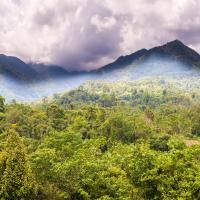
Panama has a tropical climate with warm temperatures year-round, typically ranging from 75-90°F (24-32°C). The country experiences two main seasons: a rainy season from May to November and a drier season from December to April. Humidity is consistently high throughout the year due to its tropical location. Rainfall is abundant, particularly on the Caribbean coast, which receives significantly more precipitation than the Pacific side.
Educational System in Panama
The educational system in Panama is structured similarly to many other countries, with a mix of public and private institutions. Education is compulsory for children from ages 6 to 15, which includes primary and secondary schooling. The school year in Panama typically runs from March to December, with a long summer break from mid-December to late February. Primary education, known as educación primaria, consists of six grades and generally starts at age six. After completing primary school, students move on to pre-secondary (7th grade) and secondary education (8th to 11th grade), known as educación pre media and educación media, respectively. Secondary education culminates in a diploma de bachiller, which is necessary for university admission. The quality of education in Panama varies, with private schools often providing a higher standard of education, sometimes following international curriculums like the International Baccalaureate. Public schools are free, but they may lack resources compared to private institutions. For expatriate families, there are international schools that offer education in English and other languages, adhering to different national education systems or international standards.