Budapest
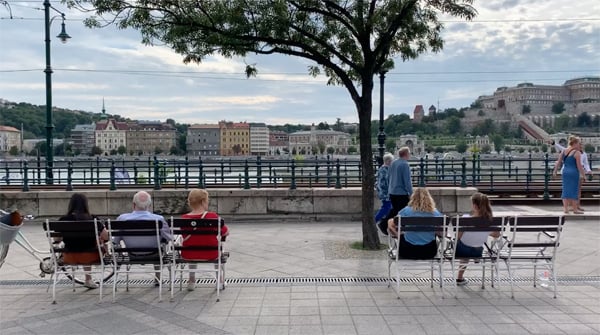
Urban RiverfrontBudapest is the capital and largest city of Hungary, situated along the Danube River in central Europe. The city is renowned for its stunning architecture, thermal baths, and rich cultural heritage spanning centuries of history. Budapest comprises two distinct areas—Buda on the western bank with its historic castle district and hills, and Pest on the eastern bank with its vibrant urban center and grand boulevards. The city features an impressive array of landmarks including the Parliament Building, Matthias Church, and the Chain Bridge, which exemplify its architectural grandeur. Budapest's thermal bath culture is world-famous, with numerous public and private spas offering natural hot springs that have attracted visitors for centuries. The city serves as Hungary's economic, political, and cultural hub, hosting museums, galleries, theaters, and concert halls. Its tree-lined streets, riverside promenades, and diverse neighborhoods create a dynamic atmosphere blending imperial elegance with contemporary vitality. Budapest is well-connected by public transportation and serves as a gateway to exploring Central Europe.
 AGS Worldwide Movers
Get Quote
Relocating abroad soon? Make your move with AGS! AGS Worldwide Movers is a leader in the international moving industry. Our experience and expertise allows us to guarantee our clients the best quality moving services.
AGS Worldwide MoversRelocating abroad soon? Make your move with AGS! AGS Worldwide Movers is a leader in the international moving industry. Our experience and expertise allows us to guarantee our clients the best quality moving services.
Get Quote
Visa & Residency
Obtaining a residency in Hungary involves several steps and the process can be considered average in terms of difficulty. Expats looking to reside in Hungary typically apply for the National "D" Visa, which is a long-term visa that allows entry into Hungary for the purpose of obtaining a residence permit. The first step is to determine the appropriate type of residence permit based on the purpose of stay, such as employment, family reunification, study, or business activities. Applicants must submit their visa application at a Hungarian consulate or embassy in their home country. The required documents usually include a valid passport, proof of accommodation in Hungary, a round-trip flight reservation, proof of sufficient financial means to support oneself, and a comprehensive health insurance policy. For certain types of permits, additional documents such as a letter of invitation from a Hungarian employer or an acceptance letter from an educational institution may be required. Once the National "D" Visa is granted, it allows the holder to enter Hungary and stay while they apply for the actual residence permit. The application for the residence permit must be submitted within 30 days of arrival in Hungary at the regional directorate of the National Directorate-General for Aliens Policing. The processing time for the residence permit can vary, but it generally takes about 1-2 months. If approved, the residence permit is typically issued for one year and can be renewed. It is important to note that the process may require an in-person interview and additional documentation, depending on the specific circumstances of the applicant. Overall, while the process involves several bureaucratic steps, it is relatively straightforward for those who prepare adequately and meet all the requirements. Expats are advised to start the application process well in advance of their intended move date to allow sufficient time for processing and potential complications.
Cost of Living
The cost of living in Budapest is moderate compared to Western European capitals, making it an attractive destination for expats and digital nomads. Accommodation, dining, and entertainment are generally affordable, though prices in central tourist areas and upscale neighborhoods are higher. Local transportation, utilities, and everyday goods remain reasonably priced, contributing to Budapest's reputation as a budget-friendly European city.
Weather
Budapest experiences a temperate continental climate with warm summers and cold winters, with average temperatures ranging from below freezing in January to around 21°C (70°F) in July.
Healthcare in Budapest
Budapest has several well-equipped hospitals and medical facilities, with the most prominent being the Hungarian Hospital and various private clinics offering modern healthcare services. The city's healthcare system is generally accessible to residents, though quality and wait times can vary between public and private institutions. English-speaking medical professionals are available in major hospitals and private practices.
Schools in Budapest
Budapest has several established international schools including the British International School Budapest, American International School of Budapest, and the International School of Budapest, which offer IB and national curriculum programs. These schools serve the expatriate community and provide education in English alongside Hungarian language instruction.
Budapest offers multiple bilingual schools with Hungarian-English and Hungarian-German programs, such as the Lauder Business School and various private institutions. These schools integrate Hungarian language and culture with international education standards, catering to both local and expatriate families.
Local Schools
Restaurants in Budapest
Living in Budapest
Best Places to Live in Budapest
Moving to Budapest
Healthcare in Budapest