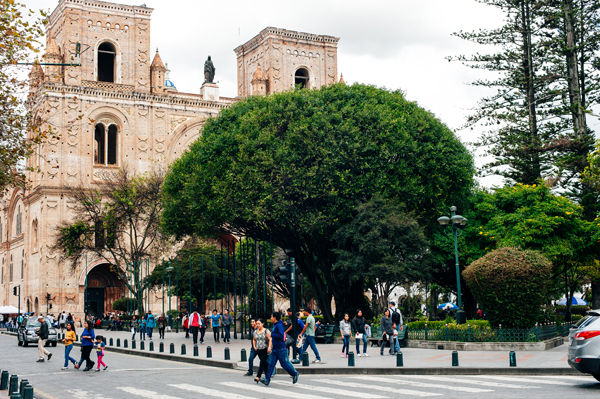
Cuenca
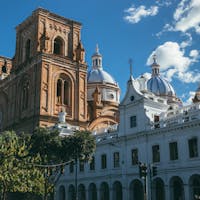
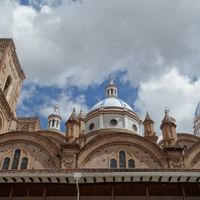
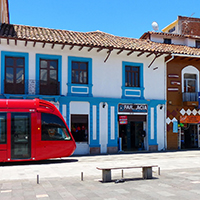
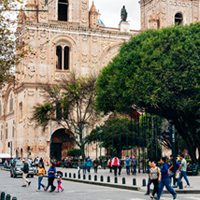
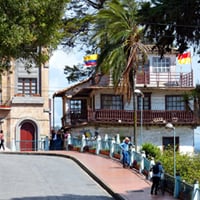
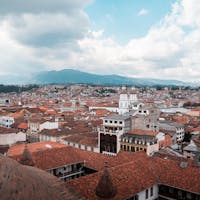
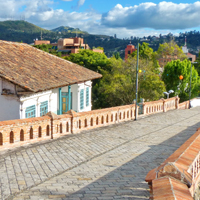
Urban RiverfrontCuenca sits at 2,560 meters elevation in Ecuador's southern highlands, making it one of the highest cities in the country and a UNESCO World Heritage Site since 1999. The city's architecture tells the story of Spanish colonial ambition meeting indigenous Andean culture—whitewashed buildings with red-tile roofs line cobblestone streets, while four rivers converge through the valley below. Known locally as the "Athens of Ecuador" for its intellectual and artistic traditions, Cuenca has become a magnet for expats and digital nomads drawn to its mild climate, affordable living, and thriving cultural scene. The historic center preserves centuries-old churches, convents, and plazas, yet the city pulses with contemporary galleries, craft breweries, and restaurants. Markets overflow with produce from surrounding agricultural lands. The surrounding mountains and rural communities offer hiking, weaving workshops, and access to indigenous markets within an hour's drive.
 BlueCross BlueShield Global Solutions
Get Quote
BlueCross BlueShield Global Solutions (BCBS) offers global health plans for international assignments or trips lasting 6 months or longer. With access to over 1.7M medical providers in 190 countries around the world, BCBS provides members with solutions and industry-leading digital services - ensuring top-quality coverage to people who live, work, study and travel internationally.
BlueCross BlueShield Global SolutionsBlueCross BlueShield Global Solutions (BCBS) offers global health plans for international assignments or trips lasting 6 months or longer. With access to over 1.7M medical providers in 190 countries around the world, BCBS provides members with solutions and industry-leading digital services - ensuring top-quality coverage to people who live, work, study and travel internationally.
Get Quote
Visa & Residency
Obtaining a residency in Ecuador is a process that can be straightforward if the applicant has all the required documentation and meets the specific criteria for the visa category they are applying for. There are several types of residency visas available, each catering to different needs and circumstances. The Pensioner Visa (9-I) is popular among retirees who can prove a stable income from a pension or retirement benefit. The minimum income requirement is typically around $800 per month for a single applicant, with an additional $100 for each dependent. This visa grants the holder permanent residency. Another common option is the Professional Visa (9-V), which is designed for individuals with a recognized university degree. Applicants must have their degree apostilled or legalized, depending on their country of origin, and it must be recognized by the Ecuadorian authorities. For digital nomads and those looking to stay in Ecuador for a shorter period, the Temporary Resident Visa is a suitable option. This visa allows individuals to live in Ecuador for up to two years and can be extended. It is important to note that while holding this visa, one cannot be absent from Ecuador for more than 90 days per year. The process of obtaining a residency visa generally involves gathering necessary documents such as a passport, police background check, and proof of income or health insurance. All documents must be apostilled or legalized and translated into Spanish. The applicant must then submit these documents to the Ecuadorian consulate in their home country or directly to the Ministry of Foreign Affairs and Human Mobility in Ecuador. Once the application is submitted, the processing time can vary, but it generally takes a few months. It is advisable to work with a legal representative or visa agent in Ecuador to ensure that the process goes smoothly, as they can provide up-to-date information on the requirements and help navigate any bureaucratic hurdles. Overall, while the process can be involved, it is considered average in terms of difficulty compared to other countries. Successful applicants will receive a visa that allows them to enjoy the benefits of living in Ecuador, including access to its healthcare system and the ability to apply for citizenship after a certain period of residency.
Cost of Living
A couple can live comfortably in Cuenca on $1,500–2,000 USD monthly, including rent, food, and utilities—roughly one-third the cost of major North American or European cities. Rent for a furnished apartment in the historic center runs $400–800, while meals at local restaurants cost $3–6. Groceries and services remain inexpensive, though imported goods carry a premium.
Weather
Cuenca's high altitude creates a spring-like climate year-round, with daytime temperatures around 20–24°C (68–75°F) and cool nights. Rain falls regularly, especially October through April, but rarely disrupts daily life.
Healthcare in Cuenca
Cuenca has two major private hospitals—Hospital Monte Sinaí and Hospital Santa Inés—that meet international standards and serve as the primary choice for expats and those seeking advanced care. Public healthcare through IESS is available but typically involves longer waits; many residents supplement with private insurance. English-speaking doctors are available at private facilities, though not universally.
Schools in Cuenca
Cuenca has several international options including Unidad Educativa Católica Benigno Malo (which offers IB programs) and Colegio Americano de Cuenca, both serving expat and local families. These schools follow curricula beyond Ecuador's national standards and typically charge $8,000–$15,000 annually.
Bilingual education is widely available through schools like Colegio Sudamericano and various smaller institutions offering English-Spanish instruction from primary through secondary levels. Most bilingual programs emphasize English proficiency while maintaining Spanish language arts.
Restaurants in Cuenca
Living in Cuenca