Ecuador
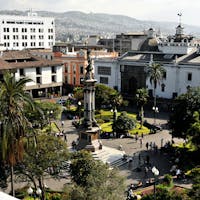
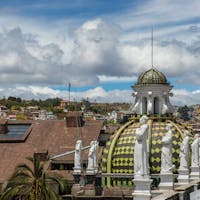
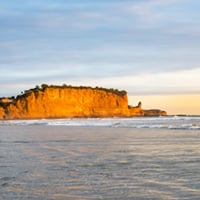
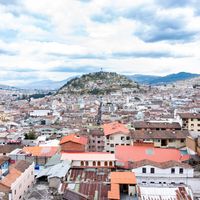
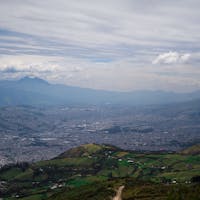
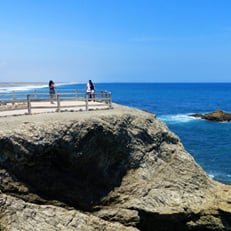
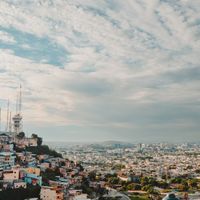
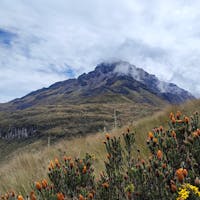
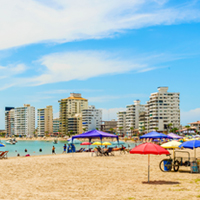
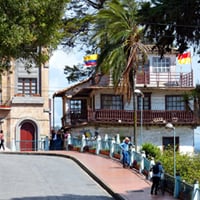
Coastal BeachesEcuador is a small South American country located on the northwestern coast of the continent, straddling the equator from which it takes its name. The country is incredibly biodiverse, featuring the Amazon rainforest in the east, the Andes Mountains running north-south through the center, and Pacific coastal regions to the west. Ecuador's culture blends indigenous heritage with Spanish colonial influences, reflected in its architecture, cuisine, and traditions. The economy relies on oil exports, agriculture (particularly bananas and cacao), and increasingly on tourism drawn by its natural wonders and biodiversity. Life in Ecuador offers a relaxed pace, affordable living costs, and access to varied landscapes and climates within short distances. The country has a rich indigenous population and vibrant local markets that characterize daily life in many regions.
 BlueCross BlueShield Global Solutions
Get Quote
BlueCross BlueShield Global Solutions (BCBS) offers global health plans for international assignments or trips lasting 6 months or longer. With access to over 1.7M medical providers in 190 countries around the world, BCBS provides members with solutions and industry-leading digital services - ensuring top-quality coverage to people who live, work, study and travel internationally.
BlueCross BlueShield Global SolutionsBlueCross BlueShield Global Solutions (BCBS) offers global health plans for international assignments or trips lasting 6 months or longer. With access to over 1.7M medical providers in 190 countries around the world, BCBS provides members with solutions and industry-leading digital services - ensuring top-quality coverage to people who live, work, study and travel internationally.
Get Quote


Podcasts

Episode 8: Jake Barber - The Expat Finance Expert Returns


Episode 6: Jake Barber - Expat Finance Expert and Lifelong Expat
Living in Ecuador
Best Places to Live in Ecuador
Visa & Residency
Obtaining a residency in Ecuador is a process that can be straightforward if the applicant has all the required documentation and meets the specific criteria for the visa category they are applying for. There are several types of residency visas available, each catering to different needs and circumstances. The Pensioner Visa (9-I) is popular among retirees who can prove a stable income from a pension or retirement benefit. The minimum income requirement is typically around $800 per month for a single applicant, with an additional $100 for each dependent. This visa grants the holder permanent residency. Another common option is the Professional Visa (9-V), which is designed for individuals with a recognized university degree. Applicants must have their degree apostilled or legalized, depending on their country of origin, and it must be recognized by the Ecuadorian authorities. For digital nomads and those looking to stay in Ecuador for a shorter period, the Temporary Resident Visa is a suitable option. This visa allows individuals to live in Ecuador for up to two years and can be extended. It is important to note that while holding this visa, one cannot be absent from Ecuador for more than 90 days per year. The process of obtaining a residency visa generally involves gathering necessary documents such as a passport, police background check, and proof of income or health insurance. All documents must be apostilled or legalized and translated into Spanish. The applicant must then submit these documents to the Ecuadorian consulate in their home country or directly to the Ministry of Foreign Affairs and Human Mobility in Ecuador. Once the application is submitted, the processing time can vary, but it generally takes a few months. It is advisable to work with a legal representative or visa agent in Ecuador to ensure that the process goes smoothly, as they can provide up-to-date information on the requirements and help navigate any bureaucratic hurdles. Overall, while the process can be involved, it is considered average in terms of difficulty compared to other countries. Successful applicants will receive a visa that allows them to enjoy the benefits of living in Ecuador, including access to its healthcare system and the ability to apply for citizenship after a certain period of residency.
Healthcare in Ecuador
The healthcare system in Ecuador is a mix of public and private services. The public healthcare system is accessible to all citizens and residents, including expatriates who have registered and are contributing to the Ecuadorian Social Security system (IESS). Public healthcare is free at the point of service, but it can be characterized by long wait times and varying levels of quality depending on the region. Private healthcare in Ecuador offers higher quality services with more modern facilities and shorter wait times, but at a higher cost. Expats and digital nomads can access public healthcare once they have a residence visa and have enrolled in the IESS. Some may opt for private health insurance or pay out-of-pocket for private care to ensure a higher standard and immediate access.
Cost of Living
Ecuador offers one of the lowest costs of living in South America, making it attractive for budget-conscious relocators. Rental prices vary significantly by location: in Quito or Cuenca, a one-bedroom apartment in the city center rents for approximately $400–$700 USD monthly, while outside city centers prices drop to $250–$400. Property purchases range from $1,500–$3,000 USD per square meter in desirable areas. Daily expenses including food, transportation, and utilities are very affordable, with a comfortable lifestyle possible on $1,200–$1,800 USD monthly for a single person.
Weather
Ecuador's weather varies dramatically by altitude and region rather than by season, as the country straddles the equator. Coastal areas are tropical and warm year-round, with a rainy season from December to May. The Andean highlands have cooler temperatures that depend on elevation, with some areas experiencing perpetual spring-like conditions. The Amazon basin is hot and humid with significant rainfall throughout the year, though there are wetter and drier periods.
Educational System in Ecuador
The educational system in Ecuador is structured to provide free and compulsory education to children from the ages of 6 to 14, which corresponds to the basic education level. The system is divided into three main levels: pre-primary, general basic education, and the baccalaureate or high school level. Pre-primary education is for children aged 4 to 5 years and is not mandatory. General basic education is divided into two cycles: the first cycle includes grades 1 to 7 (ages 6 to 12), and the second cycle includes grades 8 to 10 (ages 12 to 15). After completing the 10th grade, students receive a Basic Education Diploma. The baccalaureate level, which is the equivalent of high school, encompasses grades 11 and 12 (ages 15 to 17). Upon graduation, students receive a Bachillerato, which is necessary to enter university. The school year in Ecuador typically runs from September to July. The quality of education can vary significantly between urban and rural areas, with urban schools generally having better resources and infrastructure. Private schools are also available and are often bilingual, offering curricula in Spanish and another language, usually English. These schools may follow international curricula, such as that of the International Baccalaureate. For families moving to Ecuador, it is important to note that public schools may not offer the same level of resources as private institutions, but there are many private schools that provide high-quality education with a range of extracurricular activities
Living in Ecuador
Healthcare in Ecuador
Best Places to Live in Ecuador
Moving to Ecuador