Christmas in Croatia


Summary: Learn how people celebrate Christmas and the New Year in Croatia - traditions, food, church, gift exchange and more.
The holiday season in Croatia is a magical time, blending deep-rooted traditions with festive cheer. For expats and digital nomads experiencing their first Christmas and New Year’s here, the celebrations offer a mix of local customs and familiar holiday warmth. From twinkling lights to hearty feasts, the season is rich with unique experiences that make it unforgettable.
Christmas Traditions and Celebrations
Christmas in Croatia is a time of family, faith, and festive gatherings. Many people attend midnight Mass on Christmas Eve, known as *Badnjak*, which is one of the most important religious observances. Churches across the country hold services, and some towns even host live nativity scenes or processions. While not everyone attends church, the tradition remains strong, especially in smaller towns and rural areas.
Unlike in some Western countries, where Santa Claus (*Djed Mraz* or *Boži? Bata*) brings gifts on Christmas Eve or Christmas Day, in Croatia, presents are often exchanged on Christmas morning. Children may also receive small gifts on St. Nicholas Day (December 6th), when *Sveti Nikola* (St. Nicholas) visits, accompanied by *Krampus* in some regions—a folklore figure who punishes misbehaving children.
Festive Foods and Desserts
Food plays a central role in Croatian holiday celebrations. On Christmas Eve, many families observe a meatless fast, enjoying dishes like *bakalar* (salted cod), *fritule* (small doughnuts with raisins and citrus zest), and *sarma* (cabbage rolls stuffed with rice and spices). Christmas Day features a lavish feast, often starting with *?esnica*, a round loaf of bread with a hidden coin or trinket inside—whoever finds it is said to have good luck in the coming year.
Other traditional dishes include roasted lamb, *pe?enica* (pork roast), and *purica s mlincima* (turkey with thin, crispy flatbread). Desserts like *kola? od oraha* (walnut roll) and *medovik* (honey cake) are also popular. For New Year’s, many enjoy *krafne* (jam-filled doughnuts) and sparkling wine as they count down to midnight.
Christmas Markets and Decorations
Croatia’s Christmas markets are a highlight of the season, with Zagreb’s *Advent u Zagrebu* being one of the most famous. The city transforms into a winter wonderland, with ice-skating rinks, mulled wine (*kuhano vino*), and stalls selling handmade crafts, local delicacies, and holiday treats. Other notable markets include those in Split, Dubrovnik, and Rijeka, each offering a unique atmosphere with live music, festive lights, and cultural performances.
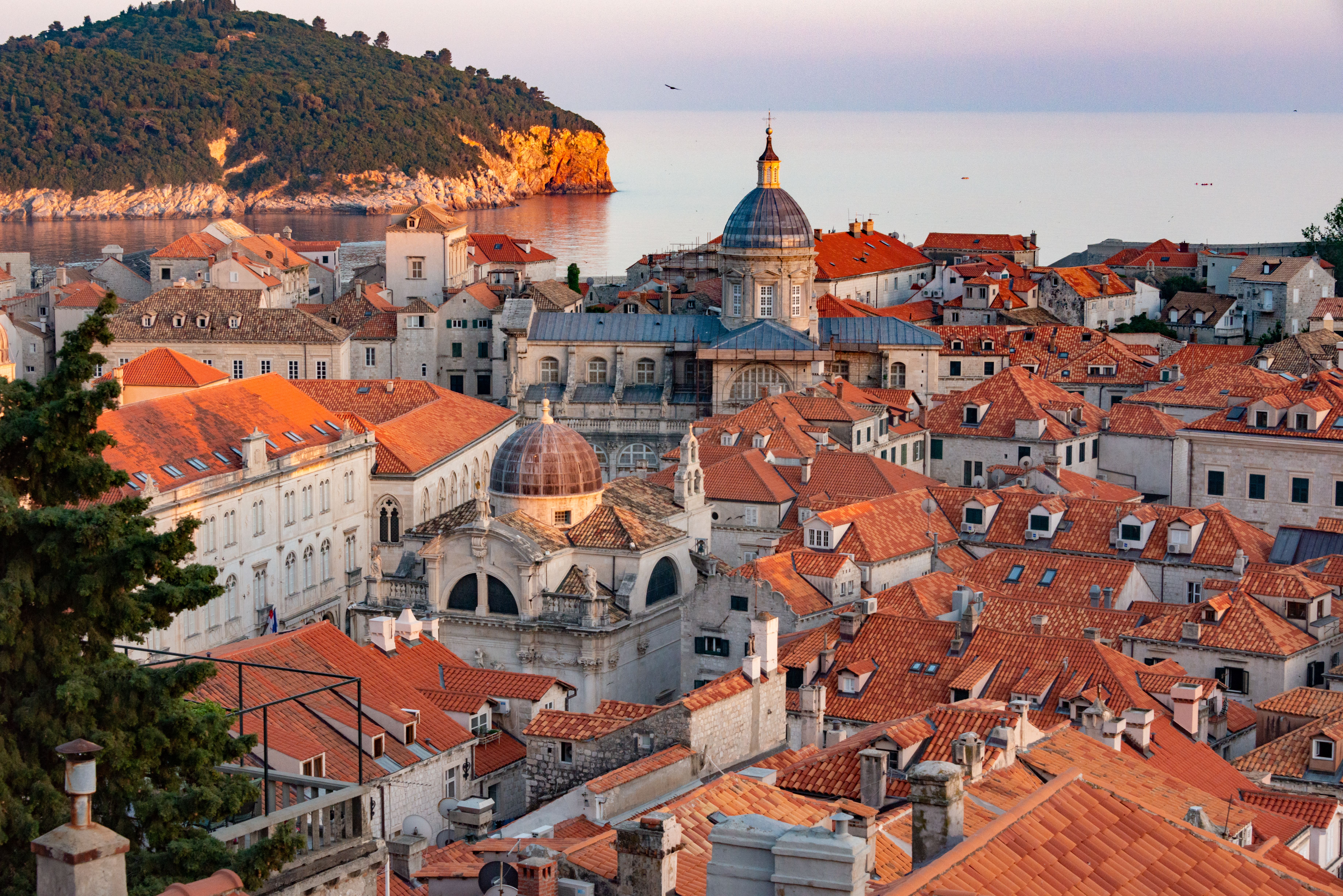
Neighborhoods and towns compete to have the most elaborate decorations. In Zagreb, Ban Jela?i? Square and Zrinjevac Park are particularly stunning, while in Dubrovnik, the Old Town’s historic streets glow with lights and garlands. Smaller towns like Varaždin and Osijek also go all out, creating a cozy, festive ambiance.
New Year’s Celebrations
New Year’s Eve in Croatia is a lively affair, with fireworks, parties, and public celebrations. Major cities host concerts and countdown events, with Zagreb’s main square drawing large crowds. Many people gather with friends for dinner, dancing, and champagne toasts at midnight. In coastal towns like Split and Dubrovnik, celebrations often spill into the streets, with live music and open-air festivities.
On New Year’s Day, families and friends gather for relaxed meals, often featuring leftovers from Christmas or fresh seafood along the coast. Some attend church services, while others take leisurely walks to enjoy the crisp winter air.
How Locals Spend the Holidays
Christmas Eve is typically a quiet, family-oriented evening, with many attending Mass or enjoying a festive dinner at home. Christmas Day is spent with loved ones, sharing meals, exchanging gifts, and playing games. In some regions, groups go caroling (*kolendanje*), singing traditional songs door-to-door.
For New Year’s, the focus shifts to celebration, with many heading out to bars, clubs, or public events. Fireworks light up the sky at midnight, and the revelry often continues into the early hours. The following days are usually low-key, with people recovering from the festivities and enjoying time off work.
Unique Regional Customs
Different parts of Croatia have their own holiday quirks. In Dalmatia, some families burn *badnjak* (an oak log) on Christmas Eve for good luck, while in Istria, *Boži? Bata* (Father Christmas) might leave gifts in shoes left by the fireplace. In Slavonia, *kolo* (traditional circle dancing) is sometimes performed at gatherings, adding a cultural touch to the celebrations.
No matter where you are in Croatia, the holiday season is a time of warmth, tradition, and community. Whether you’re sipping mulled wine at a Christmas market, feasting on homemade delicacies, or ringing in the New Year with fireworks, the experience is one you won’t soon forget.
About the Author
 Joshua Wood, LPC joined Expat Exchange in 2000 and serves as one of its Co-Presidents. He is also one of the Founders of Digital Nomad Exchange. Prior to Expat Exchange, Joshua worked for NBC Cable (MSNBC and CNBC
Primetime). Joshua has a BA from Syracuse and a Master's in Clinical and Counseling Psychology from Fairleigh Dickinson University. Mr. Wood is also a licensed counselor and psychotherapist.
Joshua Wood, LPC joined Expat Exchange in 2000 and serves as one of its Co-Presidents. He is also one of the Founders of Digital Nomad Exchange. Prior to Expat Exchange, Joshua worked for NBC Cable (MSNBC and CNBC
Primetime). Joshua has a BA from Syracuse and a Master's in Clinical and Counseling Psychology from Fairleigh Dickinson University. Mr. Wood is also a licensed counselor and psychotherapist.
Some of Joshua's articles include Pros and Cons of Living in Portugal, 10 Best Places to Live in Ireland and Pros and Cons of Living in Uruguay. Connect with Joshua on LinkedIn.
Additional Information:
- Croatia Guide
- Healthcare & Health Insurance in Croatia
- Members Talk about Healthcare & Health Insurance in Croatia
- Best Places to Live in Croatia
- Real Estate in Croatia
- Guide to Real Estate in Croatia
- Pros & Cons of Living in Croatia
- Cost of Living in Croatia
- Pros and Cons of Living in Croatia
- How to Rent a Home in Croatia
- How to Enroll in the Public Healthcare System in Croatia
- 10 Best Places for Families to Live in Croatia
- 2026 Guide to Living in Croatia
- Pros and Cons of Living in Croatia 2026