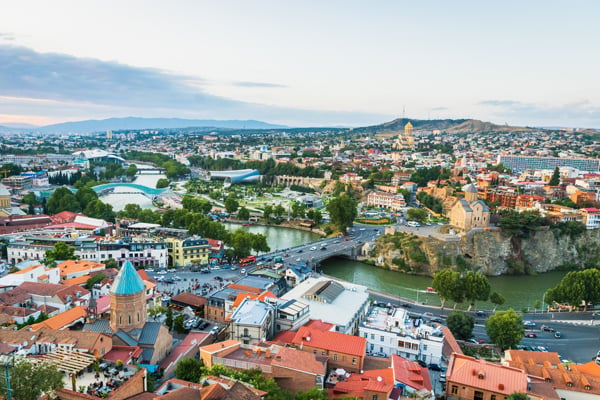


Christmas in Georgia


Summary: Explore the festive traditions of Christmas and New Year in Georgia, where the celebrations are marked by special foods, church ceremonies, the exchange of gifts, and an array of cultural customs.
The holiday season in Georgia brings a mix of ancient traditions, religious customs, and modern celebrations. For expats and digital nomads experiencing their first Christmas and New Year in the country, the festivities offer a unique blend of Eastern Orthodox traditions, Soviet-era influences, and local charm. While Georgia doesn’t have the same commercialized holiday culture as Western countries, the season is rich with warmth, family gatherings, and festive foods.
Holiday Traditions and Celebrations
Christmas in Georgia is celebrated on January 7th, following the Julian calendar used by the Georgian Orthodox Church. The weeks leading up to Christmas are filled with anticipation, though the festive atmosphere starts earlier with New Year’s Eve on December 31st, which is often the bigger celebration. Many Georgians decorate their homes with lights, ornaments, and Christmas trees, though the latter is a more recent addition influenced by Western culture.
New Year’s Eve is the main event for many, marked by fireworks, feasting, and toasting with family and friends. Unlike in Western countries, where Christmas is the focal point, in Georgia, New Year’s often takes center stage, with gifts exchanged, elaborate meals prepared, and public celebrations in cities like Tbilisi and Batumi.
Santa Claus and Gift-Giving
Georgia doesn’t have a traditional Santa Claus figure, but instead, Tovlis Babua (Grandfather Snow) or Tovlis Papa (Father Snow) is the gift-bringer. He is often depicted in a long coat and hat, similar to Ded Moroz (Grandfather Frost) in Russian tradition. Children receive small gifts, usually sweets, fruits, or toys, on New Year’s Eve rather than Christmas. Adults may exchange modest presents, such as wine, chocolates, or handmade items, but gift-giving is not as commercialized as in Western cultures.
Traditional Foods and Desserts
Food is at the heart of Georgian holiday celebrations. For New Year’s Eve, families prepare a lavish feast called Supra, featuring dishes like satsivi (turkey or chicken in walnut sauce), khinkali (dumplings), lobio (bean stew), and badrijani nigvzit (eggplant rolls with walnut paste). Desserts include gozinaki (a sweet made of caramelized walnuts and honey), churchkhela (walnuts dipped in grape must), and pelamushi (a grape pudding).
On Christmas Day, many families attend church and then enjoy a simpler meal, often featuring gomi (cornmeal porridge) and mchadi (cornbread), along with cheese and fresh herbs. Wine, a staple of Georgian culture, flows freely during both holidays.
Christmas Eve and Christmas Day
Christmas Eve (January 6th) is a time for religious observance, with many Georgians attending the Alilo procession, where children and adults go door-to-door singing carols and collecting donations for the poor. The evening often includes a modest meal before midnight church services.
Christmas Day itself is a quieter affair, focused on family and reflection. Many people attend church in the morning, followed by a festive lunch. Unlike in Western countries, where Christmas is a day of gift exchanges and parties, Georgian Christmas is more subdued, with an emphasis on faith and togetherness.
Church and Religious Observances
Religion plays a significant role in Georgian Christmas celebrations. The Georgian Orthodox Church follows the Julian calendar, so Christmas is observed on January 7th. Many people attend midnight liturgy on Christmas Eve, and churches are beautifully decorated with candles and icons. While not everyone attends services, the religious aspect remains an important part of the holiday for many families.
Festive Locations and Decorations
Tbilisi is the best place to experience holiday cheer, with its streets and squares adorned with lights and decorations. Freedom Square and Rustaveli Avenue are particularly festive, hosting Christmas markets, ice-skating rinks, and live performances. The Old Town’s narrow streets are lit with warm, twinkling lights, creating a cozy atmosphere.
Batumi, with its seaside charm, also embraces the holiday spirit, featuring decorations along the boulevard and festive events. Smaller towns like Kutaisi and Sighnaghi offer a more traditional experience, with local markets selling handmade crafts and holiday treats.
For those looking to immerse themselves in Georgian holiday culture, visiting a local church for midnight liturgy or joining a family feast can be a memorable experience. Whether celebrating New Year’s Eve with fireworks and toasts or observing Christmas with quiet reflection, the holidays in Georgia offer a blend of tradition and warmth that’s uniquely its own.
About the Author
 Betsy Burlingame is the Founder and President of Expat Exchange and is one of the Founders of Digital Nomad Exchange. She launched Expat Exchange in 1997 as her Master's thesis project at NYU. Prior to Expat Exchange, Betsy worked at AT&T in International
and Mass Market Marketing. She graduated from Ohio Wesleyan University
with a BA in International Business and German.
Betsy Burlingame is the Founder and President of Expat Exchange and is one of the Founders of Digital Nomad Exchange. She launched Expat Exchange in 1997 as her Master's thesis project at NYU. Prior to Expat Exchange, Betsy worked at AT&T in International
and Mass Market Marketing. She graduated from Ohio Wesleyan University
with a BA in International Business and German.
Some of Betsy's articles include 12 Best Places to Live in Portugal, 7 Best Places to Live in Panama and 12 Things to Know Before Moving to the Dominican Republic. Betsy loves to travel and spend time with her family. Connect with Betsy on LinkedIn.
Additional Information:
- Georgia Rep Guide
- Healthcare & Health Insurance in Georgia Rep
- Members Talk about Healthcare & Health Insurance in Georgia Rep
- Best Places to Live in Georgia Rep
- Real Estate in Georgia Rep
- Guide to Real Estate in Georgia Rep
- Pros & Cons of Living in Georgia Rep
- Cost of Living in Georgia Rep
- How to Enroll Your Children in School in Georgia
- Educational System in Georgia
- 10 Things to Know Before Moving to Georgia
- How to Buy a Home in Georgia
- Pros and Cons of Living in Georgia Rep 2026