

Christmas in Macedonia


Summary: Explore the festive traditions of Christmas and New Year in Macedonia, where the celebrations are marked by special foods, church ceremonies, the exchange of gifts, and an array of cultural customs.
The holiday season in Macedonia brings a mix of Orthodox Christian traditions, festive warmth, and winter charm. For expats and digital nomads experiencing their first Christmas and New Year here, the celebrations offer a blend of local customs and familiar holiday spirit. Whether you're drawn to the lively markets, the rich culinary traditions, or the cozy gatherings with friends and family, Macedonia’s holiday season has something unique to offer.
Holiday Traditions and Celebrations
Christmas and New Year in Macedonia are deeply rooted in Orthodox Christian traditions, with celebrations centered around faith, family, and community. While December 25th is recognized as Christmas Day, many Macedonians follow the Julian calendar, meaning some religious observances align with January 7th. However, the festive atmosphere begins in early December, with streets, homes, and businesses decorated in lights and ornaments.
One of the most beloved figures during the holidays is Dedo Mraz, Macedonia’s version of Santa Claus. Unlike the Western Santa, Dedo Mraz is often depicted in a long coat and hat, delivering gifts to children on New Year’s Eve rather than Christmas. Families exchange presents, though the focus is more on small, thoughtful gifts rather than extravagant ones. Common gifts include sweets, books, or handmade items.
Christmas Eve and Christmas Day
Christmas Eve, known as Badnik, is a time for quiet reflection and family gatherings. Many Macedonians observe a meatless fast, enjoying a meal of fish, beans, walnuts, and dried fruits. A key tradition is the badnik bread, which contains a hidden coin—whoever finds it is said to have good luck in the coming year. After dinner, families often attend midnight Mass, a central part of the celebration for those who observe religious customs.
Christmas Day is a time for feasting and visiting relatives. The meal typically includes roasted pork, sarma (cabbage rolls), and an array of pastries. Desserts like baklava and kadaif are staples, along with boza, a fermented grain drink. While not everyone attends church, many families begin the day with a service, particularly in smaller towns and villages.
New Year’s Celebrations
New Year’s Eve is the livelier of the two holidays, with fireworks, music, and public gatherings. Cities like Skopje, Ohrid, and Bitola host outdoor concerts and parties, while restaurants and bars offer special menus and entertainment. Many Macedonians celebrate with friends, enjoying a late-night feast that often includes roasted meats, salads, and plenty of wine and rakija (fruit brandy).
At midnight, fireworks light up the sky, and people toast to the new year with champagne or sparkling wine. Children receive gifts from Dedo Mraz, and families often stay up late playing games or dancing. The first day of the new year is usually spent relaxing at home or visiting close friends.
Festive Markets and Decorations
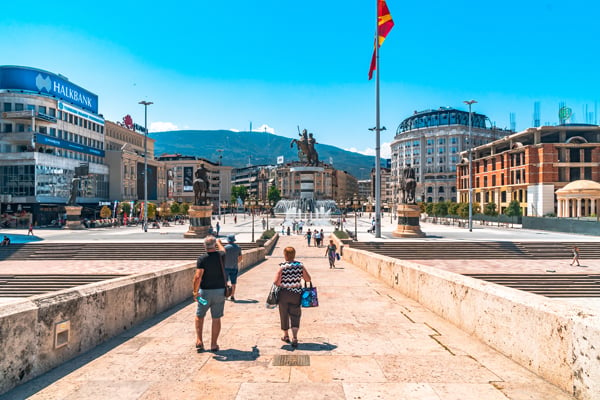
Macedonia’s holiday markets are a highlight of the season, offering handmade crafts, local delicacies, and warm drinks. Skopje’s Christmas Market in Macedonia Square is one of the most popular, with wooden stalls selling mulled wine, grilled corn, and traditional sweets. The city’s main streets are adorned with twinkling lights, and the fountain in the square often features festive displays.
Ohrid, with its charming old town and lakeside setting, is another magical place to experience the holidays. The streets are decorated with garlands and lanterns, and the sound of carolers fills the air. Bitola’s Širok Sokak pedestrian street also comes alive with lights and decorations, making it a great spot for an evening stroll.
Food and Drink
Holiday meals in Macedonia are hearty and flavorful, with dishes that vary by region. For Christmas Eve, the fasting meal might include tav?e grav?e (baked beans), pickled vegetables, and poga?a (a type of flatbread). On Christmas Day, roasted pork or lamb is common, served with fresh salads and warm bread.
Desserts are a major part of the celebrations. Baklava and kadaif are must-haves, often made with layers of phyllo dough, nuts, and honey. Orehnja?a (walnut roll) and medenik (honey cake) are also popular. For drinks, rakija is a staple, while boza and salep (a warm milk-based drink) are enjoyed during the colder months.
Whether you’re exploring the festive markets, enjoying a traditional meal, or simply soaking in the winter atmosphere, Macedonia’s holiday season offers a warm and memorable experience. For those spending their first Christmas and New Year here, it’s a chance to embrace local customs while creating new traditions of your own.
About the Author
 Joshua Wood, LPC joined Expat Exchange in 2000 and serves as one of its Co-Presidents. He is also one of the Founders of Digital Nomad Exchange. Prior to Expat Exchange, Joshua worked for NBC Cable (MSNBC and CNBC
Primetime). Joshua has a BA from Syracuse and a Master's in Clinical and Counseling Psychology from Fairleigh Dickinson University. Mr. Wood is also a licensed counselor and psychotherapist.
Joshua Wood, LPC joined Expat Exchange in 2000 and serves as one of its Co-Presidents. He is also one of the Founders of Digital Nomad Exchange. Prior to Expat Exchange, Joshua worked for NBC Cable (MSNBC and CNBC
Primetime). Joshua has a BA from Syracuse and a Master's in Clinical and Counseling Psychology from Fairleigh Dickinson University. Mr. Wood is also a licensed counselor and psychotherapist.
Some of Joshua's articles include Pros and Cons of Living in Portugal, 10 Best Places to Live in Ireland and Pros and Cons of Living in Uruguay. Connect with Joshua on LinkedIn.
Additional Information:
- Macedonia Guide
- Healthcare & Health Insurance in Macedonia
- Members Talk about Healthcare & Health Insurance in Macedonia
- Best Places to Live in Macedonia
- Real Estate in Macedonia
- Guide to Real Estate in Macedonia
- Pros & Cons of Living in Macedonia
- Cost of Living in Macedonia
- Culture Shock in Macedonia
- Homeschooling in Macedonia
- How to Enroll Your Children in School in Macedonia
- Educational System in Macedonia
- Pros and Cons of Living in Macedonia 2026