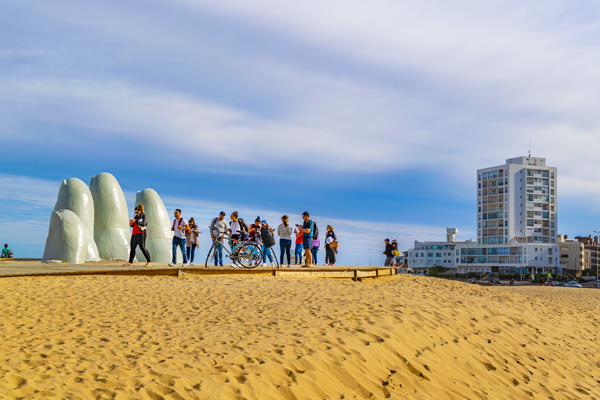
Guide to Residency in Uruguay


Summary: How to get residency in Uruguay. A Guide for Expats, Retirees and Immigrants in Uruguay.
Obtaining a residency visa in Uruguay is not always easy, but our Guide to Residency in Uruguay gives newcomers an overview of the steps involved and advice from others who have already navigated the process.
- Prepare Required Documents
- Gather and apostille required documents in your home country:
- Birth certificate
- Marriage certificate (if applicable)
- Police record
- Translate documents into Spanish
- Gather and apostille required documents in your home country:
- Enter Uruguay as a Tourist
- Citizens of many countries do not need a visa to enter Uruguay as a tourist. Verify if this applies to your country.
- Upon arrival, you will receive a tourist visa valid for 90 days, which can be renewed.
- Apply for a Tax Number (RUT)
- Visit the Dirección General Impositiva (DGI) website: https://www.dgi.gub.uy/
- Fill out the online form to register for a RUT number.
- Print the confirmation and keep it for your records.
- Open a Bank Account
- Choose a bank and make an appointment.
- Provide required documents:
- Passport
- RUT number
- Proof of address
- Find a Place to Live
- Search for accommodation through real estate agencies or online platforms.
- Sign a lease agreement (contrato de alquiler).
- Apply for Temporary Residency
- Gather required documents:
- Valid passport
- Birth certificate (apostilled and translated)
- Police record (apostilled and translated)
- Proof of income
- Lease agreement
- Health certificate (obtained in Uruguay)
- Visit the Dirección Nacional de Migración website: https://www.gub.uy/tramites/residencia-temporaria
- Fill out the online application form.
- Make an appointment and submit required documents.
- Gather required documents:
- Wait for Approval
- Processing time may vary. You can check the status of your application online.
- Obtain Your Cédula (ID Card)
- Once your residency is approved, you can apply for a cédula at the Registro Civil.
- Provide required documents:
- Approval letter
- Passport
- Birth certificate (apostilled and translated)
- Renew Your Residency
- Temporary residency is typically valid for one year and can be renewed.
- Follow the same process as the initial application, but provide updated documents.
- Apply for Permanent Residency (after a certain period)
- Meet the requirements for permanent residency, such as having lived in Uruguay for a certain number of years.
- Gather required documents and apply at the Dirección Nacional de Migración.
Notes
The process may take several months, and it is important to keep all documents up to date. It is recommended to consult with a lawyer or immigration specialist for personalized advice.
All official procedures are done in Spanish. It is helpful to have at least a basic understanding of the language or to have the assistance of a translator.
What tips do expats have about residency and visas in Uruguay?
"In order to visit Uruguay, foreign nationals must obtain a visa prior to their arrival. The process of applying for a visa involves submitting an application form, a valid passport, a passport-sized photograph, and proof of sufficient funds to cover the duration of the stay. Depending on the purpose of the visit, additional documents may be required. In order to obtain residency in Uruguay, foreign nationals must submit an application form, a valid passport, a passport-sized photograph, proof of sufficient funds to cover the duration of the stay, and a criminal background check. Depending on the purpose of the residency, additional documents may be required. Once the application is approved, the applicant will receive a residency card, which must be renewed every two years," commented one member living in Uruguay.
"Applying for residency is a process and sometimes could take over a year. There is a lot of beauracracy involved with lots of paperwork needed. You are able to visit Uruguay on a passport for 90 days before having to travel outside the country to get your passport stamped, which by default, renews your passport for another 90 days," mentioned one expat living in Uruguay.
About the Author
 Joshua Wood, LPC joined Expat Exchange in 2000 and serves as one of its Co-Presidents. He is also one of the Founders of Digital Nomad Exchange. Prior to Expat Exchange, Joshua worked for NBC Cable (MSNBC and CNBC
Primetime). Joshua has a BA from Syracuse and a Master's in Clinical and Counseling Psychology from Fairleigh Dickinson University. Mr. Wood is also a licensed counselor and psychotherapist.
Joshua Wood, LPC joined Expat Exchange in 2000 and serves as one of its Co-Presidents. He is also one of the Founders of Digital Nomad Exchange. Prior to Expat Exchange, Joshua worked for NBC Cable (MSNBC and CNBC
Primetime). Joshua has a BA from Syracuse and a Master's in Clinical and Counseling Psychology from Fairleigh Dickinson University. Mr. Wood is also a licensed counselor and psychotherapist.
Some of Joshua's articles include Pros and Cons of Living in Portugal, 10 Best Places to Live in Ireland and Pros and Cons of Living in Uruguay. Connect with Joshua on LinkedIn.
Additional Information:
- Uruguay Guide
- Healthcare & Health Insurance in Uruguay
- Members Talk about Healthcare & Health Insurance in Uruguay
- Best Places to Live in Uruguay
- Real Estate in Uruguay
- Guide to Real Estate in Uruguay
- Pros & Cons of Living in Uruguay
- Cost of Living in Uruguay
- Moving to Uruguay with a Pet
- Understanding Mental Health in Uruguay
- Do I need Health Insurance When Moving to Uruguay?
- Having a Baby in Uruguay
- 2026 Guide to Living in Uruguay
- Pros and Cons of Living in Uruguay 2026
- 2026 Guide to Moving to Uruguay