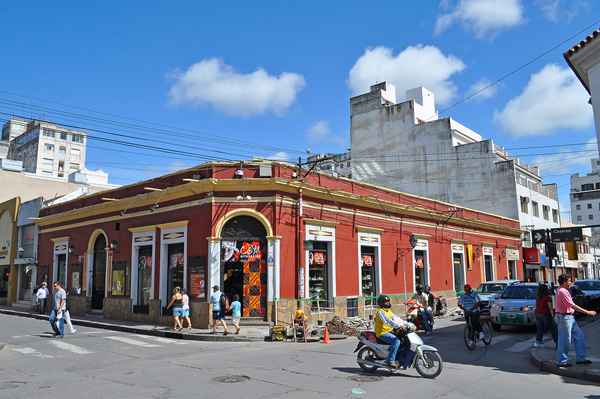
Understanding the Health System in Argentina


Summary: Discover the realities of the healthcare system in Argentina and how it may serve expats, digital nomads, retirees, and others who relocate or reside in the country.
Opening a bank account in Argentina as an expat or digital nomad can be a crucial step towards settling into your new life. While the process may have its particularities, understanding the requirements and steps involved will significantly simplify the procedure. This guide provides a comprehensive overview of what you need to know to open a bank account in Argentina.
Can foreigners open bank accounts in Argentina?
Yes, foreigners can open bank accounts in Argentina. However, the process may vary depending on the bank and the type of account you wish to open. Some banks may require a temporary or permanent residence visa, while others may allow you to open an account with just a passport. It's essential to check the specific requirements of each bank.
What are the different types of bank accounts?
Argentina offers several types of bank accounts, with the most common being current (cuenta corriente) and savings (caja de ahorro) accounts. Current accounts are typically used for day-to-day transactions and may come with a chequebook, while savings accounts are designed for putting money aside and earning interest. Some banks also offer accounts specifically designed for expats.
What are the requirements for opening a bank account in Argentina?
The specific requirements may vary from one bank to another, but generally, you will need to provide the following documents: a valid passport or national ID card, proof of address (such as a utility bill or rental contract), and proof of income or employment. Some banks may also require a Certificado de Domicilio (a certificate of residence issued by the police) and a CUIL/CUIT number (a unique tax identification number).
Can I open a bank account in Argentina before I move there and how?
Opening a bank account in Argentina before there can be challenging, as most banks require you to be physically present in the country. However, some international banks with branches in Argentina may allow you to open an account before you arrive. It's recommended to contact the bank directly to inquire about this possibility. Alternatively, you could open a bank account in your home country with a bank that has a correspondent banking relationship with an Argentinian bank.
Which US bank has branches in Argentina?
Citibank is one of the US banks with a presence in Argentina. Having an account with Citibank in the US may facilitate the process of opening an account in Argentina, but it's still important to check the specific requirements and procedures with the bank.
What are the best banks in Argentina for expats?
Several banks in Argentina are popular among expats due to their international presence and the range of services they offer. Some of the best banks for expats include HSBC, Citibank, and BBVA. These banks often have English-speaking staff and are more accustomed to dealing with international clients. Additionally, they may offer accounts specifically designed for expats and have more straightforward processes for opening an account as a foreigner.
What are the steps involved for a foreigner opening a bank account in Argentina?
To open a bank account in Argentina, follow these general steps: 1) Choose a bank that suits your needs and check their specific requirements for foreigners. 2) Gather all the necessary documents, including your passport, proof of address, and proof of income. 3) Make an appointment at the bank (if required) and visit a branch in person. 4) Complete the application process, which may involve filling out forms and providing additional information. 5) Once your account is approved, you will receive your account details and can start using your new bank account.
Insider Tips from Expats in Argentina: How to Navigate the Health System
"As a newcomer, one of the first things you should do is buy international heath insurance that can be used at any private facility in the country. They are options for private insurance that can be bought from an individual private hospital but then if they do not have the equipment needed you will have to pay out of pocket to go to another facility. So with an international health policy you can be treated anywhere you choose. This is the type of policy I have. It also covers me anywhere else in the world and I have chosen to have the US option as well. The insurance is affordable and COMPREHENSIVE. If you have a medical condition, bring your doctors notes and copies of your prescriptions," commented one expat living in Buenos Aires, Argentina.
"Healthcare services in Argentina are provided by both public and private institutions. The public system is funded by the government and is available to all citizens and legal residents. The quality of public healthcare varies depending on the region, but generally it is considered to be of good quality. Foreign residents are able to access the public healthcare system, but they may need to pay a fee. Expats in Argentina typically use the public healthcare system, as it is often more affordable than private healthcare. However, some expats may opt for private healthcare if they are able to afford it," mentioned one expat living in Argentina.
"Remember, Argentina does not offer its Government Medical Insurance if you are a senior," said an expat in Argentina.
"Have had good experiences with Clinica de Cuyo in downtown. There are lots of hospitals but I have no experience with them. Had experience with private doctors who inspired total confidence, even though they do not have all their records automated and in many cases, simply took notes on a little pad with a pencil. I find it impossible to give overall ratings such as that requested above--"same," "better, etc" so disregard what I put above," commented one expat living in Mendoza, Argentina.
"In Buenos Aires, the emergency services are very convenient. Most of the private hospitals have excellent service with long waits are weeks to see a doctor. This is one of the main benefits to going private. If you go with the public system be prepared to wait. You call "107" for an ambulance or medical services. The better hospitals in Buenos Aires are Hospital Britanico, Hospital Aleman, Hospital Italiano. They are all located close to one other. generally in the Recoleta Area of the city," mentioned one expat living in Argentina.
"Emergency services in Argentina are generally reliable and efficient. In the event of an emergency, the best way to call for an ambulance is to dial 107, which is the national emergency number. Ambulances are typically staffed with trained medical personnel and are equipped with the necessary medical supplies. In addition, the ambulance service is free of charge," said an expat in Argentina.
About the Author
 Joshua Wood, LPC joined Expat Exchange in 2000 and serves as one of its Co-Presidents. He is also one of the Founders of Digital Nomad Exchange. Prior to Expat Exchange, Joshua worked for NBC Cable (MSNBC and CNBC
Primetime). Joshua has a BA from Syracuse and a Master's in Clinical and Counseling Psychology from Fairleigh Dickinson University. Mr. Wood is also a licensed counselor and psychotherapist.
Joshua Wood, LPC joined Expat Exchange in 2000 and serves as one of its Co-Presidents. He is also one of the Founders of Digital Nomad Exchange. Prior to Expat Exchange, Joshua worked for NBC Cable (MSNBC and CNBC
Primetime). Joshua has a BA from Syracuse and a Master's in Clinical and Counseling Psychology from Fairleigh Dickinson University. Mr. Wood is also a licensed counselor and psychotherapist.
Some of Joshua's articles include Pros and Cons of Living in Portugal, 10 Best Places to Live in Ireland and Pros and Cons of Living in Uruguay. Connect with Joshua on LinkedIn.
Additional Information:
- Argentina Guide
- Healthcare & Health Insurance in Argentina
- Members Talk about Healthcare & Health Insurance in Argentina
- Best Places to Live in Argentina
- Real Estate in Argentina
- Guide to Real Estate in Argentina
- Pros & Cons of Living in Argentina
- Cost of Living in Argentina
- Guide to Residency in Argentina
- Will President Macri Make Argentina Attractive to Foreign Property Buyers Again?
- Expats Urge Caution Before Moving to Argentina
- 2026 Guide to Living in Argentina
- Pros and Cons of Living in Argentina 2026